Virexa
HomeAIProgrammingCloudSecurityOpen SourceGamesMobile GamesDeveloper Hub
Sign InSign Up
Virexa
Sign InSign Up
AIProgrammingCloudSecurityOpen SourceGamesMobile GamesDeveloper Hub
Virexa

Modern AI news aggregation and newsletter platform covering technology, business, AI, games and world news.

Categories

  • AI
  • Programming
  • Cloud
  • Security
  • Open Source
  • Developer Hub

Company

  • About
  • Contact
  • Advertise

Resources

  • RSS Feed
  • API
  • Privacy Policy
  • Terms of Service

© 2026 Virexa. All rights reserved.

Virexa
HomeAIProgrammingCloudSecurityOpen SourceGamesMobile GamesDeveloper Hub
Sign InSign Up
Virexa
Sign InSign Up
AIProgrammingCloudSecurityOpen SourceGamesMobile GamesDeveloper Hub
Virexa
HomeAIProgrammingCloudSecurityOpen SourceGamesMobile GamesDeveloper Hub
Sign InSign Up
Virexa
Sign InSign Up
AIProgrammingCloudSecurityOpen SourceGamesMobile GamesDeveloper Hub
Home›Mobile Games

Explore

Mobile Games

Mobile gaming news - hit titles, studios, monetization trends, and the platforms powering play on the go.

Filters

815 results • Page 12 of 68

Expanded billing choice and lower fees on Google Play
Mobile GamesTutorial

Expanded billing choice and lower fees on Google Play

Posted by Paul Feng, Vice President, Google Play Eng, Product, UX At Google Play, we are committed to delivering the best possible experience to users, while ensuring developers have the tools and adaptability to succeed. Guided by this commitment, earlier this year we announced updates to our business model introducing more billing flexibility, lower fees, and new programs to help your business thrive. With some of these changes rolling out soon, the breakdown below outlines what is coming, where to find more information, key dates, and how to get started. More billing flexibility Google Play’s billing system safely, efficiently, and intuitively handles the complexities of taxes, compliance, and subscriptions across 195+ markets with 300+ local payment methods. However, we understand there are situations where your business needs more flexibility, and that's why we're offering you more options in how you handle digital commerce. Building from existing programs, the new billing choice program is available to all developers globally who provide digital services or content to users within the United Kingdom and the European Economic Area, alongside programs in the United States. Following this initial phase, we will continue expanding availability to additional markets. You will find the global release schedule at the bottom of this post. Through these programs, developers can offer an alternative billing system or link users to their own website for purchases, alongside Google Play’s billing. You may also design your own choice screen in accordance with our UX guidelines, as an alternative to Google Play’s default version. Please find all the details in the program page here . Lower, separate fees To enable this new level of flexibility, we're separating our service fee from the billing fee. This starts on June 30, 2026, beginning with the United States, European Economic Area, and United Kingdom. Regardless of whether you use Google Play's billing system, alternative billing, or external web links, the service fee starts at 10% on your first $1M (USD) in annual earnings. This 10% service fee also applies to all auto-renewing subscriptions. For all other transactions, the rates in the table below applies: For other transactions, the service fee will be determined by whether the transacting user's install is new or existing relative to the regional rollout date:   New installs : A transaction from a user whose first-time install or first update of the app from Google Play occurred on or after the date that the new fee structure launched in their region. Existing installs : A transaction from a user whose first-time install or first update of the app from Google Play occurred before the date that the new fee structure launches in their market. For transactions that use Google Play’s billing system, an additional billing fee applies. In the United States, United Kingdom, and the European Economic Area, the billing fee is set at 5%. We'll announce billing fee details for other markets soon. For transactions processed via alternative billing or external web links, the billing fee does not apply. Review this Help Center article to understand how these rates apply to your business. Games Level Up and Apps Experience program guidelines We are also excited to announce even more opportunities for partners who deliver exceptional user experiences across the Android ecosystem: the revamped Games Level Up and the new Apps Experience program. Detailed guidelines are now available on the respective program websites. Apps and games that meet all requirements are eligible for a new program rate card with reduced rates. See the table below for details: Visit the Games Level Up and Apps Experience program websites, review the guidelines, and start preparing your games and apps ahead of September 30, 2026, when the program rate cards officially become available. Global release schedule Evolving our business model requires technical infrastructure and alignment with local regulations, so these updates will roll out on a staggered timeline. To help you plan, here is the previously announced release schedule for each update across all markets: Here is a quick recap of the resources available to help you get started: Review the billing choice program ; Learn more about Google Play's lower service fees ; Explore detailed guidelines on the Games Level Up and Apps Experience program websites. We look forward to building the next generation of Google Play experiences together.

← Previous1…1011121314…68Next →
🔥

Developer Pulse

What developers are discussing today

  • GPT-5.5 API↗9.4K
  • Next.js 16↗6.2K
  • Claude Code↗5.8K
  • Kubernetes→3.4K
  • Rust↗2.7K
Android Developers Blog·June 24, 2026·4 min read
Lords of the Fallen II schwingt sich mit seiner Fortsetzung des Dark-Fantasy-Action-RPGs mit UE5 zu neuen Höhen auf
Mobile GamesNews

Lords of the Fallen II schwingt sich mit seiner Fortsetzung des Dark-Fantasy-Action-RPGs mit UE5 zu neuen Höhen auf

Entdecke, wie CI Games UE5 verwendet hat, um das mit Spannung erwartete Lords of the Fallen II zu erschaffen – ein düsteres Fantasy-Action-RPG mit energiegeladenen, Soulslike-Kämpfen, das Spieler herausfordert, ein riesiges, kriegsgebeuteltes Königreich zu erkunden, das von innen zerfällt.

Unreal Engine·June 23, 2026·1 min read
State of Unreal 2026: Top-Nachrichten von der Show
Mobile GamesOpen Source

State of Unreal 2026: Top-Nachrichten von der Show

Bei der State of Unreal 2026 haben wir unsere Vision für die Unreal Engine 6 geteilt, die Unreal Engine 5.8 veröffentlicht, Lore, das Versionskontrollsystem der nächsten Generation, als Open Source zur Verfügung gestellt, das wachsende Entwickler-Ökosystem von UEFN hervorgehoben und Vorschauen auf Verbesserungen am Epic Games Store gezeigt. Hier erfährst du mehr.

Unreal Engine·June 17, 2026·1 min read
State of Unreal 2026: Top news from the show
Mobile GamesRelease

State of Unreal 2026: Top news from the show

At State of Unreal 2026, we shared our vision for Unreal Engine 6, released Unreal Engine 5.8, open-sourced the next-generation version control system Lore, highlighted UEFN’s growing developer ecosystem, and previewed improvements to the Epic Games Store. Learn more here.

Unreal Engine·June 17, 2026·1 min read
My Wife Deleted Roblox
Mobile GamesNews

My Wife Deleted Roblox

My wife uninstalled Roblox, then I talked to their safety team. Here’s what they said.

Deconstructor of Fun·June 16, 2026·10 min read
New domain for Sign in with Apple and iCloud+ Hide My Email
Mobile GamesNews

New domain for Sign in with Apple and iCloud+ Hide My Email

Later this summer, Apple will unify the email domains used by Sign in with Apple and iCloud+ Hide My Email under a single, shared domain: private.icloud.com . New addresses generated for both features will be issued on the new domain. For example: Sign in with Apple addresses, previously issued on privaterelay.appleid.com , will be issued on private.icloud.com . iCloud+ Hide My Email addresses, previously issued on icloud.com , will be issued on private.icloud.com . Existing addresses on the legacy domains will continue to work and forward mail to users without interruption. What you need to do Developers with apps or websites that use Sign in with Apple should ensure that their account systems, email validation logic, and allowlists accept addresses on the new private.icloud.com domain in addition to existing domains: privaterelay.appleid.com and icloud.com . Email service providers should update any domain-based filtering, suppression lists, or routing rules that explicitly enumerate relay domains so that the new private.icloud.com domain is included. Learn more about Sign in with Apple Communicating using the Private Email Relay Service

Apple Developer News·June 15, 2026·1 min read
WWDC26 survey
Mobile GamesNews

WWDC26 survey

Share your thoughts on this year’s conference. Take the survey

Apple Developer News·June 11, 2026·1 min read
Find out what's new for Apple developers
Mobile GamesNews

Find out what's new for Apple developers

Discover the latest advancements on all Apple platforms and create even more unique, intelligent experiences in your apps and games with major enhancements across languages, frameworks, tools, and services. The latest SDKs bring incredible new features, including platform design refinements, powerful Apple Intelligence capabilities, and new AI development frameworks. Explore what’s new Install the latest beta software Browse documentation and sample code

Apple Developer News·June 8, 2026·1 min read
Introducing Time Allowances
Mobile GamesResearch

Introducing Time Allowances

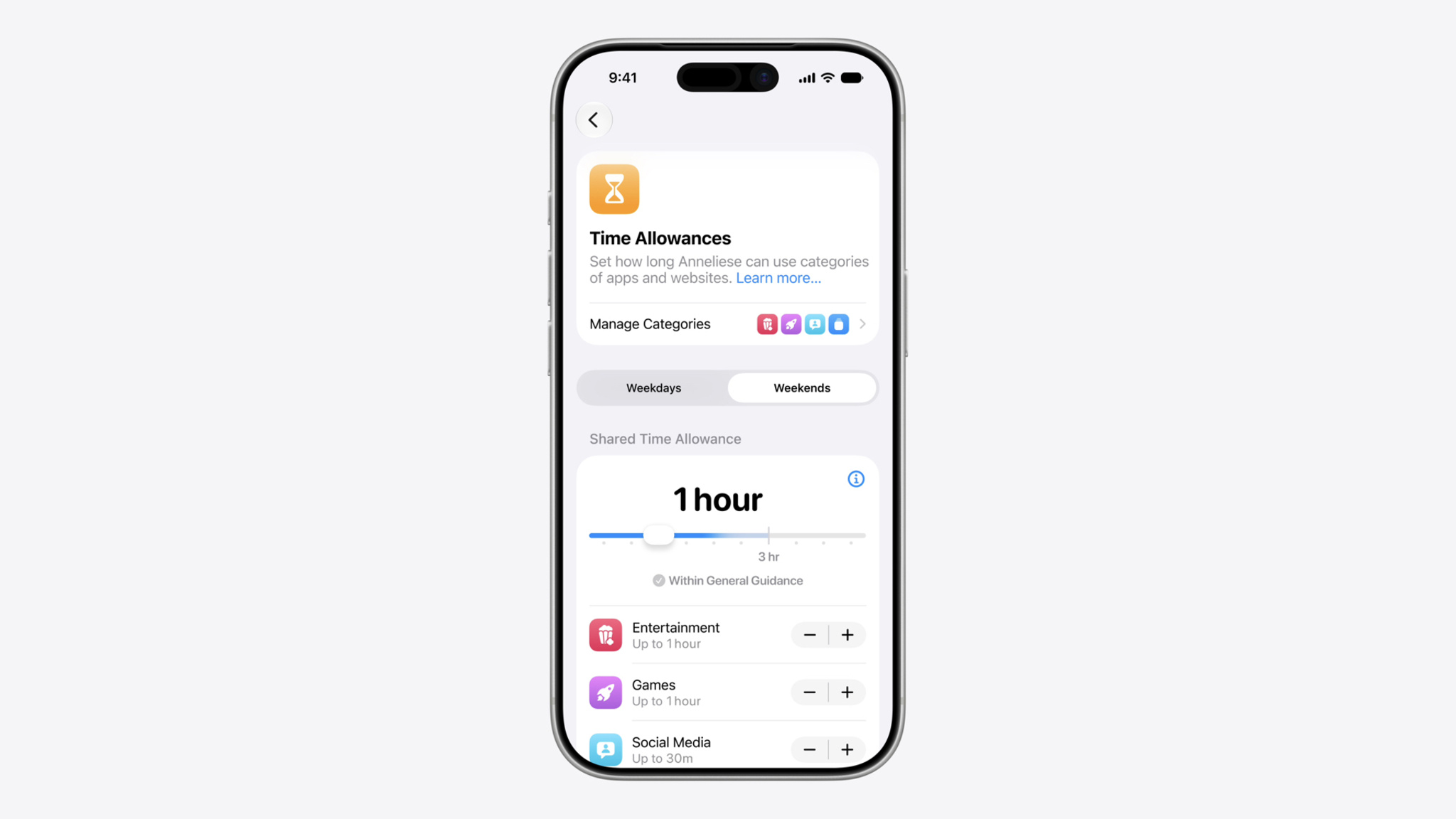
New Time Allowances in iOS 27, iPadOS 27, and macOS 27, or later, give parents more flexible ways to manage the time their kids spend in apps across categories, including Entertainment, Games, and Social Media. Time Allowances are developed based on expert research and tailored to a child’s age to give parents a helpful starting point. Parents can adjust these settings based on what they determine is best for their child. Time Allowance categories are different from categories for user discovery on the App Store. Entertainment and Games Your app or game will appear in a Time Allowance category based on the information you provide in App Store Connect. Apps and games with Entertainment or Games selected as a primary or secondary category in App Store Connect will be sorted into the corresponding Time Allowance categories. Social Media The Time Allowance category for Social Media will be based on whether your app or game offers social media capabilities, regardless of the category selected in App Store Connect. This includes the ability to redistribute, amplify, or interact with user-generated content through a social feed or similar discovery method that visibly spreads content to many users. Starting July 2026, the age rating questionnaire will be updated to let you indicate whether your app or game includes social media capabilities. If you indicate that your app or game includes social media capabilities, it will be placed in the Time Allowance category for Social Media and receive a minimum age rating of 13+. If you indicate that your app or game includes social media capabilities but they are disabled for anyone under 13, it won’t be included in the Time Allowance category for Social Media for users under 13. You'll also need to use the Declared Age Range API (at a minimum) to check users’ age ranges. If you select this option, your overall responses in the age rating questionnaire determine your age rating and may result in a rating lower than 13+. Your app or game may still be grouped in the Time Allowance category for Games or Entertainment based on the primary or secondary category selected in App Store Connect, and will remain in the Social Media category for users 13 and above. Starting September 2026, you’ll be required to indicate whether your app or game includes social media capabilities in order to submit new versions or updates to the App Store, or for notarization for distribution on alternative app marketplaces. Design safe and age‑appropriate experiences for your apps and games Set an age rating Declared Age Range API documentation

Apple Developer News·June 8, 2026·2 min read
Datadog delivers millions of in-depth performance insights with ProfilingManager
Mobile GamesNews

Datadog delivers millions of in-depth performance insights with ProfilingManager

Posted by Alice Yuan, Developer Relations Engineer at Google, Arti Arutiunov, Product Manager at Datadog and Nikita Ogorodnikov, Staff Software Engineer at Datadog Performance regressions are notoriously hard to reproduce, making regressions a massive bottleneck for mobile developers. Although signals like ANR rates indicate what issues occur in production, pinpointing the specific line of code that resulted in the performance issue has historically necessitated exhaustive manual reproduction or speculative trial-and-error experimentation. Datadog collaborated with Google to mitigate this frustration by integrating the ProfilingManager API (available on Android 15+ devices) into its Real User Monitoring (RUM) and Continuous Profiling platforms. This integration transforms the debugging workflow, allowing developers to move beyond surface-level symptoms to being able to detect the why behind a performance bottleneck. By leveraging this system-level API, Datadog now processes millions of production profiles weekly across the globe according to Datadog internal data of June 2026. It provides engineering teams with a new level of visibility into real-world performance, all while maintaining a low runtime overhead for production-scale performance monitoring. The impact of ProfilingManager ProfilingManager is a system service introduced in Android 15 that enables apps to programmatically collect performance data such as call stack samples, field traces and memory heap dumps directly from production environments. This capability shifts the engineering paradigm from reactive manual reproduction to proactive field analysis. For example, a Google communications app used field traces to investigate why its cold start times were slower on newer, more powerful hardware. By diving into the field-collected traces and comparing traces across different device types, the engineer discovered a hidden scheduling issue: a background text-to-speech service was unnecessarily being prewarmed during app startup. The traces revealed that this background process was monopolizing the device's highest-performing big CPU core, forcing the app's main thread to sleep while the prewarm occurred. Solving the Android code-level visibility challenge Prior to the implementation of ProfilingManager, Datadog’s Real User Monitoring (RUM) focused on high-level application health and session-level telemetry to assess the user journey. Engineering teams could monitor Android performance signals like time to initial display, ANR rates, CPU load, and frozen frames. These insights extended to granular interactions, such as network latency, touch events, and main thread hangs. However, while this data effectively highlighted which performance bottlenecks were surfacing in the field, it provided no clear path to identifying the root cause of these failures. To address this, Datadog needed a profiling engine capable of capturing Android traces directly from devices in production with minimal performance impact. After evaluating alternative approaches, such as writing their own trace processor using Android Debug APIs, the team selected ProfilingManager because it is the most performant solution of the profiling options they evaluated and offloads the sampling decisions overhead to the OS. ProfilingManager supports a wide range of collection methods, including CPU traces, call stack sampling, memory analysis through Java heap dumps and native heap profiles. It enables developers to profile production builds, upload trace files to external storage, and review them in the Perfetto trace analyzer UI. As a SaaS provider, Datadog uploads, visualizes, and analyzes these profiles collected via its SDK, providing a unified view of application health. By centralizing high-fidelity telemetry within a unified observability API, ProfilingManager empowers Datadog and its clients to proactively monitor, investigate, and remediate complex Android performance regressions through key technical advantages: Granular session diagnostics: ProfilingManager enhances debuggability by delivering direct OS-level trace data, overcoming the visibility and alignment challenges typical of custom logging with system services. To dive deeper, developers can download these traces from Datadog to investigate further in visualization tools like the Perfetto UI . Automated telemetry triggers: By leveraging native system events to initiate trace recordings at key optimization points, Datadog reduces the need to build custom collection logic. While the initial rollout focuses on the APP_FULLY_DRAWN signal, there are already plans to expand this observability to include ANR , OOM , and COLD_START triggers. Proactive trace snapshots: By interfacing directly with the system-level Perfetto service (traced), ProfilingManager utilizes a proactive background recording model designed to capture unpredictable issues. This ensures that developers receive a precise visualization of the events leading up to a performance anomaly, offering a level of insight that exceeds what is possible through manual instrumentation. Bottleneck detection at scale: Datadog is able to synthesize telemetry from across Datadog’s global customer base to uncover regressions that only emerge under unique hardware configurations and variable network environments. System-enforced resource stability: The API leverages sampling trace collection to ensure performance and user experience impacts remain unnoticeable. On-device data controls:  ProfilingManager filters out irrelevant information from other processes on-device before the profile is delivered to the app. This minimizes file sizes and ensures that only data relevant to the app's processes is provided. Processing millions of weekly profiles to optimize real-world apps An example of Datadog's time to initial display measurement with  stack sampling powered by ProfilingManager Integrating a system-level profiling API into a global monitoring SDK required solving infrastructure challenges. Because ProfilingManager generates highly detailed performance traces, the Datadog engineering team had to build a pipeline capable of parsing and analyzing these profiles on the server side at scale.  Beyond profile collection, Datadog also emphasizes the importance of balancing sampling frequency with collecting enough data to generate meaningful insights about your application. Datadog relies on ProfilingManager’s built-in rate limiting as a critical stability safeguard, preventing excessive telemetry requests from overburdening user devices. The team has been profiling Datadog's own native Android application and a number of early adopters’ applications for months, gathering millions of profiles to ensure a fast, error-free launch experience and to refine their performance-detection algorithms. Today, the production integration seamlessly scales across a variety of Android devices. Conclusion By integrating Android’s ProfilingManager API, Datadog successfully closed the visibility gap between backend systems and mobile client applications for their customers. By processing millions of profiles weekly with negligible device overhead, Datadog equips Android developers with the code-level insights necessary to diagnose complex performance bugs instantly, helping developers build smoother applications and improve their app’s performance signals in the Play Store. To adopt the ProfilingManager API directly into your performance observability framework, check out our documentation . In the future, Datadog aims to make Android profiling data a first-class input for coding agents to autonomously resolve performance bottlenecks, closing the feedback loop between detection and remediation. Datadog is working toward making Android profiling broadly accessible to developers. To get started using the Datadog real user monitoring feature powered by ProfilingManager, visit Datadog Mobile Real User Monitoring .

Android Developers Blog·June 8, 2026·5 min read
Update for Apps Distributed in Texas
Mobile GamesNews

Update for Apps Distributed in Texas

Due to a recent court ruling lifting an injunction on Texas law SB 2420, new Apple Accounts in Texas are now subject to the law, which introduced age assurance requirements for app marketplaces and developers. As previously announced , this includes age assurance and parent or guardian consent on behalf of minors under the age of 18 for downloads, Apple In-App Purchases, and significant changes associated with an app. Parents or guardians will also be able to revoke their consent for any app they previously approved for their child. These changes will go into effect starting June 4, 2026. Developers can request age category data for these Apple Accounts through the Declared Age Range API . For significant changes, developers should use the Significant Change API under the PermissionKit framework. As a reminder, it’s the developer’s responsibility to determine when there’s a significant change to their app. To learn about a parent or guardian’s revocation of consent, the App Store is providing a server notification that developers can configure to receive notifications that consent has been withdrawn for their app on a child or teen’s device. Next steps Review documentation and implement the following: Declared Age Range API Significant Change API under PermissionKit New age rating property type in StoreKit App Store server notification Use Apple’s sandbox testing environment to validate that the APIs have been implemented correctly. For the most up-to-date requirements and API references, see: Age assurance frameworks Q&A Learn more about how you can provide age-appropriate experiences and safeguard privacy in your apps and games using robust features available across Apple platforms.

Apple Developer News·June 3, 2026·1 min read
Introducing the 2026 Apple Design Award winners
Mobile GamesNews

Introducing the 2026 Apple Design Award winners

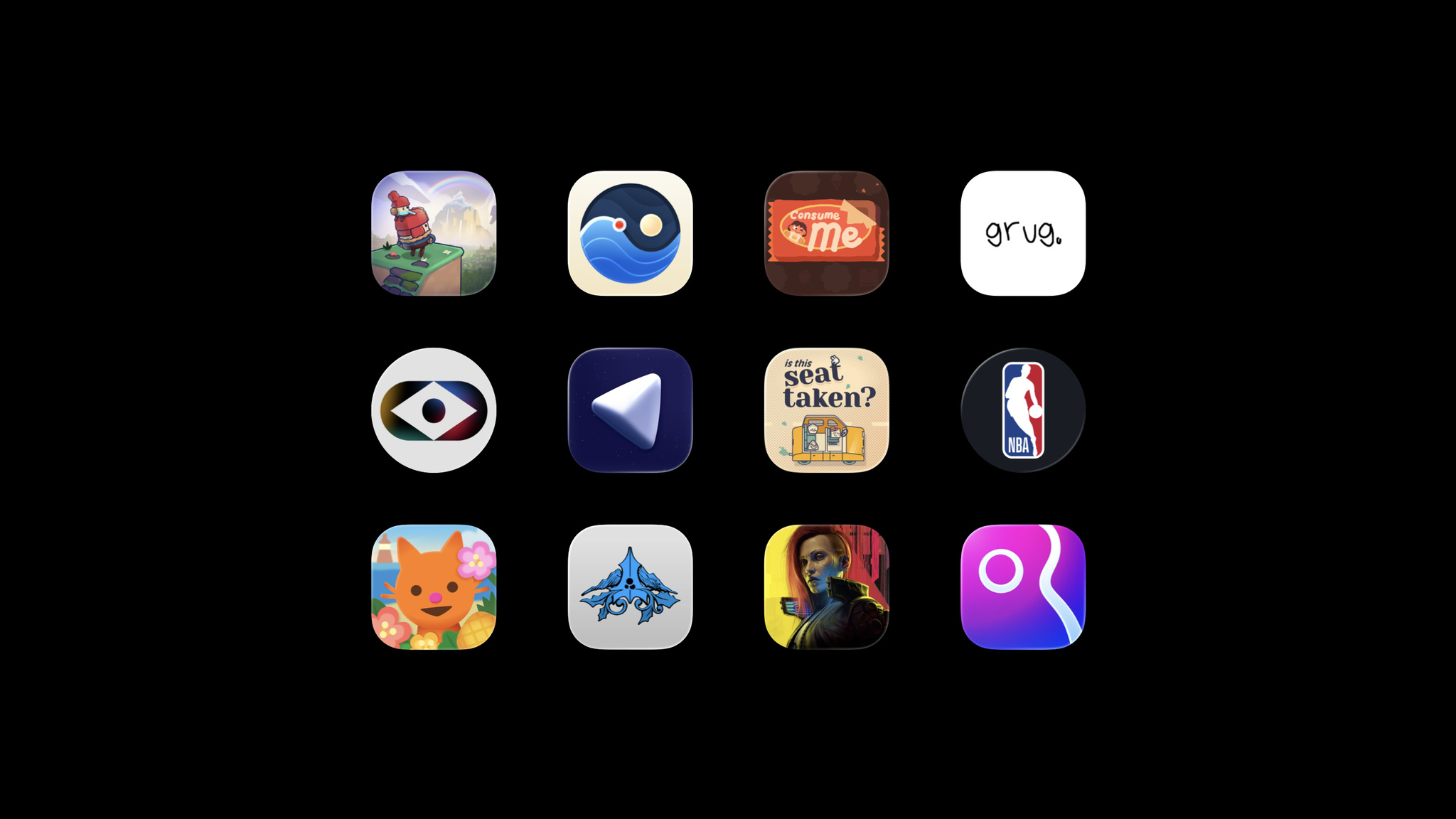
Join us in celebrating these extraordinary apps and games. Meet the 2026 Apple Design Award winners

Apple Developer News·June 2, 2026·1 min read
Zero-Day
↘2K
💬

Top Discussion

HN

Hacker News

“GPT-5.5's API pricing is reshaping how startups build AI products”

14.1K932 comments
View discussion→

Filters

Time
Categories
Sources
Content Type