MobileNews
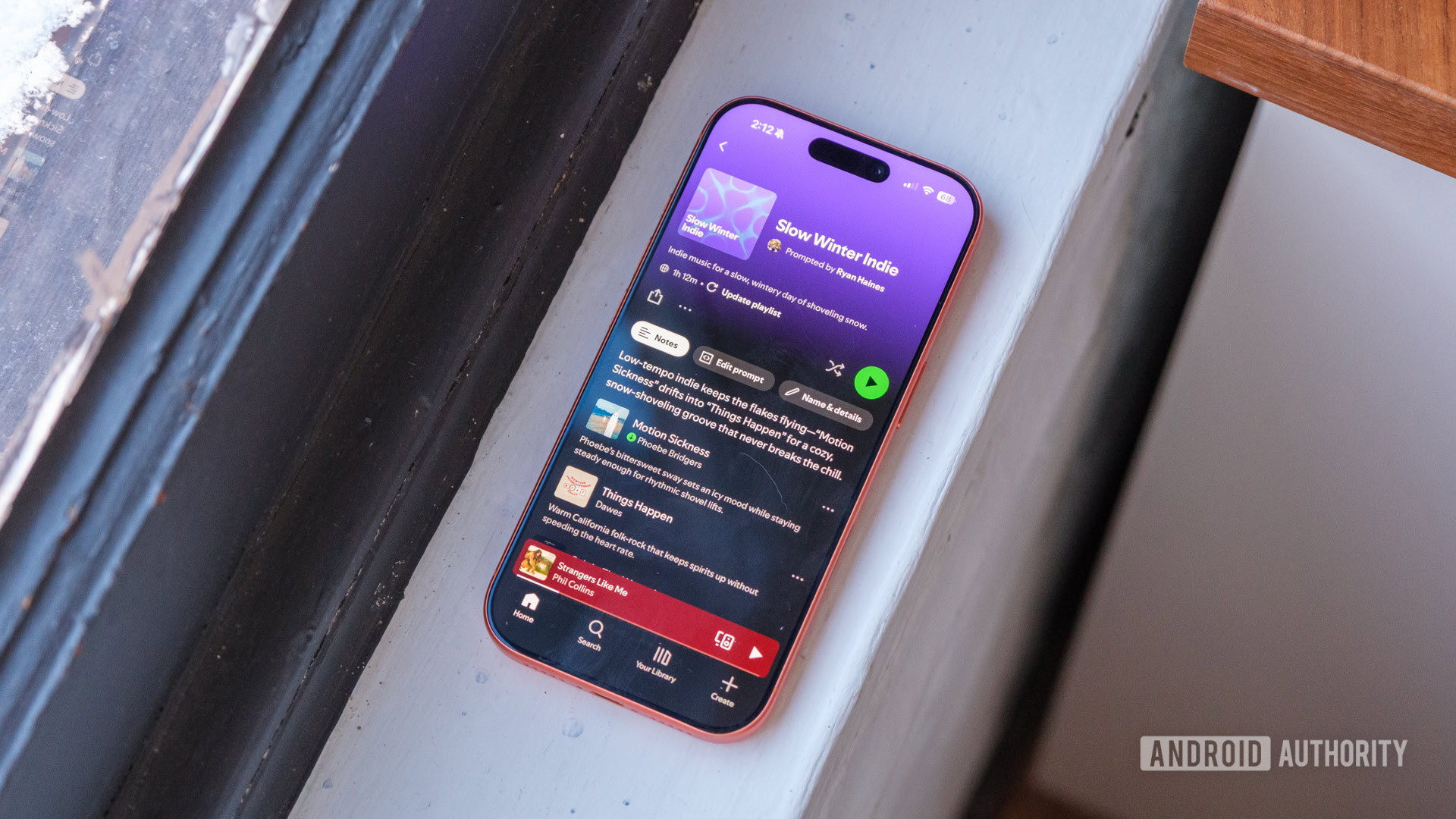
Is Spotify down for you? Here’s what’s going on (Update: Back up)
The outage is affecting users across the country.
Android Authority1 min read
Explore
Browse every article collected by VIREXA. Newest articles appear first.
6,933 results • Page 93 of 578
The outage is affecting users across the country.
Company noted for building quantum annealers now also making gate-based hardware.
Once, I had some questions about why SpaceX, Elon Musk's healthiest company, acquired xAI, his sickliest one. Now I have some questions about why we're calling the whole thing SpaceX. Look, what we have here, by revenue, is primarily a telecom company and a company that rents compute, according to SpaceX's first quarterly earnings statement […]
A flaw in WebKit leaks real IP addresses, and Apple is already looking into it.
More than 50 offending image and video ads were published across Facebook, Instagram, Messenger, or Threads, according to Meta’s ad library data. Some ran as recently as this week.
679 points 420 comments on Hacker News · discoveryloop.com
An attacker on Tuesday took over the GitHub account of the developer who maintains keyv , a small key-value storage library that npm serves roughly 127 million times a week. Within hours, poisoned versions of keyv and its sibling caching packages were live on npm, carrying a credential-stealing worm. By midday, security firm Aikido counted at least 868 compromised packages across 1,381 versions, together carrying over two billion monthly installs, a total still climbing. JFrog independently traced the campaign across more than 400 packages and 1,700 poisoned versions. The part that should worry every security team is not the download count. It is the paperwork. The initial poisoned releases shipped with valid provenance signatures, the cryptographic attestation the industry built to prove a package came from where it claims. The worm did not forge that signature. It earned it, the way a legitimate release would. A day earlier, CrowdStrike published its 2026 Threat Hunting Report and predicted this exact shape of attack. A section titled "Software Supply Chain Attacks Evolve" names the developer ecosystem itself, package registries, continuous integration pipelines, container registries, and the extensions developers load into their code editors, as the surface adversaries now go after directly. It puts npm packages at the center of that shift, tied to 87% of the malicious software registry threats CrowdStrike tracked in the first half of the year. The keyv worm turned that finding into a live incident inside 24 hours. For CISOs and security architects, the two events read as one message. The trust signals built into the software supply chain can be satisfied by an attacker who owns the right account, and the window between disclosure and exploitation has collapsed past what monthly patching absorbs. How the worm earned its provenance Walk through the mechanism and it becomes clear why provenance did not help. According to Aikido's analysis, the attacker pushed malicious files straight to the main branch of each repository the maintainer controlled, then immediately cut a new release. Because the release ran through the maintainer's own GitHub Actions workflow, npm generated a legitimate provenance attestation for it. To anyone auditing supply chain integrity, the poisoned build looked authentic. Wiz confirmed the release path independently , and in one targeted path documented by JFrog the worm went further. Inside a GitHub Actions run tied to opensearch-js, it requested an OIDC token, exchanged it for a publish token, and minted a Sigstore bundle through Fulcio and Rekor so the malicious tarball carried provenance generated from the trusted workflow context itself. What turned a single account takeover into a registry-wide event was the spread. Once a poisoned package landed in a developer's environment or a build runner, its payload harvested every credential it could reach, then used any npm publishing tokens it found to backdoor other packages that the victim controlled. Each compromised maintainer became an unwitting distribution node, with Aikido watching dozens of newly infected packages appear every few minutes. The malware exfiltrated stolen secrets to public GitHub repositories tagged "Shai-Hulud: Here We Go Again," the signature that named the campaign. This blast radius reached well beyond obscure utilities. Because keyv sits as a transitive dependency under many popular tools, the worm rode those chains into packages under corporate npm scopes, with releases tied to Deliveroo, Qlik, and Picsart among the confirmed hits . Developers at those companies never installed keyv on purpose. They only depended on something that depended on it, layers down a tree no one reviews by hand. Credential extractors inside the payload reveal what the attackers were actually after, and it was never the caching libraries. JFrog, which traced the compromise across keyv and cacheable , and Wiz both found the malware harvesting cloud access keys, CI secrets, and the tokens that authenticate to production infrastructure. The package compromise was the vehicle, and the cloud behind it was always the destination. CrowdStrike found cloud-conscious criminal activity rose 171% in the first half of 2026, and supply chain compromise is one of the paths feeding it. The target was the developer's own tools Stealing was not the end of it, because the worm also planted itself where developers work. Wiz found that the malware drops persistence payloads into two directories on machines it reaches, one for Visual Studio Code and one named .claude, the working directory for Anthropic's Claude Code agent. The setup files placed there mean the payload can run when a developer opens the infected project in their editor or starts an AI coding session, not only at install time. This is the developer ecosystem CrowdStrike named, hit precisely, the editor and the AI assistant a developer trusts most and inspects least. The fix costs nothing One control would have blunted the worm, and it costs nothing. Adam Meyers, who leads Counter Adversary Operations at CrowdStrike, laid it out in a pre-release interview under embargo. "Secure the software supply chain," he said. "Simple things like not allowing any of your tooling to pull down the most recent dependencies, but maybe last week's dependencies." The delay is the whole point. "You're still going to have pretty up-to-date stuff, but you won't have that risk of pulling down something that was updated minutes ago, and now you've just onboarded some sort of malicious tooling." A release held back a week gives the security community time to catch a poisoning that would otherwise reach every downstream build within minutes. That guidance is not hypothetical. npm shipped this capability in February 2026 with CLI version 11.10.0 as a setting called min-release-age . pnpm got there five months earlier with minimumReleaseAge . Either one lets a team reject any package version published more recently than a threshold they set. The keyv worm is the argument for turning it on. Meyers pairs the cooldown with a second discipline. Patch what attackers are exploiting before anything else. "You need to kind of focus your vulnerability mitigation and patching around the exploits that are known to the exploiter," he told VentureBeat. He pointed to a resource most teams underuse. "CISA here in the United States puts out something called the Known Exploited Vulnerability Catalog," updated weekly with flaws confirmed under active attack, government-maintained and free. "If you patch those vulnerabilities first, you're going to probably be safer." Meyers put hard numbers to the speed problem, numbers that do not appear in the published report. All of 2025 saw roughly 48,200 vulnerabilities registered as CVEs. When he checked the week before the briefing, 2026 had already reached 43,000. That volume breaks monthly patch cycles. "They cannot operate in 30-day patch windows," he told VentureBeat. "As soon as a vulnerability is disclosed, they need to be moving towards patching or mitigating that particular issue." CrowdStrike's report pairs that trajectory with a finding that 88% of the exploitation it observed against vulnerabilities with a public proof of concept happened inside 48 hours of the code going public. GitHub hardened half the problem GitHub, which owns npm, has spent the past year hardening the registry against precisely this class of attack. The platform made two-factor authentication mandatory for publishing, revoked old never-expiring access tokens, and added trusted publishing so build systems push without stored credentials. Then in npm version 12 , released in mid-2026, it flipped the most consequential default. The preinstall, install, and postinstall hooks that most registry malware relies on to execute the moment a package lands now require explicit approval. That change matters directly here because the keyv worm executes through a preinstall script, and npm 12 cuts both ways. JFrog confirmed that on npm 12 or newer, where preinstall hooks are off by default, the malware does not run at install time. Every organization still on an older npm, and most enterprises upgrade slowly, remained exposed. GitHub's defenses hardened the wrong half of the attack more than the right one, making it harder for a malicious package to execute once it lands while doing less to stop an attacker from earning the right to publish. Account takeover remains the root cause. Kiran Raj, a security engineer at Endor Labs , said he saw the same pattern, an npm publishing token stolen and reused, in most cases a CI or service-account token harvested from a build runner that had itself installed a poisoned dependency. The worm never had to defeat provenance. It needed one set of valid credentials, and npm's own publishing automation did the rest. Provenance attestation answers whether a package came from the pipeline it claims. It does not answer whether the human or token that triggered that pipeline was supposed to. Identity governance, who can publish and what their credentials can reach, is the weaker control. CrowdStrike names abuse of legitimate developer identities as the primary entry point for supply chain compromise. Meyers put it plainly. "They log in, they don't hack in," he said. The keyv maintainer's account was that identity, and the trusted-publishing machinery did the rest on the attacker's behalf. Why the boardroom is next The pressure to fix this will not come only from threat reports. It is about to come through contracts. Kayne McGladrey, a senior member of the IEEE, told VentureBeat in an exclusive interview that enterprises are starting to push software security obligations onto the vendors and maintainers in their supply chains. "We're going to start seeing companies trying to contractually shift liability to other parties in their supply chain," he told VentureBeat. "We're using your technology, but we want you to do the security for it." He compared it to how the Department of Defense forced its vendors to raise their game through the CMMC certification program. "Get better at cybersecurity if you want to sell us stuff." For any company shipping software on open-source dependencies, that turns provenance, identity, and patch discipline into contractual exposure. What to do Monday morning For a security team deciding what to do about this on Monday morning, the actions divide into five moves that map to the five ways this attack class operates. Each is a governance decision a board can fund and audit, not a tool a developer installs alone. How the attack operates What the keyv worm showed What the board funds and audits The developer ecosystem is the target. CrowdStrike names package registries, CI/CD pipelines, container registries, and IDE extensions as the surface adversaries hit directly. The keyv payload planted persistence hooks in developer editor and AI tooling directories, not just the package. Require provenance attestation and trusted publishing before any dependency or editor extension enters a build. Give the board a standing inventory of registries, pipeline components, and extensions in scope. Treat developer tooling as an audited supplier category. Automation makes the spread fast. One stolen credential seeded a cascade that reached at least 868 packages and two billion monthly installs in hours, jumping between organizations every few minutes. The worm ran through a preinstall script, the install-time default npm v12 disables. Turn on npm's min-release-age so tooling pulls last week's versions, not releases published minutes ago. Require npm v12 or install-script blocking across the build estate. Plan for simultaneous multi-package compromise in resilience testing. Identity is the entry point. The attack began with one hijacked GitHub maintainer account. Provenance signed the poisoned releases because they ran through the maintainer's own pipeline. Valid credentials, not a broken control, did the damage. Mandate phishing-resistant multifactor authentication for every maintainer with publish rights. Prefer short-lived scoped tokens over long-lived ones. Report developer and machine identity coverage to the board as a countable liability. The cloud is the real destination. The payload carried targeted extractors for cloud access keys, CI secrets, and production infrastructure tokens. The package compromise was the vehicle. Cloud-conscious criminal activity rose 171% in the first half of 2026. Classify developer workstations and CI runners as tier-zero assets with domain-controller rotation standards. Document cloud credential rotation in hours after any supply chain exposure. Report long-lived cloud keys with reduction targets. The patch window has collapsed. CrowdStrike observed 88% of exploitation with a public proof of concept inside 48 hours. Meyers put 2026 CVE registrations at 43,000 by late July against 48,200 for all of 2025. The keyv worm was live within hours, with no CVE to wait for. Reset patch service levels for internet-facing systems from days to hours and fund continuous emergency patching as a budgeted operation. Give the audit committee time-from-disclosure-to-mitigation as a standing metric. Build defensibility on documented pre-patch compensating controls. Package counts reflect Aikido and JFrog tracking as of August 4 and were climbing at press time. The keyv worm will be contained. Compromised versions pulled, stolen tokens rotated, affected packages republished clean. What will not change is the shape of the exposure it revealed. The developer ecosystem is now a primary target, the automation that makes it productive is the same automation that makes a worm fast, and the trust signals meant to secure it can be satisfied by anyone holding the right credentials.
369 points 1 comment on Hacker News · axios.com
https://www.axios.com/2026/08/05/google-deepmind-demis-hassa... https://www.reuters.com/business/google-shakes-up-ai-leaders... https://www.discoveryloop.com/ , https://news.ycombinator.com/item?id=49184960 https://twitter.com/JeffDean/status/2085034604172603724 , https://xcancel.com/JeffDean/status/2085034604172603724
His win in Michigan sets up a high-stakes contest in November, testing a left-wing candidate's popularity in a swing state.
Reddit is enlisting AI to help moderate new subreddits - and eventually the rest of site. The company is introducing automated moderation tools that rely on LLMs to help mods manage their communities, and it's expanding who can use those tools today ahead of a full launch later this year. The company calls the suite […]
Jeff Dean and other high-profile Google executives have founded Discovery Loop, a startup that will seek AI-powered breakthroughs in everything from drug discovery to chip design.
Hacker News
“GPT-5.5's API pricing is reshaping how startups build AI products”