Virexa
HomeAIProgrammingCloudSecurityOpen SourceGamesMobile GamesDeveloper Hub
Sign InSign Up
Virexa
Sign InSign Up
AIProgrammingCloudSecurityOpen SourceGamesMobile GamesDeveloper Hub
Virexa

Modern AI news aggregation and newsletter platform covering technology, business, AI, games and world news.

Categories

  • AI
  • Programming
  • Cloud
  • Security
  • Open Source
  • Developer Hub

Company

  • About
  • Contact
  • Advertise

Resources

  • RSS Feed
  • API
  • Privacy Policy
  • Terms of Service

© 2026 Virexa. All rights reserved.

Virexa
HomeAIProgrammingCloudSecurityOpen SourceGamesMobile GamesDeveloper Hub
Sign InSign Up
Virexa
Sign InSign Up
AIProgrammingCloudSecurityOpen SourceGamesMobile GamesDeveloper Hub
Home›News Explorer

Explore

News Explorer

Browse every article collected by VIREXA. Newest articles appear first.

Filters

6,729 results • Page 1 of 561

Scaling Agentic RL: High-Throughput Agentic Training with Tunix
TechnologyOpen Source

Scaling Agentic RL: High-Throughput Agentic Training with Tunix

Tunix is Google’s new JAX-native post-training library designed to eliminate TPU idling bottlenecks when training multi-turn, tool-using LLM reasoning agents. It maximizes hardware throughput by combining highly concurrent, asynchronous rollouts with a decoupled producer-consumer pipeline, ensuring the trainer is constantly fed even while agents wait on network I/O or environment steps. Additionally, Tunix provides plug-and-play abstractions and continuous macro-level profiling, allowing developers to easily integrate custom open-source environments and optimize complex distributed workflows without massive code rewrites.

Google Developers·August 20, 2026·1 min read
← Previous123…561Next →
🔥

Developer Pulse

What developers are discussing today

  • GPT-5.5 API↗9.4K
  • Next.js 16↗6.2K
  • Claude Code↗5.8K
  • Kubernetes→3.4K
  • Rust↗2.7K
Building scalable AI agents with modular prompt transpilation
AINews

Building scalable AI agents with modular prompt transpilation

To resolve the scaling bottlenecks and runtime errors caused by monolithic system prompts, engineering teams should treat prompts as build artifacts by modularizing instructions into reusable templates. By running these modular "skill files" through a transpiler, developers can enforce static validation, catch missing dependencies at build time, and integrate prompt generation directly into their CI/CD pipelines. This deterministic approach prevents code drift and ultimately establishes a safe framework where agents can propose updates to their own logic via standard pull requests.

Google Developers·August 20, 2026·1 min read
Evolving Spec-Driven Development: Conductor Now Supports Antigravity
TechnologyRelease

Evolving Spec-Driven Development: Conductor Now Supports Antigravity

Conductor has evolved from a Gemini CLI extension into a portable plugin, bringing conversational Spec-Driven Development (SDD) to ecosystems like Antigravity CLI and Claude. Rather than relying on strict command sequences, developers can now chat naturally with their AI assistant while it dynamically manages persistent markdown artifacts (like spec.md and plan.md) in the background. This update eliminates workflow friction while ensuring your repository remains a version-controlled, single source of truth for your project's architecture and state across different AI tools.

Google Developers·August 20, 2026·1 min read
Expanding Choice in Gemini Enterprise Agent Platform: Introducing Grounding with Parallel Web Search
TechnologyNews

Expanding Choice in Gemini Enterprise Agent Platform: Introducing Grounding with Parallel Web Search

Google Cloud has partnered with Parallel Web Systems to natively integrate Parallel's search infrastructure as a web grounding provider on the Gemini Enterprise Agent Platform. This integration enables developers to anchor their AI agents in verifiable, real-time web results, significantly improving factual accuracy for complex enterprise workflows. Additionally, the partnership offers expanded architectural flexibility, allowing users to programmatically extract, permanently cache, and process web data alongside other large language models.

Google Developers·August 20, 2026·1 min read
LiteRT.js, Google's high performance Web AI Inference
AINews

LiteRT.js, Google's high performance Web AI Inference

We're excited to introduce LiteRT.js, the newest member of the LiteRT family! LiteRT.js is our powerful solution for running machine learning models directly in the browser, extending Google's cross-platform edge AI runtime to the web. Built for JavaScript developers, LiteRT.js delivers state-of-the-art ML model inference performance on WebGPU and upcoming WebNN, with a fallback to WebAssembly for CPU. This post provides a quick tour of LiteRT.js and gives web developers everything they need to get started.

Google Developers·August 20, 2026·1 min read
Systems Engineering Playbook: Optimizing Qwen 3.5-397B MoE on Ironwood (TPU7x)
TechnologyRelease

Systems Engineering Playbook: Optimizing Qwen 3.5-397B MoE on Ironwood (TPU7x)

To serve the 397B-parameter Qwen 3.5 Mixture-of-Experts (MoE) model on Ironwood TPUs, engineers developed a modular JAX/Pallas optimization stack that achieved up to a 4.7x inference speedup for prefill-heavy workloads. The team bypassed severe hardware sharding constraints by deploying a hybrid Data Parallelism and Expert Parallelism (DP+EP) topology, paired with custom low-level communication fusions like a hierarchical reduce-scatter to optimize cross-device token routing. Finally, by executing hardware-aware custom kernels—such as Batched Ragged Page Attention and a fully-fused Gated DeltaNet (GDN) block—they successfully saturated HBM bandwidth and TensorCore MXUs to push system throughput near its theoretical roofline limits.

Google Developers·August 20, 2026·1 min read
Run Ray on TPU, Part 1: The foundations
TechnologyNews

Run Ray on TPU, Part 1: The foundations

Ray 2.55 introduces official, first-class support for Google Cloud TPUs, enabling developers to run distributed Python workloads on Google's accelerators using the familiar Ray task-and-actor APIs. To handle the strict networking requirement of keeping multi-host TPU "slices" together over their Inter-Chip Interconnect (ICI), the KubeRay Operator on GKE automatically provisions and labels the underlying hardware layout. Ray Core utilizes these labels via its slice_placement_group() primitive to atomically reserve complete slices, allowing developers to deploy jobs through KubeRay, Ray Train, or Ray Serve simply by declaring a hardware topology (like "4x4") without writing custom placement code.

Google Developers·August 20, 2026·1 min read
Introducing Credentio: Open Source C++ Library for C2PA Content Credentials from Google
ProgrammingOpen Source

Introducing Credentio: Open Source C++ Library for C2PA Content Credentials from Google

Credentio is a newly released, open-source C++ library from Google that allows developers to integrate high-performance, local-first validation of C2PA Content Credentials into their client and server applications. By processing assets entirely locally with a highly optimized memory footprint, the library delivers instant validation verdicts for multi-gigabyte media files without incurring cloud latency, bandwidth costs, or data privacy risks. The library currently features deep manifest parsing alongside configurable trust list integration, and is available now on Google Source with future plans to support full credential generation and embedding.

Google Developers·August 20, 2026·1 min read
HeyGen x Google Cloud: Bringing Avatar IV to TPUs
TechnologyNews

HeyGen x Google Cloud: Bringing Avatar IV to TPUs

HeyGen ported their 18B+ parameter Avatar IV video generation model to Google Cloud's Trillium (v6e) TPUs via torchax and XLA, utilizing FSDP and Ulysses sequence parallelism across an eight-chip mesh. To achieve a 1.86x speedup for real-time streaming, the engineering team pipelined exposed all-to-all collectives, aligned sparse attention block sizes to eliminate mask padding, and bypassed softmax serial dependencies using a precomputed Cauchy-Schwarz upper bound. These custom Pallas kernel and compiler optimizations were deployed only after passing rigorous two-tier quality gates to guarantee byte-identical or mathematically equivalent pixel outputs.

Google Developers·August 20, 2026·1 min read
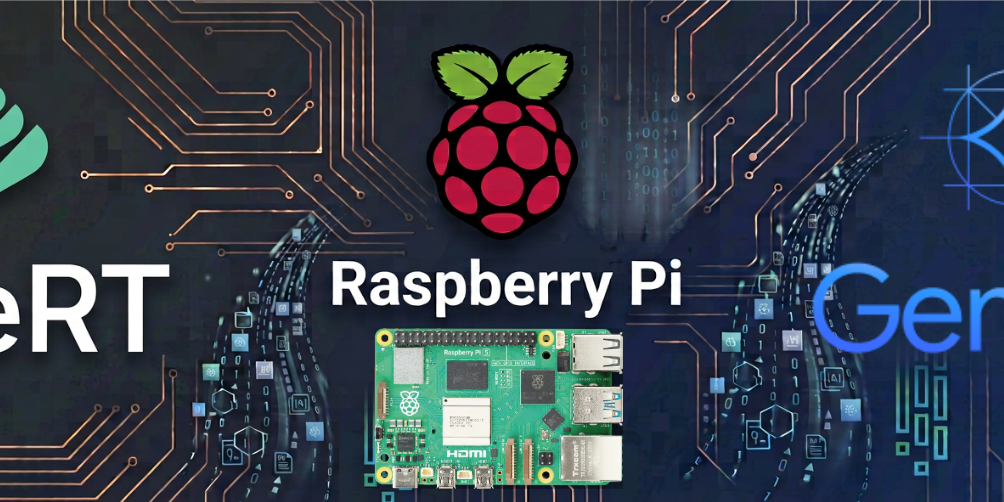
Mastering Edge AI on Raspberry Pi with LiteRT and Gemma
AINews

Mastering Edge AI on Raspberry Pi with LiteRT and Gemma

Deploying secure, real-time Edge AI on Raspberry Pi is now simplified using LiteRT and lightweight Gemma open models. LiteRT optimizes CPU and GPU performance, delivering fast token speeds for models like Gemma4, enabling real-time local reasoning for robotics. Developers can quickly convert, quantize, and run these models using the lightweight LiteRT CLI tool. Support for Hailo AI accelerators is also coming very soon.

Google Developers·August 20, 2026·1 min read
Why Go is an Ideal Language for AI-Assisted Software Engineering
ProgrammingNews

Why Go is an Ideal Language for AI-Assisted Software Engineering

As AI coding assistants shift the developer's primary role from writing boilerplate to reviewing and maintaining systems, language choice becomes critical for long-term architectural integrity. Go directly addresses this new paradigm by utilizing its strict compiler, integrated toolchain, and uncompromising readability to provide deterministic guardrails that help AI models self-correct and generate highly standardized code. By enforcing ecosystem-wide consistency and strict backward compatibility, the Go platform empowers engineering teams to efficiently verify, optimize, and maintain high-velocity, AI-generated output in production environments.

Google Developers·August 20, 2026·1 min read
Agent Plugins package your skills, tools, and more
TechnologyNews

Agent Plugins package your skills, tools, and more

Agent Plugins 1.0.0 is a new, vendor-neutral directory specification—backed by Google, Amazon, Microsoft, and others—for packaging Agent Skills and MCP servers into a single portable unit. By standardizing the manifest (plugin.json) and utilizing a fixed directory layout, it eliminates the need for developers to maintain separate wrappers or configurations to support different AI coding agents and IDEs. Google has officially joined as a Core Maintainer and already rolled out support in the Agents CLI and Data Agent Kit, allowing developers to start building and distributing interoperable plugins today.

Google Developers·August 20, 2026·1 min read
Zero-Day
↘2K
💬

Top Discussion

HN

Hacker News

“GPT-5.5's API pricing is reshaping how startups build AI products”

14.1K932 comments
View discussion→

Filters

Time
Categories
Sources
Content Type