Starting next month, Apple will change the supported algorithms that secure server connections for Apple Pay on the Web. In order to maintain uninterrupted service, you’ll need to ensure that your production servers support one or more of the designated six ciphers before February 4, 2025. These algorithm changes will affect any secure connection you’ve established as part of your Apple Pay integration, including the following touchpoints: Requesting an Apple Pay payment session (Apple Pay on the Web only) Renewing your domain verification (Apple Pay on the Web only) Receiving and handling merchant token notifications for recurring, deferred, and automatic-reload transactions (Apple Pay on the Web and in app) Creating and updating Wallet Orders (Apple Pay on the Web and in app) Managing merchant onboarding via the Apple Pay Web Merchant Registration API (payment service provider (PSP) and e-commerce platforms only)
In the first edition of the new year: Bring SwiftUI to your app in Cupertino, get ready for the Swift Student Challenge, meet the team behind Oko , and more. Read the full article
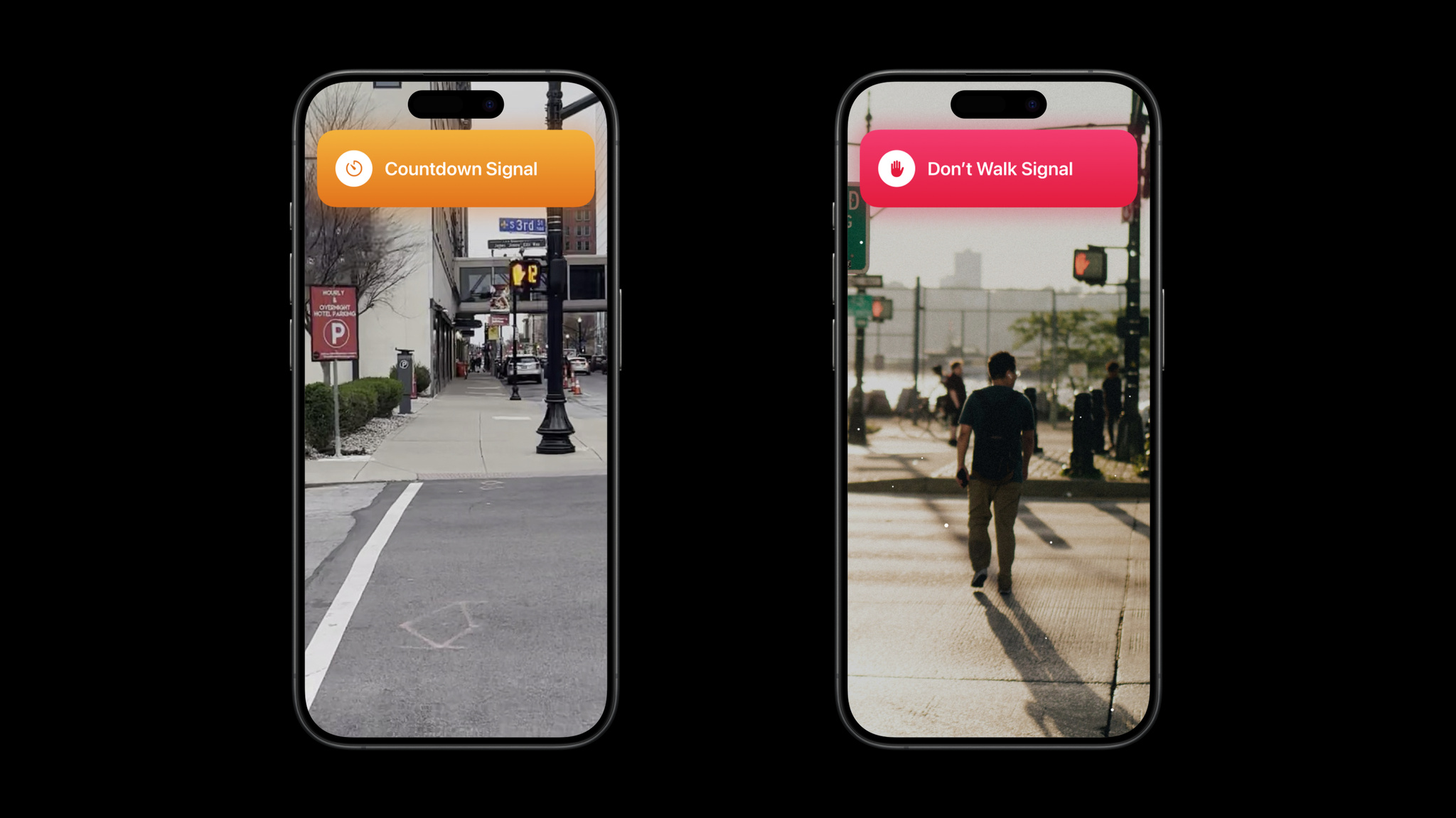
Oko is a testament to the power of simplicity. The 2024 Apple Design Award winner for Inclusivity and 2024 App Store Award winner for Cultural Impact leverages Artificial Intelligence to help blind or low-vision people navigate pedestrian walkways by alerting them to the state of signals — “Walk,” “Don’t Walk,” and the like — through haptic, audio, and visual feedback. The app instantly affords more confidence to its users. Its bare-bones UI masks a powerful blend of visual and AI tools under the hood. And it’s an especially impressive achievement for a team that had no iOS or Swift development experience before launch. “The biggest feedback we get is, ‘It’s so simple, there’s nothing complex about it,’ and that’s great to hear,” says Vincent Janssen, one of Oko ’s three Belgium-based founders. “But we designed it that way because that’s what we knew how to do. It just happened to also be the right thing.” ADA FACT SHEET From left: Willem Van de Mierop, Michiel Janssen, and Vincent Janssen are the three cofounders of Oko . The app’s name means “eye.” Oko Winner: Inclusivity Team: AYES BV Available on: iPhone Team size: 6 Previous accolades: 2024 App Store Award winner for Cultural Impact; App Store Editors’ Choice Learn more about Oko Download Oko from the App Store For Janssen and his cofounders, brother Michiel and longtime friend Willem Van de Mierop, Oko — the name translates to “eye” — was a passion project that came about during the pandemic. All three studied computer science with a concentration in AI, and had spent years working in their hometown of Antwerp. But by the beginning of 2021, the trio felt restless. “We all had full-time jobs,” says Janssen, “but the weekends were pretty boring.” Yet they knew their experience couldn’t compare to that of a longtime friend with low vision, who Janssen noticed was feeling more affected as the autumn and winter months went on. “We really started to notice that he was feeling isolated more than others,” says Janssen. “Here in Belgium, we were allowed to go for walks, but you had to be alone or with your household. That meant he couldn’t go with a volunteer or guide. As AI engineers, that got us thinking, ‘Well, there are all these stories about autonomous vehicles. Could we come up with a similar system of images or videos that would help people find their way around public spaces?’” I had maybe opened Xcode three times a few years before, but otherwise none of us had any iOS or Swift experience. Vincent Janssen, Oko founder The trio began building a prototype that consisted of a microcomputer, 3D-printed materials, and a small portable speaker borrowed from the Janssen brothers’ father. Today, Janssen calls it “hacky hardware,” something akin to a small computer with a camera. But it allowed the team and their friend — now their primary tester — to walk the idea around and poke at the technology’s potential. Could AI recognize the state of a pedestrian signal? How far away could it detect a Don’t Walk sign? How would it perform in rain or wind or snow? There was just one way to know. “We went out for long walks,” says Janssen. And while the AI and hardware performed well in their road tests, issues arose around the hardware’s size and usability, and the team begin to realize that software offered a better solution. The fact that none of the three had the slightest experience building iOS apps was simply a hurdle to clear. “I had maybe opened Xcode three times a few years before,” says Janssen, “but otherwise none of us had any iOS or Swift experience.” Oko helps people navigate pedestrian walkways through interactive maps and audio, visual, and haptic feedback. So that summer, the team pivoted to software, quitting their full-time jobs and throwing themselves into learning Swift through tutorials, videos, and trusty web searches. The core idea crystallized quickly: Build a simple app that relied on Camera, the Maps SDK, and a powerful AI algorithm that could help people get around town. “Today, it’s a little more complex, but in the beginning the app basically opened up a camera feed and a Core ML model to process the images,” says Janssen, noting that the original model was brought over from Python. “Luckily, the tools made the conversion really smooth.” ( Oko ’s AI models run locally on device.) With the software taking shape, more field testing was needed. The team reached out to accessibility-oriented organizations throughout Belgium, drafting a team of 100 or so testers to “codevelop the app,” says Janssen. Among the initial feedback: Though Oko was originally designed to be used in landscape mode, pretty much everyone preferred holding their phones in portrait mode. “I had the same experience, to be honest,” said Janssen, “but that meant we needed to redesign the whole thing.” The Oko team navigates through prototypes at a review session in their hometown of Antwerp, Belgium. Other changes included amending the audio feedback to more closely mimic existing real-world sounds, and addressing requests to add more visual feedback. The experience amounted to getting a real-world education about accessibility on the fly. “We found ourselves learning about VoiceOver and haptic feedback very quickly,” says Janssen. Still, the project went remarkably fast — Oko launched on the App Store in December 2021, not even a year after the trio conceived of it. “It took a little while to do things, like make sure the UI wasn’t blocked, especially since we didn’t fully understand the code we wrote in Swift,” laughs Janssen, “but in the end, the app was doing what it needed to do.” We found ourselves learning about VoiceOver and haptic feedback. Vincent Janssen, Oko founder The accessibility community took notice. And in the following months, the Oko team continued expanding its reach — Michiel Janssen and Van de Mierop traveled to the U.S. to meet with accessibility organizations and get firsthand experience with American street traffic and pedestrian patterns. But even as the app expanded, the team retained its focus on simplicity. In fact, Janssen says, they explored and eventually jettisoned some expansion ideas — including one designed to help people find and board public transportation — that made the app feel a little too complex. Today, the Oko team numbers 6, including a fleet of developers who handle more advanced Swift matters. “About a year after we launched, we got feedback about extra features and speed improvements, and needed to find people who were better at Swift than we are,” laughs Janssen. At the same time, the original trio is now learning about business, marketing, and expansion. At its core, Oko remains a sparkling example of a simple app that completes its task well. “It’s still a work in progress, and we’re learning every day,” says Janssen. In other words, there are many roads yet to cross. Meet the 2024 Apple Design Award winners Behind the Design is a series that explores design practices and philosophies from finalists and winners of the Apple Design Awards. In each story, we go behind the screens with the developers and designers of these award-winning apps and games to discover how they brought their remarkable creations to life.
In this week’s TouchArcade Show we’re all over the map, as usual. We kick things off with my experience going … Continue reading "Polar Express is SCARY – The TouchArcade Show #609"
The busiest season on the App Store is almost here. Make sure your apps and games are up to date and ready. App Review will continue to accept submissions throughout the holiday season. Please plan to submit time-sensitive submissions early, as we anticipate high volume and reviews may take longer to complete from December 20-26. Learn more about submitting to the App Store