MobileNews
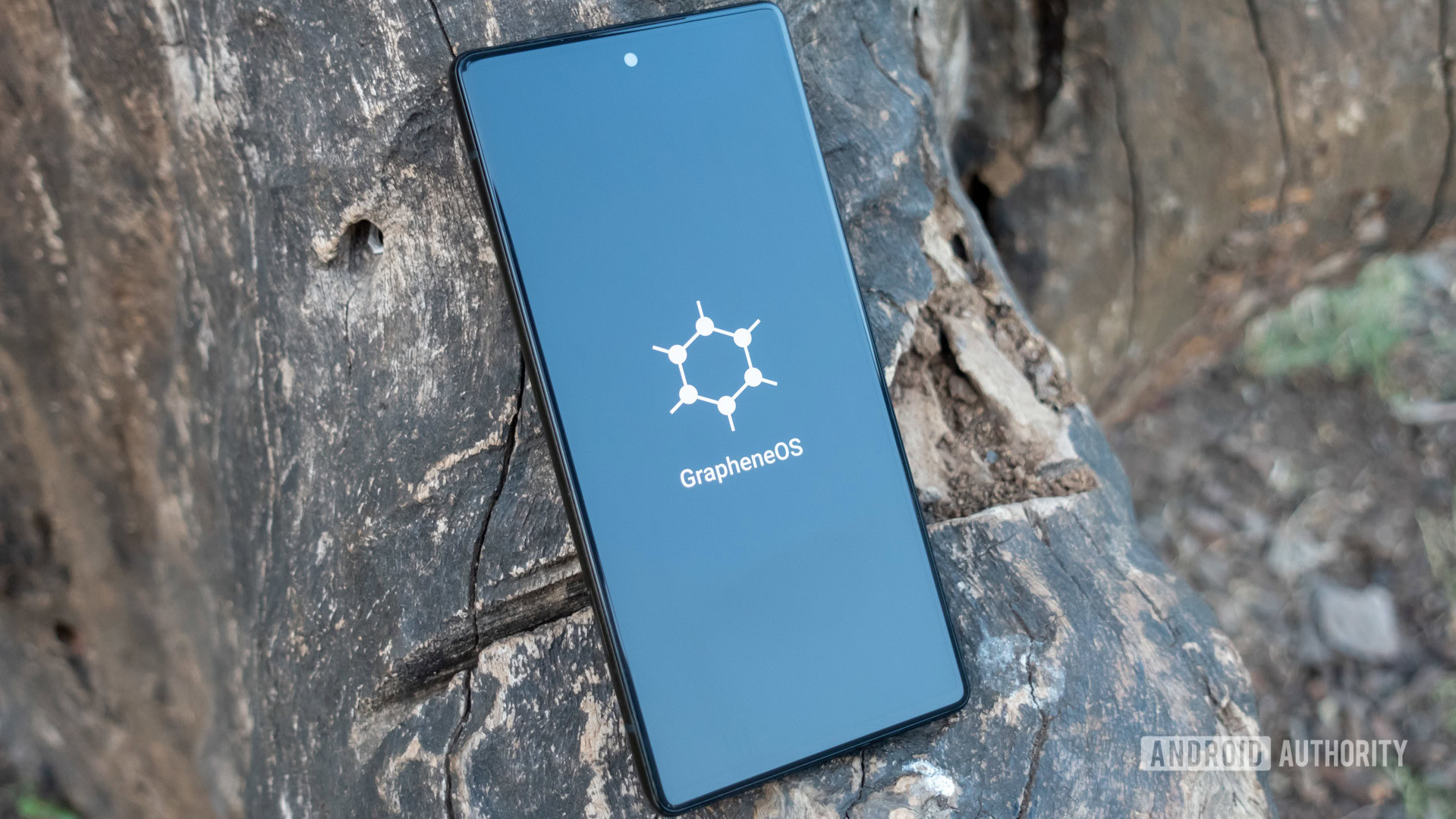
GrapheneOS duress PIN could land a man in prison
A US man is being prosecuted after allegedly using a GrapheneOS duress PIN to wipe his Pixel during a border search.
Android Authority1 min read
Explore
The most-read articles on Virexa, ranked by real reader engagement.
1,000 results • Page 1 of 84
A US man is being prosecuted after allegedly using a GrapheneOS duress PIN to wipe his Pixel during a border search.
To serve the 397B-parameter Qwen 3.5 Mixture-of-Experts (MoE) model on Ironwood TPUs, engineers developed a modular JAX/Pallas optimization stack that achieved up to a 4.7x inference speedup for prefill-heavy workloads. The team bypassed severe hardware sharding constraints by deploying a hybrid Data Parallelism and Expert Parallelism (DP+EP) topology, paired with custom low-level communication fusions like a hierarchical reduce-scatter to optimize cross-device token routing. Finally, by executing hardware-aware custom kernels—such as Batched Ragged Page Attention and a fully-fused Gated DeltaNet (GDN) block—they successfully saturated HBM bandwidth and TensorCore MXUs to push system throughput near its theoretical roofline limits.
Celebrating the first anniversary of the Agent-to-Agent (A2A) protocol, this blog post highlights how the framework enables autonomous AI agents to securely collaborate and hand off tasks without the rigidity of traditional APIs. By delegating complex workflows to specialized peer agents, A2A prevents context pollution, ensures data privacy, and simplifies application design through modularity. To demonstrate this ecosystem in action, the post spotlights FoldRun—an agentic interface for life sciences that orchestrates complex protein structure predictions—alongside diverse A2A use cases spanning commerce, data streaming, DevOps, and telecommunications.
With the launch of FancyOrb's Global Warfare 4 now closer than ever, Rust has shared an incredible cinematic trailer to promote the event.
The Agent Development Kit (ADK) for Go 2.0 has been released, introducing a first-class, graph-based workflow engine to help developers compose complex, multi-agent applications. This update adds built-in primitives for human-in-the-loop (HITL) orchestration, dynamic execution using plain Go code, and automated resilience features like exponential backoff retries. By unifying the execution model, both single-agent applications and intricate graphs now run on the same runtime, simplifying telemetry and state persistence.
This post introduces three architectural patterns designed to integrate Model Context Protocol (MCP) Apps and Agent-to-User Interface (A2UI) to solve the tradeoff between highly custom iframe environments and native, declarative rendering. By combining these approaches, developers can serve native-feeling UIs directly over MCP servers, embed complex and stateful iframe apps securely inside declarative views, or inject generative UI components into legacy systems. Ultimately, these hybrid frameworks empower engineering teams to deliver secure, performant, and brand-consistent agentic user experiences tailored to their specific project constraints.
The Google Cloud Workbench Notebooks extension for VS Code has officially launched, allowing developers to connect their local IDE to scalable, cloud-based Jupyter environments. This integration streamlines the machine learning lifecycle by eliminating context switching and providing direct access to high-performance Google Cloud infrastructure. To support transparency and community-driven innovation, the newly released extension is fully open-sourced and available on GitHub and the VS Code Marketplace.
Google Cloud has partnered with Parallel Web Systems to natively integrate Parallel's search infrastructure as a web grounding provider on the Gemini Enterprise Agent Platform. This integration enables developers to anchor their AI agents in verifiable, real-time web results, significantly improving factual accuracy for complex enterprise workflows. Additionally, the partnership offers expanded architectural flexibility, allowing users to programmatically extract, permanently cache, and process web data alongside other large language models.
To resolve the scaling bottlenecks and runtime errors caused by monolithic system prompts, engineering teams should treat prompts as build artifacts by modularizing instructions into reusable templates. By running these modular "skill files" through a transpiler, developers can enforce static validation, catch missing dependencies at build time, and integrate prompt generation directly into their CI/CD pipelines. This deterministic approach prevents code drift and ultimately establishes a safe framework where agents can propose updates to their own logic via standard pull requests.
Tunix is Google’s new JAX-native post-training library designed to eliminate TPU idling bottlenecks when training multi-turn, tool-using LLM reasoning agents. It maximizes hardware throughput by combining highly concurrent, asynchronous rollouts with a decoupled producer-consumer pipeline, ensuring the trainer is constantly fed even while agents wait on network I/O or environment steps. Additionally, Tunix provides plug-and-play abstractions and continuous macro-level profiling, allowing developers to easily integrate custom open-source environments and optimize complex distributed workflows without massive code rewrites.
AI coding agents are rapidly shifting from reactive assistants that complete tasks when prompted to ...
Building AI agents often leaves developers uncertain if prompt tweaks to fix single errors will accidentally cause widespread regressions in production. To bridge this gap, Google has introduced a new developer skill for coding agents that automates a five-stage evaluation flywheel: preparing data, running inference, grading with adaptive AutoRaters, analyzing failure clusters, and executing targeted optimizations. Running continuously against production traffic or on-demand via synthetic scenarios, this tool allows developers to describe testing goals in plain language while an independent evaluation service safely validates and counts actual performance improvements.
Hacker News
“GPT-5.5's API pricing is reshaping how startups build AI products”