
Synthetic-user startup Simile raises $200M at $2B valuation 5 months after $100M Series A
Add another member to the fast-and-furious AI unicorn club: Simile.
TechCrunch
Funding rounds, founders, and the early-stage companies betting on what comes next.
79 articles found
Add another member to the fast-and-furious AI unicorn club: Simile.

There are fresh signs that fusion power startup Commonwealth Fusion Systems will list in the next two to three years.

Commonwealth Fusion Systems raised $1 billion as the startup moves toward its first commercial fusion power plant.

The Disrupt Stage is where many of the biggest conversations in technology happen, with a legacy that stretches back for more than a decade.

600 points 314 comments on Hacker News · science.org

Andon Labs' latest vending machine simulation shows Opus 5 lied and colluded its way to become the best AI capitalist ever.

With the Light Phone, Kaiwei Tang and Joe Hollier have spent over a decade exploring the value of simplicity in our relationship to technology, partnering along the way with players like Andrew Yang, Kendrick Lamar, and Pete Davidson. Now, with a new flip phone and a growing wave of “attention activists” pushing back against Big Tech, they think the rest of […]
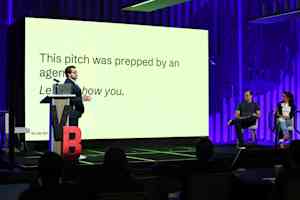
Enterprise AI agents can do the work — but the infrastructure to let them talk to each other, prove they should be trusted , and be audited when something goes wrong is still being built. Here's a look at how five startups are tackling that gap — around orchestration, observability, connectivity, and security — as shown at VB Transform 2026 . BAND is orchestrating all the agents you have running in the background In the very near future, agents will be deployed everywhere, and they will do work on our behalf, noted Vlad Luzin, CTO and co-founder of BAND . As he describes it: They will receive tasks, visit registries, recruit other agents to help them, delegate subtasks to AI peers in a “conversational space,” gather and share results, then return a summary to the human user. BAND is building a coordination infrastructure layer for multi-agent AI systems to make this a reality. Why don’t Telegram, Slack, or Discord solve the problem? These platforms were built for humans, Luzin noted. Agents have to be onboarded manually in numerous steps, and they can’t see each other; “they are still alone in a kind of digital solitary confinement.” Similarly, Claude is stateless, and devs often have multiple sessions open at a time that they toggle between for different tasks — something Luzin said creates real friction. The challenge is connecting remote processes, which Luzin called a distributed systems problem. “The transportation layer needs to be solved first, how the agents communicate in real time,” he said. Conversations can’t happen through IPs and URLs; they need to be bumped to the abstraction layer so agents can talk across channels, conversational spaces, and platforms. “Agents see each other. They understand. They can collaborate together. They discuss issues. They fix issues, and they ask for review from another,” Luzin said. BAND supports autonomous workflows that can run for eight to 20 hours and is compatible with A2A and MCP protocols, according to Luzin. Importantly, humans can join the conversation as agents converse and discover one another, he said. “We can record and show you all the tasks that your agent generates in real time,” Luzin said. Conifers is helping defenders move at machine speed The biggest challenge defenders face today is that they’re still running at human speed, but adversaries are running at machine speed, said Tom Findling, CEO and co-founder of Conifers . Attackers are already adopting agents, Findling said, and they only have to be successful once to penetrate an enterprise. Malicious campaigns that used to take months and weeks now take hours, even minutes. Security operations, on the other hand, are fragmented, manual, inefficient, and slow. Findling said Conifers has taken various components of cyber defense — private intelligence, hunting, detection, engineering, investigation, response — and made them agentic. They then broke down the silos between them, he said. Various agentic systems can communicate with one another to ensure that operational defense and active defense are always on and adapting. Findling said that Conifers’ system is condensing containment time from 7 hours to 12 minutes, and that the company can turn around complex cyber investigations in four minutes or less. He emphasized the importance of connecting to an enterprise’s existing security tools, whether that be endpoint detection and response (EDR), security information and event management (SIEM), posture management, or others. Conifers helps customers understand their security posture, pain points, which controls are working and which are not, and the areas to invest for the best ROI. “The threat landscape is changing, detection stays the same, and threat intelligence is not being operationalized,” Findling said. “This is a job for agents.” Raindrop AI creates an agent audit log One of the defining problems of the current era is finding critical issues in AI agents, says Ben Hylak, CTO of Raindrop AI . It’s what he called a “double whammy”: As agents become more capable, complexity increases, as do timelines; they are running for hours or days in some cases. Secondly, issues become catastrophic in sectors like healthcare or defense. “This problem is getting a lot worse as models and agents improve,” Hylak said, “and I think there's good reason to believe it will continue to get worse.” Raindrop AI's platform finds critical issues in agents in production and simulates fixes based on past user behavior, Hylak said. That lets teams confirm a fix works as intended before it's live, without introducing unexpected side effects. The startup’s reinforcement learning (RL) platform optimizes harnesses and trains models directly from Raindrop data, he said. Its pre-deployment simulation engine helps identify what fixes would actually impact in production; its live A/B testing then shows those changes in action. Messages, tool calls, retries, and errors are captured in one place, and human users are notified (typically via Slack) when there's an issue, he said. Models are trained for every customer, and signals are powering continual learning across models and harnesses. “It is condensed into something that is actually navigable, easy to understand, easy to verify,” Hylak said. Arcade gives agents the security clearance they need to take action AI agents are designed to do all kinds of things for you, but they often hit three major snags: authorization, governance, and reliability. To act on behalf of real users with real permissions, agents need a new type of security architecture, said Sam Partee, co-founder and CTO of Arcade.dev . Partee said his company’s secure agent runtime provides this authentication and authorization layer so agents can pass critical security reviews. It also provides observability so human users can watch everything an agent is doing. Actions are attributable to the exact moment in time with the least amount of privileged scopes. Arcade is available in an installable plugin that can be deployed on-prem in a clean room-like environment; companies can continue to use their own sign-in and security tools, Partee said. Whenever anything is run in Arcade, it's gated by the same role-based access controls (RBACs), intrusion detection and prevention systems (IDPS), policies, entitlements, and other already-established checkpoints. Arcade is tackling the supply chain attack problem, which has “gotten so rampant; it's unbelievable,” Partee noted. Security and observability have continued to be challenging because “largely, the abstraction has been wrong.” Omilia is tackling the "not straightforward" CX problem Solving enterprise customer experience (CX) is “really not straightforward,” said Claudio Rodrigues, CPO of Omilia . Heuristic-based systems are controlled but slow; agentic systems are fast but unpredictable, Rodrigues said. Omilia built its platform to deliver both control and speed together. The agentic, self-learning offering is built on a philosophy of observing customer service operations as they actually happen, rather than in the abstract. Omilia's agents observe problems first-hand, listen to every customer and agent interaction, ingest data, API specs, screen recordings, and standard operating procedures (SOP), then map those to use cases for customer support, he said. Contact centers should be a revenue driver, Rodrigues said, and Omilia’s differentiator is its speech-to-text systems and governance and observability layers. AI creates insights, suggests improvements, automatically generates conversational agents, pulls information from documents and APIs, and designs dialogue flows. Human experts can then test real and simulated interactions and deploy into production under their supervision. Omilia combines all of this into one enterprise-wide engine that continuously learns over time, Rodrigues said. Rodrigues said the company handles more than 3 billion calls a year, 1 million-plus voice calls a day in some deployments, and has seen 30 to 45% improvement in time to resolution (TTR). Omilia’s agents generate 21x more upsell revenue versus human agents, he said. In a mature deployment, automation “easily” reaches 80 to 90%, he said. However, “human in the loop is still very fundamental for us.”
Who's covering this category most
Explore more of what's active right now
 The 2026 Startup Battlefield 200 is here — see who made the cutTechCrunchAugust 20, 2026
 Rillet raises $100M Series C at $1B valuation — 2 years after emerging from stealthTechCrunchAugust 19, 2026
 Meet the startup helping Wall Street put a price on AI computeTechCrunchAugust 19, 2026
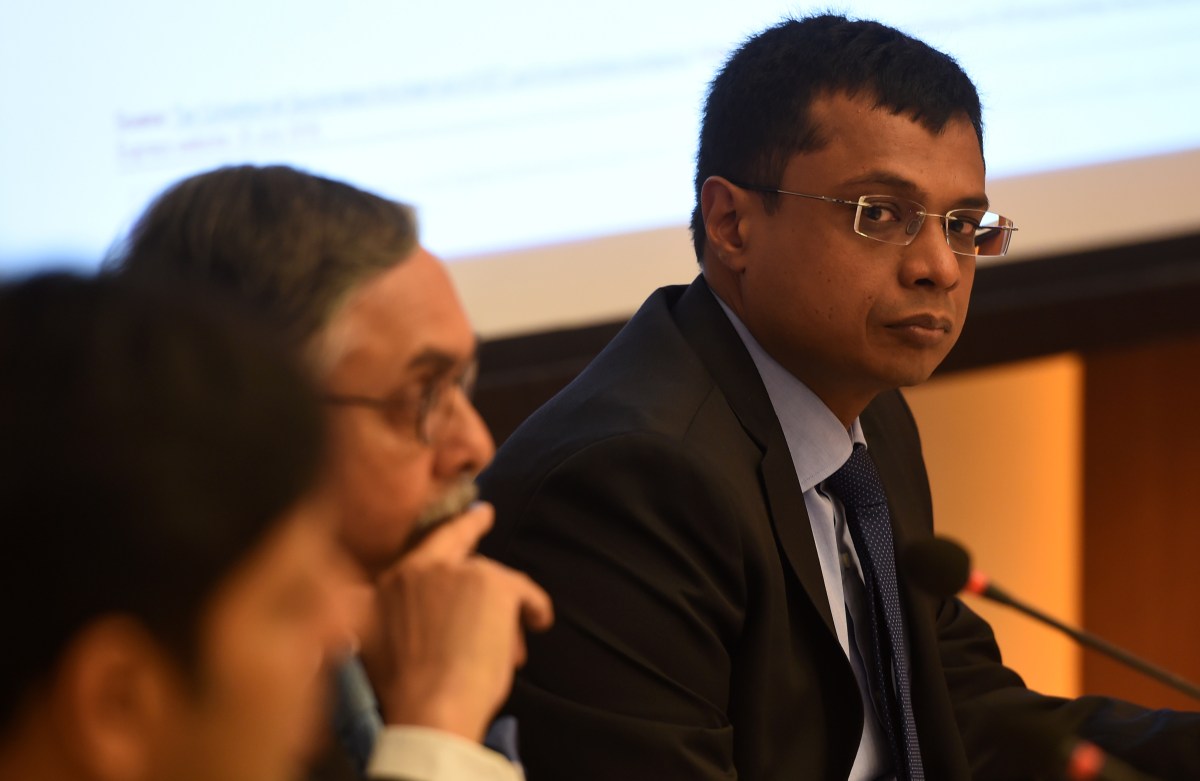 Sachin Bansal’s fintech Navi raises first outside capital with $100M Prosus investmentTechCrunchAugust 19, 2026
 The founder’s secret weapon: Work at TechCrunch Disrupt 2026 and learn how the pros do itTechCrunchAugust 19, 2026