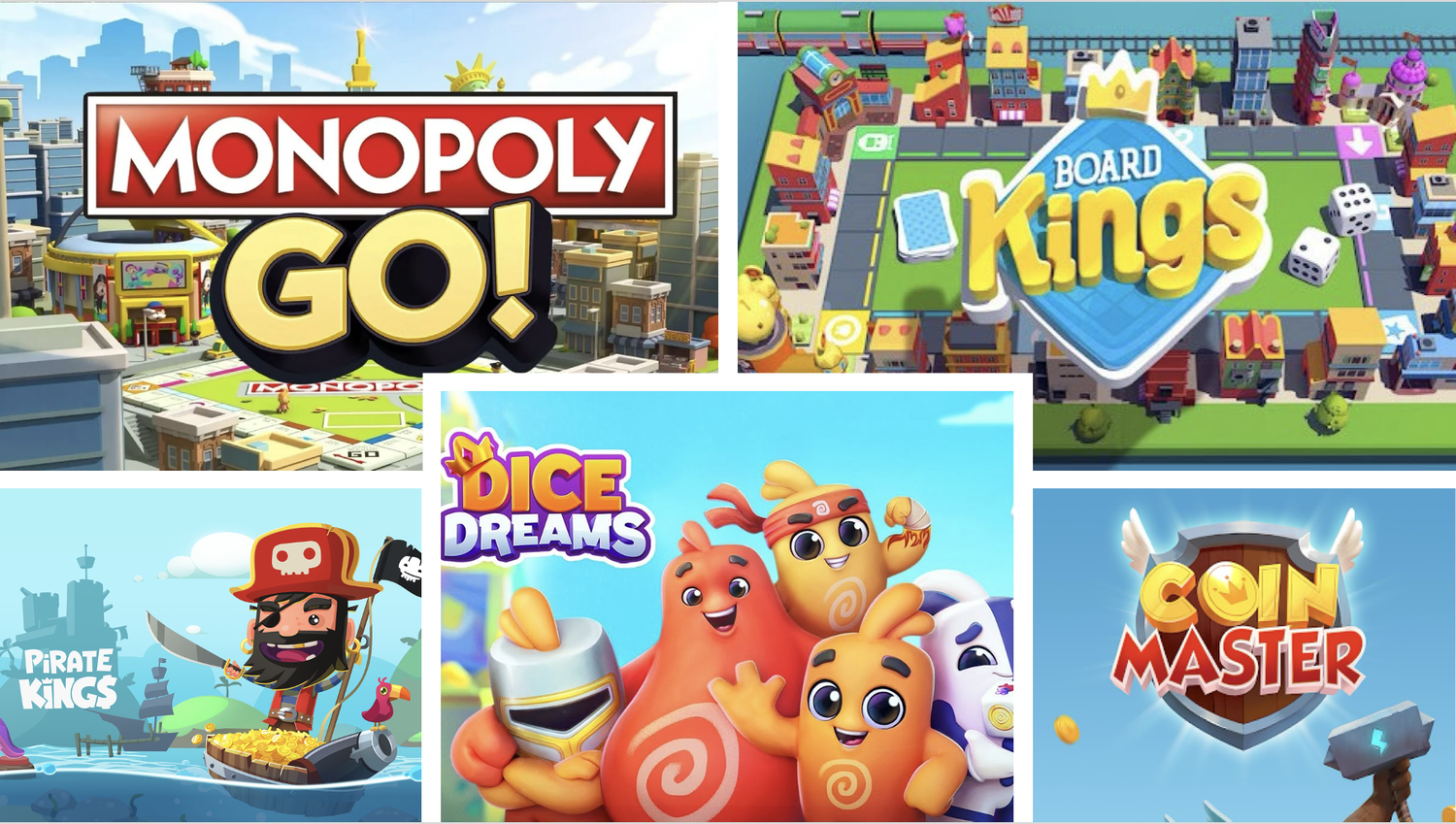
From economy pitfalls to pricing strategy, here are 5 real-world cases showing how asking the right data questions can drive retention, revenue, and growth in games.
Not all celebrity ads are created equal. Let’s dive into the data behind gaming’s biggest celebrity collaborations — from Gordon Ramsay to MrBeast — and see what makes some soar while others stumble.
Posted by Robbie McLachlan, Developer Marketing They saw a problem and built the answer. Meet 20 #WeArePlay founders from across the U.S. who started their entrepreneurial journey with a question like: what if reading was no longer a barrier for anyone? What if an app could connect neighbors to fight local hunger? What if fitness or self-care could feel as engaging as playing a game? These new stories showcase how innovation often starts with finding the answer to a personal problem. Here are just a few of our favorites: Cliff’s app Speechify makes the written word accessible to all Cliff, founder of Speechify Miami, Florida Growing up with dyslexia, Cliff always wished he could enjoy books but found reading them challenging. After moving to the U.S., the then college student turned that personal challenge into a solution for millions. His app, Speechify , empowers people by turning any text—from PDFs to web pages—into audio. By making the written word accessible to all, Cliff’s innovation gives students, professionals, and auditory learners a new kind of independence. Jenny’s game Run Legends turns everyday fitness into a social adventure Jenny, founder of Talofa Games San Francisco, California As a teen, Jenny funded her computer science studies by teaching herself to code and publishing over 100 games. A passionate cross-country runner, she wanted to combine her love for gaming and fitness to make exercise feel more like an adventure. The result is Run Legends , a multiplayer RPG where players battle monsters by moving in real life. Jenny’s on a mission to blend all types of exercise with playful storytelling, turning everyday fitness into a fun, social, and heroic quest. Nino and Stephanie’s app Finch makes self-care a rewarding daily habit Nino and Stephanie, co-founders of Finch Santa Clara, California As engineers, Nino and Stephanie knew the power of technology but found the world of self-care apps overwhelming. Inspired by their own mental health journeys and a gamified app Stephanie built in college, they created Finch . The app introduces a fresh take on the virtual pet: by completing small, positive actions for yourself, like journaling or practicing breathing exercises, you care for your digital companion. With over 10 million downloads, Finch has helped people around the world build healthier habits. With seasonal events every month and growing personalization, the app continues to evolve to make self-care more fun and rewarding. John’s app The HungreeApp connects communities to fight hunger John, founder of The HungreeApp Denver, Colorado John began coding as a nine-year-old in Nigeria, sometimes with just a pen and paper. After moving to the U.S., he was struck by how much food from events was wasted while people nearby went hungry. That spark led him to create The HungreeApp , a platform that connects communities with free, surplus food from businesses and restaurants. John’s ingenuity turns waste into opportunity, creating a more connected and resourceful nation, one meal at a time. Anthony’s game studio Tech Tree Games turns a passion for idle games into cosmic adventures for aspiring tycoons Anthony, founder of Tech Tree Games Austin, Texas While working as a chemical engineer, Anthony dreamed of creating an idle game like the ones he loved to play, leading him to teach himself how to code from scratch. This passion project turned into his studio Tech Tree Games and the hit title Idle Planet Miner , where players grow a space mining empire filled with mystical planets and alluring gems. After releasing a 2.0 update with enhanced visuals for the game, Anthony is back in prototyping mode with new titles in the pipeline. Discover more #WeArePlay stories from the US and stories from across the globe.
The App Store is designed to be a safe and trusted place for all ages, including children. The age rating system for apps and games has been updated in order to provide people with more granular age ratings. We’ve also introduced new age rating questions to help identify sensitive content in your app and added the ability to set a higher rating to reflect your app’s minimum age requirement. Ratings for all apps and games on the App Store have been automatically updated to align with this new system and will be reflected on Apple devices running beta versions of iOS 26, iPadOS 26, macOS Tahoe 26, tvOS 26, visionOS 26, and watchOS 26. The updated age rating system adds 13+, 16+, and 18+ to the existing 4+ and 9+ ratings. Age ratings are assigned to each country or region and may vary based on region-specific suitability standards. We’ve introduced a new set of required questions to the ratings questionnaire for all apps. These new questions cover: In-app controls. Capabilities. Medical or wellness topics. Violent themes in your app or game. Your answers to these questions will help Apple better calculate a rating and help you deliver an age-appropriate experience. If your app has a policy requiring a higher minimum user age than the rating assigned by Apple, you can set a higher age rating after you respond to the age ratings questions. You can view the age rating for each of your apps under the updated system and respond to the new questions for each app in the App Information section in App Store Connect . As a reminder, you must consider how all app features, including AI assistants and chatbot functionality, impact the frequency of sensitive content appearing within your app to make sure it receives the appropriate rating. All apps are subject to the App Review Guidelines , such as the safety guidelines regarding objectionable content or user generated content, and must abide by all applicable local laws and regulations, like the Children’s Online Privacy Protection Act (“COPPA”), and the European Union’s General Data Protection Regulation (“GDPR”). Please provide responses to the updated age rating questions for each of your apps by January 31, 2026, to avoid an interruption when submitting your app updates in App Store Connect. Learn more about age ratings values and definitions Learn how to set your app rating
Beginning April 2026, watchOS apps uploaded to App Store Connect must also include 64-bit support and be built with the watchOS 26 SDK. To enable 64-bit support in your project, we recommend using the default Xcode build setting of “Standard architectures” to build a single binary with 64-bit code. You can test ARM64 compatibility for your apps in the Xcode Simulator, and on Apple Watch Series 9 or 10, or Apple Watch Ultra 2 running watchOS 26 beta. Learn more about the SDKs included in Xcode
Posted by Robbie McLachlan – Developer Marketing In our latest #WeArePlay film, which celebrates the people behind apps and games on Google Play, we meet Bill and Silver - the duo behind Amanotes . Their game company has reached over 3 billion downloads with their mission ‘everyone can music’. Their titles, including the global hit Magic Tiles 3 , turn playing musical instruments into a fun, easy, and interactive experience, with no musical background needed. Discover how Amanotes blends creativity and technology to bring joy and connection to billions of players around the world. What inspired you to create Amanotes? Bill: It all began with a question I’d pursued for over 20 years - how can technology make music even more beautiful? I grew up in a musical family, surrounded by instruments, but I also loved building things with tech. Amanotes became the space where I could bring those two passions together. Silver: Honestly, I wasn’t planning to start a company. I had just finished studying entrepreneurship and was looking to join a startup, not launch one. I dropped a message in an online group saying I wanted to find a team to work with, and Bill reached out. We met for coffee, talked for about an hour, and by the end, we just said, why not give it a shot? That one meeting turned into ten years of building Amanotes. Do you remember the first time you realized your game was more than just a game and that it could change someone’s life? Silver: There’s one moment I’ll never forget. A woman in the U.S. left a review saying she used to be a pianist, but after an accident, she lost use of some of her fingers and couldn’t play anymore. Then she found Magic Tiles. She said the game gave her that feeling of playing again—even without full movement. That’s when it hit me. We weren’t just building a game. We were helping people reconnect with something they thought they’d lost. How has Google Play helped your journey? Silver: Google Play has been a huge part of our story. It was actually the first platform we ever published on. The audience was global from day one, which gave us the reach we needed to grow fast. We made great use of tools such as Firebase for A/B testing. We also relied on the Play Console for analytics and set custom pricing by country. Without Google Play, Amanotes wouldn’t be where it is today. What’s next for Amanotes? Silver: Music will always be the soul of what we do, but now we’re building games with more depth. We want to go beyond just tapping to songs. We're adding stories, challenges, and richer gameplay on top of the music. We’ve got a whole lineup of new games in the works. Each one is a chance to push the boundaries of what music games can be. Discover other inspiring app and game founders featured in #WeArePlay.
Android Developers Blog··2 min read
Zero-Day
↘2K
💬
Top Discussion
HN
Hacker News
“GPT-5.5's API pricing is reshaping how startups build AI products”