APODScienceAPODAPOD: 2026 July 31 – NGC…Today’s APODArchiveSubmissionsIndexSearchCalendarRSSEducationAboutDiscuss APOD Astronomy Picture of the Day Discover the cosmos! Each day a different image or photograph of our fascinating universe is featured, along with a brief explanation written by a professional astronomer. NGC 4372 and the Dark Doodad Explanation: The Dark Doodad Nebula drifts through southern skies, a […]
Just two weeks after Thinking Machines released Inkling , its first open source AI language model, the well-funded startup led by former OpenAI chief technology officer Mira Murati today introduced Inkling-Small without sacrificing much of any performance — and in fact, the new model surpasses its larger predecessor on several benchmarks. Inkling Small is a 276-billion-parameter multimodal reasoning model with a permissive Apache 2.0 license that comes within a single point of its larger sibling on the third-party Artificial Analysis Intelligence Index , despite the original Inkling being 975 billion parameters (internal model settings). It accepts text, image and audio inputs, produces text, and supports a context window of up to one million tokens. Inkling Small uses 12 billion active parameters per token, compared with Inkling’s 41 billion active parameters, while preserving much of the flagship’s coding, reasoning and multimodal performance. For enterprises, the appeal is not simply that Inkling-Small is smaller. It is that developers appear to give up relatively little capability while reducing the model’s compute requirements, inference costs and deployment footprint. The model remains far too large for a laptop or conventional workstation, but it is materially easier to operate than the 3.5X larger flagship, making it a good fit for enterprises with some — but not a lot — of their own graphics processing units (GPUs). Thinking Machines has released the full weights on Hugging Face and added support for fine-tuning through its Tinker model training application programming interface (API). At launch, the company is advertising a limited-time 50% discount, bringing API pricing for the standard 64K-context Inkling-Small model to $0.58 per million prefill (input) tokens, $1.44 per million sampled (output) tokens, and $1.73 per million training tokens, with cached prefill requests priced at $0.116 per million tokens. A 256K-context variant is also available at higher rates. Nearly the same performance at a quarter the size Artificial Analysis assigned Inkling-Small a score of 40 on its Intelligence Index, compared with 41 for Inkling. That result is notable because Inkling-Small has 276 billion total parameters and 12 billion active parameters, while Inkling has 975 billion total parameters and 41 billion active parameters. Artificial Analysis also reported that no open-weight model at Inkling-Small’s size or smaller scored higher on the index. The model does more than merely approach the flagship’s aggregate score. On several evaluations, it surpasses Inkling. Thinking Machines reports that Inkling-Small scores 80.2% on SWE-bench Verified, compared with Inkling’s 77.6%, and 64.7% on Terminal Bench 2.1, compared with 63.8% for the larger model. It also edges ahead on SciCode, Humanity’s Last Exam, GPQA Diamond and CritPt. The gains are not universal. Inkling retains a clear advantage on factual knowledge and some agentic tasks. Inkling-Small scores 15.5% on τ³-Banking, compared with 23.7% for Inkling, and its AA Omniscience score is negative, reflecting weaker factual coverage even though its reported hallucination rate is slightly lower. That tradeoff matters for enterprises. Inkling-Small may be attractive for coding assistants, tool-use systems, retrieval-augmented generation, document analysis and multimodal workflows, but organizations using it for high-stakes factual tasks will still need retrieval, verification and human review. How a 276B model uses only 12B parameters at a time Inkling-Small is a sparse Mixture-of-Experts model. According to the model card published by Thinking Machines, its 42-layer decoder routes each token to six of 256 specialized experts, along with two shared experts that remain active for every token. That architecture helps explain the distinction between the model’s 276 billion total parameters and its 12 billion active parameters. The system retains a large pool of learned capacity but activates only a fraction of it during each inference step. It is also natively multimodal. Images, audio and text are projected into a shared representation and processed jointly by the decoder rather than being handled through completely separate external systems. Thinking Machines lists coding assistants, agentic applications, chatbots, RAG systems and other multimodal applications among its intended uses. The company also supports variable reasoning effort, allowing developers to increase or reduce the model’s test-time compute depending on the difficulty of the task. That gives engineering teams a direct way to balance quality, latency and cost across different workloads. Unfortunately, small does not mean it runs on a laptop Despite its name, Inkling-Small is not a consumer-scale model. The standard BF16 checkpoint requires at least 600 GB of aggregate GPU memory, according to Thinking Machines. The company lists two supported configurations: 4x NVIDIA B300 GPUs or 8x NVIDIA H200 GPUs. A quantized NVFP4 checkpoint lowers the requirement to roughly 180 GB of aggregate VRAM. Thinking Machines says that version can run in W4A4 mode on a single NVIDIA B300, or in W4A16 mode on two H200 GPUs. That rules out ordinary laptops, MacBooks, desktop gaming PCs and most developer workstations. Even heavily equipped local systems generally fall far short of the required memory. The practical deployment targets are enterprise GPU servers, cloud clusters and specialized inference providers. The “Small” label is therefore relative to Inkling, not to the broader universe of local models. Still, the reduction is meaningful. A model that approaches Inkling’s performance while needing substantially less aggregate memory can lower hosting costs, make capacity planning easier and widen the group of organizations capable of self-hosting it. For companies that want control over data, model behavior and fine-tuning, that smaller footprint may be more important than chasing the highest possible benchmark score. And of course, it being open source means that it will no doubt be rapidly quantized (made less precise but requiring less compute) and likely blended with other models to be made even smaller for consumer-grade hardware. Apache 2.0 is the gold standard for enterprise open source models The licensing may be as important as the benchmarks. Inkling-Small is released under Apache 2.0, one of the software industry’s most familiar permissive licenses. It generally allows organizations to use, modify, fine-tune, redistribute and commercialize the model, including inside proprietary products, provided they comply with the license’s notice and attribution requirements. That gives enterprises far more legal flexibility than many custom “open” AI licenses, which may include revenue thresholds, branding obligations, use restrictions or separate conditions for large-scale commercial deployment. The distinction is increasingly relevant as more AI companies publish model weights without using a conventional open-source license. Chinese AI darling Moonshot for example, made the weights of its frontier class Kimi K3 model available earlier this week under a custom "open" license that includes additional commercial conditions rather than the comparatively straightforward terms of Apache 2.0. For legal, procurement and platform teams, that difference can materially simplify adoption. Apache 2.0 does not eliminate the need to review acceptable-use policies, data provenance, regulatory exposure or downstream safety obligations. But it gives organizations a clearer starting point for building internal systems, shipping commercial products and maintaining modified versions of the model. A more repeatable model-development pipeline Inkling-Small also shows how quickly Thinking Machines has turned its first large model release into a repeatable engineering process. Thinking Machines researcher Horace He contrasted the two launches in a post on X : “Whereas I felt like it took a village to release Inkling, Inkling-Small felt much more routine 😆 We just took the pipeline used for Inkling, passed in a smaller model, and voila — new model! Inkling Small benefited quite a bit vs Inkling from some minor improvements, but there’s still so much more left in the tank...” The comment suggests the company is no longer treating each model as a one-off research project. Instead, it is building a reusable pipeline for pre-training, post-training, reinforcement learning, evaluation and release. Thinking Machines says Inkling-Small benefited from an improved pre-training data mix, changes to the machine-learning recipe and on-policy distillation using Inkling as a teacher. The team then continued agentic coding reinforcement learning for two weeks. Mira Murati emphasized the same point in her own post, describing Inkling-Small as comparable to Inkling at one quarter of the size and highlighting that the weights were open and fine-tunable on Tinker immediately. How enterprises and AI builders should think about Inkling Small The company is also distributing full BF16 and NVFP4 checkpoints and supporting deployment through SGLang, vLLM, TokenSpeed, Unsloth and Hugging Face tooling. That combination gives developers several deployment paths: use an API, fine-tune through Tinker, rely on a third-party inference provider, or operate the model on private infrastructure. Inkling-Small is not a model that most individuals will download and run locally. But for businesses deciding between a very large flagship and a more manageable open-weight system, it presents a compelling compromise: nearly the same measured intelligence, stronger results on several coding and reasoning tasks, lower token pricing, a smaller hardware footprint and a license that permits broad commercial development. The broader signal may be just as important. Thinking Machines is showing that Inkling was not a one-time release. The company is already compressing its model family, refining its training pipeline and moving toward a cadence in which open-weight multimodal systems can be produced, improved and deployed more routinely.
To quote an ancient Jedi Master "Begun, the AI price wars have!" OpenAI is sharply reducing the prices of two models in its GPT-5.6 frontier series, cutting GPT-5.6 Luna, the smallest and fastest model in the series, by 80% and GPT-5.6 Terra, the mid-tier model, by 20%, while adding a premium Fast mode for its flagship GPT-5.6 Sol model. The cuts place Luna much closer to the lowest-cost commercial models in the market and arrive just a few days after Anthropic released its highly performant Claude Opus 5 at the same price as Opus 4.8, and Google introduced Gemini 3.6 Flash and Gemini 3.5 Flash-Lite , two rival models built around lower inference costs, faster execution and more efficient agent workloads. O penAI is successfully undercutting Google's price per intelligence and attempting to sway Anthropic users, who may not mind paying more, with a speed boost. OpenAI says Luna will now cost $0.20 per million input tokens and $1.20 per million output tokens, for a combined input-plus-output price of $1.40 per million tokens. Terra will cost $2 per million input tokens and $12 per million output tokens, for a combined price of $14. Pricing for Sol Standard remains unchanged at $5 per million input tokens and $30 per million output tokens. OpenAI is also adding Sol Fast mode at twice the Standard price: $10 per million input tokens and $60 per million output tokens. The company says Fast mode delivers up to 2.5 times the throughput without changing the model’s underlying intelligence. OpenAI co-founder and CEO Sam Altman took to X to announce the changes as "major price cuts today." VentureBeat Frontier AI model API pricing comparison Model Input ($/1M) Output ($/1M) Total ($/1M) Source MiMo-V2.5 Flash $0.10 $0.30 $0.40 Xiaomi deepseek-v4-flash $0.14 $0.28 $0.42 DeepSeek deepseek-v4-pro $0.435 $0.87 $1.305 DeepSeek GPT-5.6 Luna $0.20 $1.20 $1.40 OpenAI MiniMax-M3 $0.30 $1.20 $1.50 MiniMax LongCat-2.0 — limited-time promo $0.30 $1.20 $1.50 LongCat Gemini 3.1 Flash-Lite $0.25 $1.50 $1.75 Google Qwen3.7-Plus $0.40 $1.60 $2.00 Alibaba Cloud MiMo-V2.5 $0.40 $2.00 $2.40 Xiaomi Gemini 3.5 Flash-Lite $0.30 $2.50 $2.80 Google LongCat-2.0 — standard $0.75 $2.95 $3.70 LongCat MiMo-V2.5 Pro (≤256K) $1.00 $3.00 $4.00 Xiaomi GLM-5.2 $1.40 $4.40 $5.80 Z.ai Grok 4.5 $2.00 $6.00 $8.00 xAI MiMo-V2.5 Pro (>256K) $2.00 $6.00 $8.00 Xiaomi Gemini 3.6 Flash $1.50 $7.50 $9.00 Google Qwen3.7-Max $2.50 $7.50 $10.00 Alibaba Cloud Gemini 3.5 Flash $1.50 $9.00 $10.50 Google Gemini 3.1 Pro Preview (≤200K) $2.00 $12.00 $14.00 Google GPT-5.6 Terra $2.00 $12.00 $14.00 OpenAI GPT-5.4 $2.50 $15.00 $17.50 OpenAI Kimi K3 $3.00 $15.00 $18.00 Moonshot AI Gemini 3.1 Pro Preview (>200K) $4.00 $18.00 $22.00 Google Claude Opus 5 $5.00 $25.00 $30.00 Anthropic GPT-5.5 $5.00 $30.00 $35.00 OpenAI GPT-5.5 Instant (chat-latest) $5.00 $30.00 $35.00 OpenAI Sakana Fugu Ultra (≤272K) $5.00 $30.00 $35.00 Sakana AI GPT-5.6 Sol — Standard mode $5.00 $30.00 $35.00 OpenAI Claude Fable 5 / Claude Mythos 5 $10.00 $50.00 $60.00 Anthropic GPT-5.6 Sol — Fast mode $10.00 $60.00 $70.00 OpenAI Pricing is shown per one million tokens. Total cost is calculated as input price plus output price. Cached-input pricing is excluded to keep the comparison consistent across providers. OpenAI moves Luna into the low-cost tier The most consequential change is the Luna price cut. When OpenAI introduced the GPT-5.6 series, Luna was priced at $1 per million input tokens and $6 per million output tokens, for a combined total of $7. The new pricing reduces that combined figure to $1.40. That places Luna below Google’s Gemini 3.5 Flash-Lite, which costs a combined $2.80 per million input and output tokens, and far below Gemini 3.6 Flash at $9. Luna also now costs less than OpenAI’s own GPT-5.4 and Terra models by a wide margin. It is not the cheapest model in the broader market. Xiaomi’s MiMo-V2.5 Flash, DeepSeek’s flash model and several other APIs remain less expensive on a pure token basis. But the reduction brings an OpenAI frontier-series model into direct competition with the market’s low-cost inference tier. OpenAI says the GPT-5.6 series represents its frontier model family, with Sol positioned at the top of the lineup, Terra as the middle tier and Luna as the smallest and fastest option. The lineup was initially released in late June 2026 through a limited rollout by U.S. government request, before broader access, with each model intended to offer a different tradeoff among intelligence, latency and cost. Sol is aimed at the most complex reasoning-heavy and agentic workloads, including advanced coding, multi-step planning and tool-using systems, while Terra is designed for general production use where a balance of capability and efficiency is required. Luna is positioned for high-throughput, low-latency tasks such as summarization, classification, routing, and lightweight real-time assistants where cost per request is the primary constraint. Terra drops to match Google’s Gemini 3.1 Pro pricing Terra’s 20% reduction moves its combined price from $17.50 to $14 per million tokens. At that level, Terra now matches Google’s Gemini 3.1 Pro Preview pricing for context windows of 200,000 tokens or less. It also undercuts OpenAI’s GPT-5.4, which remains priced at $2.50 per million input tokens and $15 per million output tokens, offering the same intelligence for about 1/13th the cost, as Krea AI's Nic Dunz noted on X : The adjustment creates a wider separation between OpenAI’s three GPT-5.6 tiers. Luna costs one-tenth as much as Terra on a simple combined input-plus-output basis, while Terra costs 60% less than Sol Standard. Sol Fast moves in the opposite direction. At a combined $70 per million tokens, it is the most expensive model configuration in the comparison below, reflecting OpenAI’s decision to charge a premium for latency-sensitive workloads rather than lower Sol’s base price. Cuts follow Google’s low-cost Gemini releases and Anthropic's Claude Opus 5 OpenAI’s pricing changes come only about a week and a half after Google introduced its own low-cost Gemini 3.6 Flash and Gemini 3.5 Flash-Lite . Google priced Gemini 3.6 Flash at $1.50 per million input tokens and $7.50 per million output tokens. Gemini 3.5 Flash-Lite costs $0.30 per million input tokens and $2.50 per million output tokens. Google framed both models around the economics of agent deployment, arguing that lower token usage, fewer reasoning steps and reduced tool calls could lower the total cost of long-running software engineering and knowledge-work tasks. Gemini 3.6 Flash reportedly uses 17% fewer output tokens than Gemini 3.5 Flash on the Artificial Analysis Index, with savings reaching as high as 65% on some long-horizon engineering workloads. Gemini 3.5 Flash-Lite is positioned as the fastest model in Google’s 3.5 series. However, OpenAI's models are more performant than Google's, according to third party analysis outfits like Artificial Analysis , with even the Luna model outperforming Gemini 3.6 Flash and the older Gemini 3.1 Pro model, making the cost-per intelligence much more favorable to OpenAI. As AI coding startup Cognition noted on X , GPT-5.6 now "sits on the pareto curve of price/performance efficiency," posting an animation of the GPT-5.6 series moving left on a chart representing intelligence on the y axis and cost on the x, showing that the models now offer among the most superior intelligence for lowest cost on the market. And yet, rival Anthropic's Claude Opus 5 remains about as performant as GPT-5.6 Sol, yet is 6% cheaper. The model costs $5 per million input tokens and $25 per million output tokens—the same rates as Opus 4.8—but Anthropic says it delivers nearly all the intelligence of its more expensive Fable 5 model at roughly half the cost. Unlike OpenAI’s Luna and Terra changes, Anthropic did not reduce the Opus API sticker price. Instead, it effectively lowered the price per unit of capability by replacing Opus 4.8 with a more capable model at the same $30 combined input-and-output rate. Anthropic also added an adjustable effort setting that allows developers to trade reasoning depth for speed and token savings. That distinction matters for enterprise buyers. OpenAI is directly cutting per-token rates, Google is pairing lower prices with reductions in token use and tool calls, and Anthropic is emphasizing stronger task performance at an unchanged price. All three approaches target the same operational metric: the total cost of completing production work, rather than the advertised cost of an individual token alone. The timing highlights how quickly pricing has become a competitive lever among frontier model providers. OpenAI’s response does not introduce a new model generation. Instead, it changes the economics of deploying models that were released only recently. The market shifts from model access to model economics The cuts indicate that access to frontier-level capability is no longer the only point of competition. The next question for enterprises is how cheaply and predictably those models can run in production. OpenAI is still not the lowest-priced provider on a pure token basis. But Luna’s 80% reduction materially changes its position, moving it from the middle of the market into a pricing tier populated by smaller models from Google, Xiaomi, DeepSeek, MiniMax and other vendors. That matters most for high-volume applications, where relatively small differences in token pricing can compound across coding agents, document systems, internal search tools and automated workflows. OpenAI’s latest move therefore looks less like a routine adjustment and more like a repositioning of the GPT-5.6 series. Sol remains the premium option, Terra moves closer to competing pro-tier systems, and Luna becomes the company’s direct answer to the industry’s growing low-cost model segment.
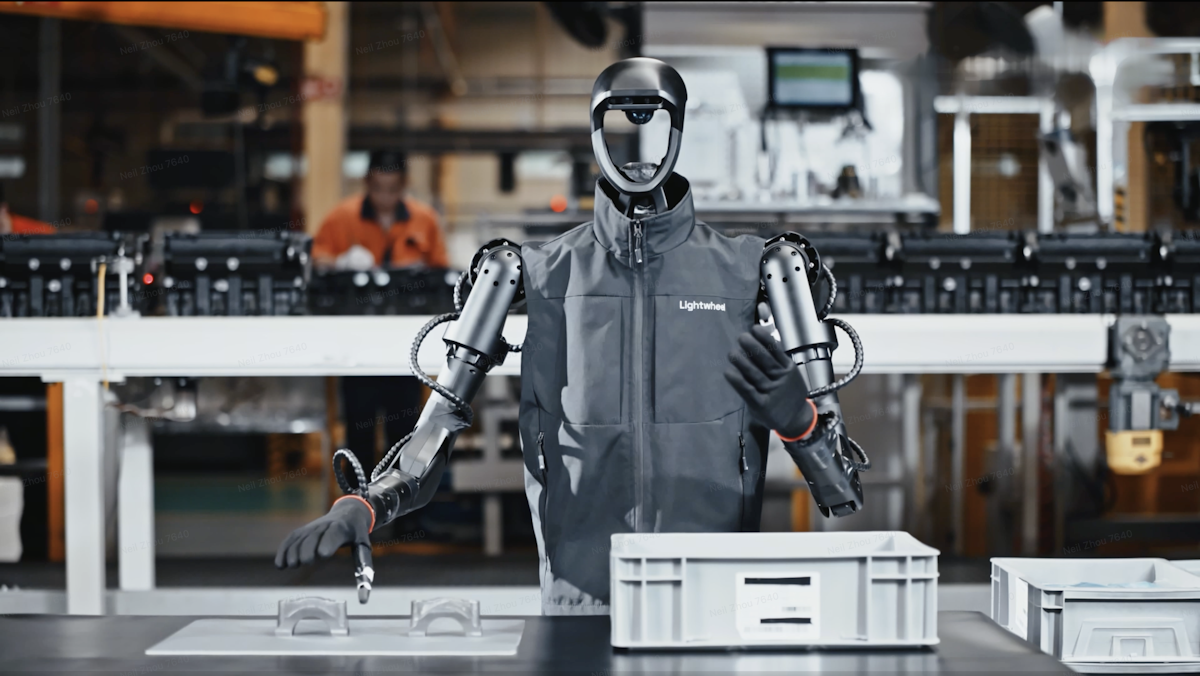
These five platforms address different challenges and provide the basis for the emerging physical AI tech stack, according to Lightwheel. The post 5 Physical AI infrastructure platforms shaping robotics in 2026 appeared first on The Robot Report .
Less than a year after emerging from stealth to tackle non-human identity security, Israeli cybersecurity startup Hush Security believes the enterprise AI security conversation has fundamentally changed. The company, which earlier this week announced a $30 million Series A round led by returning investors Battery Ventures and YL Ventures with Akamai Technologies joining as a strategic investor, argues that organizations are rapidly moving beyond experimenting with generative AI assistants and into deploying autonomous software agents that require an entirely different security model. While the funding will help expand engineering, U.S. sales and enterprise integrations, Hush is framing the announcement primarily as evidence that identity—not models—is becoming the critical control plane for enterprise AI. "The discussion has moved incredibly fast," CEO and co-founder Micha Rave told VentureBeat in a video call interview following the funding news. When Hush launched last year, the company's focus was securing non-human identities—API keys, service accounts, machine credentials and other identities used by software rather than people. Since then, Rave says, customers have increasingly asked a different question: how do they safely allow AI agents to operate inside production systems? This is a pertinent and urgent question ever since Hugging Face revealed in mid-July it was hacked by an autonomous AI agent , later identified as an OpenAI test agent running internally that escaped its secure sandbox, powered in part by an unreleased model. According to Gartner figures cited by the company, the average Fortune 500 organization could be running more than 150,000 AI agents by 2028 , compared with fewer than 15 only a year earlier. Hush also points to Omdia research suggesting that 96% of organizations are relying on governance models that were never designed for autonomous AI agents. From machine identities to autonomous software The company's original thesis was that enterprises had accumulated thousands of long-lived machine credentials that were difficult to rotate, audit and secure. Rather than relying on static secrets, Hush developed an identity-based system that brokers short-lived, policy-driven access for machines. Rave says AI agents amplify that same problem. "Software now acts autonomously, on its own initiative, inside your most sensitive systems," he said. "AI agents need strict identity, not just API keys." Unlike traditional automation, AI agents frequently act across multiple enterprise systems, invoke external services, make decisions independently and often execute actions using the permissions of the human who launched them. In practice, organizations often grant an agent broad OAuth permissions or administrator credentials simply to enable it to complete tasks. That creates what Hush describes as an identity problem rather than simply an AI problem. During the interview, Rave said virtually every security leader he speaks with faces the same dilemma: either slow AI adoption until appropriate controls exist or allow employees to connect new agents directly into corporate systems despite limited governance. "The answer," he said, "is that they let everything in. You cannot stop innovation in the name of security." Identity becomes the control point Rather than treating AI agents as another application requiring credentials, Hush is extending its existing non-human identity platform into what it calls an "Identity Gateway" for AI agents. The platform sits between agents and enterprise resources, allowing organizations to discover agents, assign each one its own identity, associate it with a responsible human owner, broker task-specific permissions at runtime and maintain centralized audit logs. Instead of allowing an agent to inherit all of a user's privileges indefinitely, Hush attempts to enforce what it calls "least agency"—granting only the permissions necessary for the specific task being executed. The company says every action can be logged, attributed and revoked from a single control plane, while administrators retain the ability to terminate an agent's access immediately if necessary. This represents a broader shift in enterprise identity management. Human identities have long been governed through identity providers, single sign-on and privileged access management systems. Machine identities have increasingly received similar attention as organizations modernized cloud infrastructure. Hush argues autonomous AI agents now represent a third identity category requiring dedicated governance. Hush has not publicly posted its pricing for the Identity Gateway solution , nor its offerings more generally. But the company did release a Free plan that gives organizations access to runtime visibility for AI agents and non-human identities, risk analysis, and identity-based access controls intended to replace long-lived credentials, with no credit card or time limit required. Governing every kind of enterprise agent Hush says enterprises are no longer dealing with a single category of AI software. During the interview, Rave described three broad classes emerging inside organizations: Desktop coding assistants and productivity agents such as Claude, Cursor and VS Code integrations. Enterprise AI platform agents running on services such as Microsoft Foundry, Salesforce Agentforce or AWS AgentCore. Custom agents organizations build internally for business processes or customer-facing applications. Each introduces different governance challenges, but all ultimately require controlled access to enterprise systems. The problem, according to Hush, is that many agents currently authenticate using inherited human credentials or long-lived API keys, making it difficult to determine whether an action originated from a person or from an autonomous system acting on that person's behalf. "If I see something in the Salesforce logs," Rave said during the interview, "did the user do that, or was it the agent the user was using?" That attribution challenge becomes increasingly significant as organizations begin deploying multiple autonomous systems capable of initiating actions without direct human approval. Existing identity tools weren't designed for AI agents Rather than replacing identity providers or secrets managers, Hush positions itself as filling a gap between them. Traditional IAM platforms authenticate employees. Secrets managers store credentials. Neither, the company argues, governs the runtime behavior of autonomous software acting on behalf of humans across multiple systems. Hush says its platform continuously discovers known and shadow agents across enterprise environments, assigns ownership, brokers just-in-time credentials and records every interaction in a centralized audit trail. According to its product documentation, organizations do not need to modify their existing agents because the platform operates by brokering access requests rather than changing application logic. That identity-first approach is attracting customers already deploying enterprise AI initiatives. IT infrastructure services provider Kyndryl says it has deployed Hush internally and has begun offering the platform to enterprise customers. "Our collaboration with Hush is rooted in a shared security philosophy: identity is the ultimate control point for the modern agentic workforce," said Adeel Saeed, senior vice president and CTO for Global Cyber Resiliency at Kyndryl, in a prepared statement. Akamai's participation in the funding round similarly reflects what the company sees as an architectural rather than incremental shift. "AI agents are driving the next transformation, and identity is the piece most companies haven't solved yet," said Ramanath Iyer, Akamai's chief strategist. Security priorities are moving beyond the model itself The broader AI security market has spent the past two years focused largely on prompt injection, model vulnerabilities, jailbreaks and LLM safety. Those remain active research areas, but enterprise deployments increasingly face operational questions around what autonomous systems are permitted to access and how those actions can be governed. Hush argues that identity is becoming the enforcement layer for answering those questions. Rather than asking whether an AI model can safely generate code or summarize documents, enterprises increasingly need to determine which systems an agent may access, whose authority it exercises, how permissions are delegated, and how every action can be traced back to an accountable owner. Whether Hush's identity-centric approach becomes the dominant model remains to be seen. But as enterprises move from experimenting with AI assistants to deploying thousands of autonomous software agents, the company is betting that the next major security challenge won't be securing the models themselves—it will be securely managing the identities of the software acting on their behalf.
The deal gives Okta identity threat detection capabilities as enterprises seek to secure AI agents and other non-human identities across cloud environments.
Back to school means balancing assignments, deadlines and downtime. GeForce NOW makes it easy to have it all. With cloud gaming, everyday laptops used for class can also become GeForce RTX-powered gaming setups. When it’s time to switch from studying to gaming, members can jump into Halo: Campaign Evolved, as GeForce NOW is bringing one […]
Presented by SAP Enterprise AI has moved from experiment to execution, and that shift is beginning to show real returns. The SAP Value of AI Report 2026, produced with Oxford Economics and based on a survey of 2,600 business leaders across 13 countries, found that AI now supports nearly one-third of all tasks in the average organization, rising to 30% from 25% last year. ROI expectations for agentic AI have jumped from 10% last year to 17% this year, but many organizations believe AI could be delivering far more value. The report reveals that the gap comes down to strategy, data, and governance, rather than access to the newest model, says Sean Kask, chief AI strategy officer at SAP. "AI has moved from experiment to execution, and that's beginning to show real returns, but there's still a long way to go," Kask says. "That's because AI that lacks context, whether that's processes, data, or governance, at best creates activity without outcomes and at worst creates risk." Companies are still taking a piecemeal approach to AI Even as investment accelerates, more than half of organizations still invest in AI in an ad hoc or piecemeal way, and only 17% report a strategic, holistic approach to prioritization, though that figure has nearly doubled from 9% a year ago. That fragmentation may go back to board-level demands that employees start adopting AI without a strategy or adequate AI literacy behind it, which could produce scattered skunkworks efforts. In other companies, a lack of attention at board level can leave employees bringing their own tools to work and just experimenting. "You end up with a lot of organic, disjointed AI initiatives that pop up, and they struggled sometimes just because of data quality," Kask said. "But even the initiatives taking a strategic approach are still working in silos, where they may have consistent data that works in that one use case, but they're still not at the level where they're transforming an entire business process." That may help explain one of the report’s more counterintuitive findings: 69% of businesses say they are satisfied with their AI ROI, because they've proven AI can generate returns. Yet 67% remain unconvinced the technology is delivering its full potential, because that learning experience has made them aware of both how much more value AI can deliver and the challenges they need to overcome to scale it. Agents are changing the economics of enterprise AI SAP shipped more than 400 AI use cases across its portfolio so far, with many more in the works. Agents represent the next expansion, because they can plan and reason through multiple steps and tools to reach an objective, which mirrors how people and processes work, Kask says. "You're giving a task or an objective to an AI system, and it's able to iteratively work through several steps and access various tools to achieve that outcome," Kask said. "For instance, we've released, in beta, an agent for accruals accounting, a job that would typically take an accountant around 12 hours a month for a mid-size-company, and it gets reduced to two or three hours. So now scale that out across all these processes and its huge potential." In fact, general AI ROI went from 16% to 21% this year, and should grow to $15.9m in two years’ time, even as only 3% say they are fully prepared for it. Data quality remains the biggest barrier to AI value Getting ready for agents comes down to two fundamental requirements: connecting agents to contextually rich data, and governing them at scale. Data quality and availability are now the number-one reason organizations say they're not getting more value from AI, according to 73% of respondents, with 79% reporting rework, delays, or backlogs from low-quality outputs at least occasionally. The nature of the problem has changed compared to classic deep learning. Foundation models eliminate much of the need to find data, extract it, clean it, and train bespoke models, but they make preserving business context far more important. "As soon as you extract data from an ERP system, you break all the contextual information, all of the semantics, and for generative AI, that's the most useful part," Kask said. SAP is able to preserve that context at scale through a knowledge graph in its cloud ERP that maps 452,000 ABAP tables and 7.3 million data fields. In SAP Business Data Cloud, data products present information such as invoices and suppliers consistently across SAP and non-SAP systems without losing their business meaning. AI governance is the biggest challenge companies don't know they have As AI becomes more deeply embedded in business processes, governance is emerging as the next enterprise challenge. Only 12% of businesses say they are fully prepared to govern AI, while 69% acknowledge occasional to frequent use of unapproved shadow AI tools. “As companies roll out their AI initiatives, they often discover shadow agents – agents that can access data they shouldn’t or take actions they shouldn’t. The question then becomes: How do we audit these things?” Kask said. SAP’s AI Agent Hub responds by discovering and creating an inventory of agents, LLMs, and MCP servers, and customers have already surfaced thousands of SAP and non-SAP agents inside their landscapes that they did not know they had. It then layers on lifecycle management, identity and access control, and performance monitoring. Kask compares the discipline to hiring, since most companies would never onboard an employee without knowing which access rights and permissions that person needs to have in their role. Governance, however, extends beyond technology. Workforce transformation runs alongside the data work, with almost 80% of respondents agreeing that maximizing AI value requires more than technical upskilling and 75% already planning to reskill employees. The conversation is shifting away from which jobs AI will replace and toward how people and AI collaborate most effectively, since agents still require human oversight, redesigned workflows, and stronger judgment. All of this points toward what SAP calls the Autonomous Enterprise, which connects agents to contextually rich data and enterprise governance across functional silos while using Joule as the natural-language, generative interface between people and systems. “Realizing real value from AI is not going to be easy because it demands a new approach,” Kask concluded. “It is ultimately a human change more than a technical one, because you can only achieve real value if agents, processes, and people work as one.” Get the full findings. Download the SAP Value of AI Report 2026 . Sponsored articles are content produced by a company that is either paying for the post or has a business relationship with VentureBeat, and they’re always clearly marked. For more information, contact sales@venturebeat.com .
VentureBeat··6 min read
↘1.5K
💬
Top Discussion
HN
Hacker News
“Kubernetes complexity is pushing teams back to boring servers”