APODScienceAPODAPOD: 2026 August 20 – The…Today’s APODArchiveSubmissionsIndexSearchCalendarRSSEducationAboutDiscuss APOD Astronomy Picture of the Day Discover the cosmos! Each day a different image or photograph of our fascinating universe is featured, along with a brief explanation written by a professional astronomer. The Elephant’s Trunk in Cepheus Explanation: Like an illustration in a galactic Just So Story, the […]
Another day, another new AI agent harness is released. Only this time, it's one that aims to solve a growing enterprise problem as AI agents proliferate: enabling greater developer control of agents and tools, while reducing cost. TrueFoundry , a San Francisco B2B machine learning startup co-founded in 2021 by former Meta engineers, has released its own custom TrueForge harness under the permissive MIT License on Github . Thus, it can be used with any of a developer (or their parent enterprise's) preferred AI models, forked, modified, self-hosted and incorporated into commercial products. The company states in a blog post that when it used TrueForge paired with the open source GLM-5.2 LLM to successfully complete 11 of 14 tasks on DevRev’s Enterprise-Bench — testing multi-step tool use across CRM, issue tracking, and document management systems — it cost 75% less than achieving the same results with Anthropic's Claude Managed Agents harness powered by Claude Opus 4.8 ($2.90 compared to $11.80). Using the same model in each harness, Opus 4.8, TrueFoundry still claims a cost savings of roughly 30% using TrueForge compared to Claude Managed Agents ($8.50 vs $11.80). Why is TrueFoundry giving this powerfully efficient harness away for free? "We’ve had this ask from a bunch of customers," said Anuraag Gutgutia, TrueFoundry’s co-founder and COO, in an exclusive interview with VentureBeat. "You have an ability where you bring in agents and MCPs — can we also get something where you can actually launch these managed agents? I think that is the need we are satisfying. It is not a replacement. People will use this alongside other harnesses, like the cloud-managed ones or the commercial-provider-managed ones, but this will serve as a way for people to use them in a vendor-neutral way and also at a lower cost.” Indeed, TrueFoundry already offers a paid " AI Gateway " for enterprises centrally controlling model and MCP access, credentials, permissions, budgets and observability. TrueForge, by contrast, handles what happens above that gateway: the loop that lets a model repeatedly reason, call tools, receive results and continue working until a task is complete. For enterprise developers, the practical proposition is that they can start locally with a single command and SQLite, then move the same agent harness into a shared deployment using Docker Compose or Helm with Postgres and Redis. TrueFoundry explicitly warns that the local configuration is intended only for use on a developer’s machine, not as an internet-facing production service. Gutgutia said the company ultimately wants its AI Gateway to become the common layer beneath whichever agents and harnesses an enterprise chooses. “There will be a set of companies that will use our harness as the way to launch managed agents,” he said, while others may continue using Claude, other open-source harnesses or internal systems. “But all that traffic should still be flowing through our gateway.” Context management is where TrueForge tries to cut waste TrueForge’s architecture centers on context engineering — controlling how much information gets sent back into the model on every step of an agent run. That includes delaying the loading of MCP tool schemas until they are needed, delegating isolated tasks to subagents, moving oversized tool results into files instead of stuffing them into the active context window, processing structured results through code, and automatically compacting long-running conversations. The documentation sets the default compaction threshold at 50,000 tokens, though it can be changed per agent. TrueForge also treats the sandbox differently from runtimes that keep an agent inside an isolated environment throughout its run. The core agent loop remains on the TrueForge server; a sandbox is provisioned as a tool only when the agent needs to execute code or work with files. TrueFoundry says that reduces unnecessary compute and allows a server to run more agents concurrently. The company argues those choices directly reduce model spending. How TrueForge compares to Claude Managed Agents and other leading orchestration harnesses Type / focus TrueFoundry TrueForge: General-purpose production agent harness designed for enterprise deployments. DeepSeek Harness: Open-source agent harness, currently positioned as a developer preview. OpenAI Codex CLI: Coding-focused agent harness designed primarily for software-engineering workflows. LangChain Deep Agents: General-purpose agent harness built on LangGraph. Anthropic Claude Managed Agents: Fully managed production agent runtime operated by Anthropic. License TrueFoundry TrueForge: MIT. DeepSeek Harness: MIT. OpenAI Codex CLI: Apache 2.0. LangChain Deep Agents: MIT. Anthropic Claude Managed Agents: Proprietary. Price TrueFoundry TrueForge: The open-source harness itself is free. Model, sandbox and infrastructure costs are separate. TrueFoundry also offers an optional commercial governance layer through its broader platform. DeepSeek Harness: No harness license fee. Users separately pay for whatever model providers and infrastructure they use. OpenAI Codex CLI: The CLI is open source. Underlying model/API or subscription costs are separate, OpenAI says around $100–$200 per developer per month, although actual spending varies substantially with model choice LangChain Deep Agents: Open source, with model and infrastructure expenses separate. LangChain also offers optional commercial services through LangSmith. Anthropic Claude Managed Agents: Claude tokens consumed plus $0.08 per running session-hour, with runtime metered to the millisecond. Model flexibility TrueFoundry TrueForge: Vendor-neutral and designed around bring-your-own-model support. DeepSeek Harness: Multi-provider and not restricted to DeepSeek models. OpenAI Codex CLI: Supports configurable inference endpoints, including OpenAI-compatible services and local-model options. LangChain Deep Agents: Broad multi-provider support through the LangChain ecosystem. Anthropic Claude Managed Agents: Claude-centric. Deployment TrueFoundry TrueForge: Can run locally as a single process with SQLite, then move into a production deployment using Docker Compose or Helm with Postgres and Redis. DeepSeek Harness: Designed for local or self-hosted operation. OpenAI Codex CLI: Primarily a local CLI experience, alongside OpenAI-hosted Codex products and services. LangChain Deep Agents: Can be self-hosted or deployed through LangChain and LangSmith infrastructure. Anthropic Claude Managed Agents: Anthropic manages the runtime and infrastructure. Key features TrueFoundry TrueForge: MCP and tool orchestration, subagents, human approval checkpoints, persistent sessions, context compaction, large-result offloading, Code Mode, generative UI, tracing and a sandbox-as-a-tool architecture. DeepSeek Harness: Pluggable models, tools, session storage and agent loops, along with sandboxing, permissions, approval gates and skills. OpenAI Codex CLI: Agent loop, repository and file operations, shell execution, MCP tools, sandboxing, permissions, approvals and context management. LangChain Deep Agents: Planning, subagents, skills, filesystem-based context management, persistent memory, human-in-the-loop controls, MCP support and multiple sandbox backends. Anthropic Claude Managed Agents: Managed execution environments, persistence, tools, sandboxing and infrastructure for long-running agents. Key differentiator TrueFoundry TrueForge: Its strongest distinction is the combination of an open-source, vendor-neutral harness with a clear path from local development to a shared production runtime, plus an optional enterprise governance plane through TrueFoundry. DeepSeek Harness: Emphasizes deep modularity. Major parts of the runtime, including models, tools, storage and the agent loop, are designed to be replaceable plugins. OpenAI Codex CLI: Stands out as a highly developed software-engineering-specific harness rather than a general-purpose enterprise agent server. LangChain Deep Agents: Benefits from the broader LangChain and LangGraph ecosystem and offers a mature open-source path for building general-purpose agents. Anthropic Claude Managed Agents: Minimizes operational burden by having Anthropic manage the runtime, but trades that convenience for tighter model and platform coupling. Open source does not automatically mean governed For enterprise buyers, one of the most important distinctions is between TrueForge by itself and TrueForge connected to TrueFoundry’s commercial AI Gateway. The open-source harness can run independently. But it does not magically inherit an organization’s enterprise access policies on its own. “If you are using just the open source version of our agent harness, yes, you will need to put the right controls therein or in front of some other internal control system,” Gutgutia told VentureBeat. When paired with TrueFoundry’s gateway, the company says agents can inherit the identities and access controls already attached to models, MCP servers, tools, skills and other agents. Gutgutia described the gateway as the place where enterprise SSO, identity providers and granular permissions can be centrally enforced rather than reimplemented separately for every agent. That distinction is likely to be important for platform engineering teams evaluating the project. TrueForge is free software; TrueFoundry’s governance layer is the commercial control plane around it. TrueFoundry says NetApp was a beta user of the harness and contributed requirements during development. Gutgutia said NetApp’s IT organization has used the technology for incident response and faster ticket triage, while also exposing internal agents as self-service tools for developers. He also identified Automattic as an early user. Background on TrueFoundry and its business to date TrueFoundry was founded in 2021 to help enterprises deploy and operate machine-learning models, including Kubernetes-based model serving, training and infrastructure management. Its three co-founders — Nikunj Bajaj, Abhishek Choudhary and Anuraag Gutgutia — previously worked at Meta and WorldQuant, respectively. Gutgutia said the founders' common experience was working around mature systems where infrastructure and controls were designed to prevent costly mistakes — an idea they believed would become increasingly important as AI moved into production inside large companies. As generative AI spread through enterprise software, TrueFoundry expanded from that MLOps foundation toward managing LLM applications and, increasingly, the models, tools and agents around them. By 2025, the company had made its AI Gateway a central part of the business: a layer sitting between enterprise applications and model providers that handles routing, authentication, access controls, observability, budgets, guardrails and failover. That evolution has been backed by roughly $21 million in outside financing. TrueFoundry raised a $19 million Series A in February 2025 led by Intel Capital, with participation from existing investors Eniac Ventures and Peak XV's Surge, as well as Jump Capital and angel investors including Gokul Rajaram and Mohit Aron. The round brought total financing to about $21 million, according to Intel Capital's announcement . At the time, TrueFoundry said its customer base had grown fourfold year over year and that it was managing more than 1,000 clusters for machine-learning workloads. The business has since become increasingly oriented around large-scale enterprise AI traffic. In VentureBeat's January 2026 coverage of TrueFoundry's TrueFailover launch , the company said it had more than 30 paid customers worldwide, had exceeded $1.5 million in annual recurring revenue during the prior year and was processing more than 10 billion requests per month through its AI Gateway. Customers and deployments cited by TrueFoundry have included NetApp, Siemens Healthineers, ResMed, Automation Anywhere, Nvidia, Games24x7 and others; Gutgutia also named NetApp, Siemens, Synopsys and Automation Anywhere among Fortune 1000 organizations working with the company in his interview with VentureBeat. TrueFoundry has also been expanding through acquisition. In June 2026 it acquired UK-based Seldon AI , a longtime MLOps vendor whose Seldon Core software has been used for production model serving and inference. As the acquisition shows, rather than treating traditional ML, LLMs, tools and agents as separate infrastructure categories, TrueFoundry is trying to put them behind a common deployment and governance layer. TrueForge extends that strategy upward into the agent runtime itself. Until now, TrueFoundry's commercial center of gravity has largely been the control plane underneath enterprise AI workloads — deciding which users and applications can access which models and tools, routing requests, enforcing policy, monitoring spend and keeping services available. TrueForge gives the company an open-source runtime above that layer where agents can actually execute. Gutgutia described the relationship as complementary: organizations can run TrueForge independently or continue using other agent harnesses, while TrueFoundry's longer-term business opportunity is to provide the common governance and infrastructure underneath whichever agents enterprises choose.
Is it possible to build an app for my iphone directly from a windows pc with only a free developer account? From what I can tell the options are either buy a license for $100 (which for my little hobby project is too much) and connect it to unity for cloud builds to testflight, or go and buy a mac (which is even more too much) and do some xcode stuff. 5 posts - 3 participants Read full topic
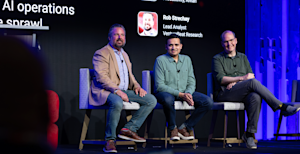
Rob Strechay, until recently managing director and principal analyst at theCUBE Research, has joined VentureBeat as our first Lead Analyst and a founding analyst of VentureBeat Research. His arrival is the next step in a deliberate move at VentureBeat toward deeper specialization: analysis built for the technical decision-makers — the directors, VPs, CIOs, and CTOs — who are evaluating, buying, and deploying enterprise AI. The enterprise AI stack is being rewritten in real time, and the decision-makers I talk with are starved for objective, defendable data. Rob Strechay has the mix of technical rigor and operating experience needed to dissect the architecture behind the next phase of enterprise AI deployment. The questions enterprise technology leaders are asking have changed. As organizations move past experimentation with generative AI toward production deployment, they want to know how to orchestrate multi-vendor environments, where the security gaps in their agentic pipelines sit, and how to fix the utilization problems draining their infrastructure budgets. Answering those questions requires more depth than news coverage alone provides, and that is the gap this research offering is built to fill. An analyst who has sat on every side of the table Strechay brings nearly three decades of experience as a practitioner, product executive, and industry analyst. Before becoming an analyst, he was an executive at numerous startups, including Zerto; he joined Amazon Web Services to help build a new analytics service; and he held executive roles across enterprise infrastructure. He later served as a senior analyst at Enterprise Strategy Group and most recently as managing director and principal analyst at theCUBE Research and SiliconANGLE, where he hosted executive interviews and analyzed the evolution of cloud, data, and AI infrastructure. Strechay will initially focus his coverage on cloud infrastructure, advanced data infrastructure, platform engineering and DevOps orchestration and observability, and the intersection points where AI and enterprise security collide. Already at work: GPU utilization and the VB Pulse surveys Strechay has already been contributing to VentureBeat's research . In May he published an analysis of enterprise GPU utilization , examining the compute waste sitting inside enterprise AI infrastructure, and he provided a substantive review of our AI Infrastructure & Compute survey before it went into the field. His infrastructure-level focus complements the research engine VentureBeat has built around its monthly VB Pulse surveys, which track five areas of enterprise AI adoption: agentic orchestration, agent reliability and evals, agentic security and identity, AI infrastructure and compute, and context layers, including retrieval-augmented generation (RAG). Our June report on agentic orchestration , drawn from a survey of 145 enterprises, found that two-thirds of those enterprises had hedged their AI model strategy rather than committing to a single provider — a posture whose value the June outage of Anthropic's Claude models made plain. VB In Conversation: The first vehicle A core vehicle for this expanded research footprint will be a deepening of VentureBeat's existing VB In Conversation video interview series, which Strechay will host. Rather than high-level industry overviews, the series will bring architectural blueprints, actual deployment barriers, and back-end infrastructure realities to light through in-depth technical interviews with the architects and product leaders behind leading enterprise AI systems — an unvarnished look at which tools perform under production-grade pressure. "VentureBeat has built an audience of enterprise builders and technology buyers that any analyst would want to serve," Strechay said. "My goal is to use deep empirical metrics and VentureBeat's proprietary tracking data to help enterprise buyers and the people building for them make sound platform and infrastructure decisions during the most disruptive transition enterprise technology has seen." The expanded VB In Conversation series will appear on VentureBeat and on VentureBeat's YouTube channel , alongside Rob's written analysis on the site. Enterprise practitioners who want to take part in our monthly VB Pulse surveys, or arrange an analyst briefing with Rob, can reach the research team here .
Block , the technology company founded by former Twitter CEO Jack Dorsey that owns Square, Cash App and the music streaming service Tidal, is open-sourcing Berd , a desktop application it originally built to give its own employees a single environment for working with AI agents across different models, tools and projects. Berd is a locally installed graphical desktop application rather than a browser-based workspace. It is available now on GitHub under a permissive Apache 2.0 license — meaning anyone can use, modify and redistribute it, including commercially — with free downloadable builds for macOS, Windows and Linux. The repository reached version 0.6.2 on Aug. 18, its seventh public release, and lists 91 contributors. “Berd is desktop-first because much of its value comes from working directly with projects, local files, tools, repositories, and agents running on or connected to the user’s computer,” Brad Axen, Head of AI Capabilities at Block, told VentureBeat in emailed responses. A daily work surface for AI agents Block positions Berd as a “daily AI work surface”: a single place where users can start chats, attach files or folders, choose agents and models, work inside persistent projects, configure AI providers, manage skills and extensions, review session history and build automations. The design goal is not merely convenience. According to Berd’s product specification, users should always be able to tell which project, files, agent, model, provider and session state are actively shaping a conversation. That emphasis on visible operational state is what Block says separates Berd from a generic chatbot wrapper. Configuration — providers, extensions, skills, automations, projects — is treated as part of the workflow rather than buried in an administrative layer, and the interface is designed to expose failures, unavailable providers, and loading and streaming states plainly rather than smoothing them over with assistant-style friendliness. Berd grew out of a practical problem inside Block. Employees were already working with capable agents — Block’s own Goose, Anthropic’s Claude Code and OpenAI’s Codex — but the experience around them had become fragmented. “We had capable agents through goose, Claude Code, and Codex, but working across them meant navigating different interfaces, configuration systems, and ways of managing context,” Lucinda Bell, Technology Communications at Block, said in an email. Berd, she said, gives Block teams “one consistent desktop application across models and harnesses.” For enterprises, that layer may matter as much as another incremental gain in model capability. Persistent projects mean users can return to an established collection of files, instructions and agent configurations instead of reconstructing context for each task. Block also explicitly designed Berd to make agentic work accessible beyond engineering, letting people start with a conversation and add tools, context and structure as the work requires. Block is not positioning Berd as a mobile product. Axen said the company’s open source collaboration platform Buzz already provides a mobile experience and is Block’s preferred environment for work on the go. Block thinks agents should look different when they are different Berd takes an unusual approach to a problem most enterprise AI products leave implicit: how users tell one configured agent apart from another. Instead of treating every agent as another blank chat window, Berd gives agents roles, instructions, skills, tools and recognizable visual identities. Block created collections of animated characters — its flagship designs are called “Gloopies” — and Berd’s public site showcases predefined personas such as Berdy, Pushback, Choosey, Copycat, Tinker and Wildcard, each built around a different style of work: Pushback plays devil’s advocate on drafts, Choosey helps narrow decisions, Copycat learns to write in the user’s style. The visual layer is not meant to substitute personality for substance. Block’s own formulation, from a company blog post on Berd’s design , is functional: “The avatars make the agent recognizable. Its role, skills, and tools make it useful.” That distinction could grow more important as workers juggle several specialized agents at once. A recognizable identity serves as visible shorthand for an otherwise invisible package of instructions, tools and permissions — agents appear on the workspace as distinct animated characters rather than identical entries in a chat list, so users can tell them apart before opening a conversation. The product specification guards against the characters turning Berd into a novelty. It describes the intended personality as “focused, capable, companionable,” while explicitly rejecting toy-like presentation, oversized decorative UI and interfaces that hide operational state behind friendliness. An orchestration layer, not another model or agent runtime Architecturally, Berd is neither a new foundation model nor a new agent runtime. The application is built with Tauri 2 and React 19 — frameworks for building lightweight desktop apps with web technologies — and communicates with Goose, the open source agent framework Block introduced in January 2025, through a standard called the Agent Client Protocol (ACP). Goose runs quietly alongside Berd as a bundled “sidecar” process and handles the underlying agent loop; Berd handles projects, sessions, context, agents and configuration on top. For readers unfamiliar with it, Goose is a model-agnostic agent framework and runtime, originally focused on software development workflows. It connects large language models to files, commands and outside systems — including through the Model Context Protocol (MCP), an open standard for wiring AI systems to external tools and data — so agents can take actions rather than merely generate text. Goose works with proprietary model providers as well as locally run open models. Block has since contributed Goose to the Agentic AI Foundation , the Linux Foundation body it helped establish with Anthropic, OpenAI and others in December 2025, giving the framework a vendor-neutral home alongside MCP. Axen drew the boundary explicitly: agent harnesses such as Goose, Claude Code and Codex manage the loop between a model, its context and its tools, while Berd provides the consistent desktop environment around those harnesses. In the public release, users configure whichever providers and harnesses they want rather than inheriting a Block-selected model stack. The project’s README adds an operational detail that matters for anyone evaluating the software: Berd does not simply pull whatever Goose build happens to be current. Its build process pins a specific Goose backend version through a lockfile, verifies the cached binary matches that pinned version, and packages it with the app. Developers can explicitly substitute another Goose binary for local testing. For organizations inspecting Berd, that creates a defined version boundary between the desktop application and its default agent backend rather than letting the backend silently drift. How Berd compares to Codex, Claude Code, Cursor and Goose That separation matters because the agent-tooling market is already converging on products that manage increasingly autonomous AI workers. OpenAI describes its Codex app as a “command center” for agents, with separate project threads and multiple agents operating in parallel. Claude Code , Anthropic’s agent for reading codebases, editing files and executing commands, now spans the terminal, IDEs and a desktop app. Cursor describes its latest release, Cursor 3, as a unified workspace for software development with agents, including handoffs between local and cloud agents and multi-repository workflows. And Goose itself remains available directly, as a free command-line tool and desktop app for technically comfortable users. Berd’s differentiation is therefore less about inventing the agent workspace than about making that workspace open source, multi-harness and potentially useful outside coding. Every other product in the table below is either tied to a single vendor’s models, priced as a subscription, or aimed squarely at developers — and in most cases all three. Product Maker Pricing Model support Distinguishing features Berd Block Free and open source (Apache 2.0); users pay only their own model provider costs Any provider the user configures, across multiple agent harnesses Desktop workspace over agent harnesses rather than a harness itself; local-first data storage; visual agent identities; persistent projects; enterprise custom distributions; designed for non-engineers as well as developers Codex app OpenAI Included with paid ChatGPT plans, from Plus at $20/month to Pro at $200/month OpenAI models only “Command center” for coding agents; multiple agents running in parallel across separate project threads; cloud and local execution Claude Code Anthropic Included with paid Claude plans, from Pro at $20/month to Max at $100–$200/month; also usage-based via API Anthropic Claude models only Deep autonomous coding — reads codebases, edits files, runs commands; available in terminal, IDEs, desktop and web; usage caps have drawn developer criticism Cursor Anysphere Pro at $20/month; Ultra at $200/month Multiple frontier models AI-native code editor; Cursor 3 adds a unified agent workspace with local-to-cloud agent handoffs and multi-repository workflows; developer-focused Goose Block / Agentic AI Foundation Free and open source (Apache 2.0); bring your own model, including free local models Any provider, or fully local models via tools like Ollama The model-agnostic agent framework and runtime underneath Berd; CLI and desktop versions; can run entirely offline with no data leaving the machine Portability is part of Block’s pitch. Axen said much of the underlying work in Berd is deliberately kept portable: folders, Git repositories, files and plain-text instructions remain accessible outside the application; skills are file-based; and Berd agents can be exported and shared between Berd users with their instructions and settings intact. He pointed to ACP and MCP as part of Block’s direction toward “clear, user-owned formats and open protocols wherever possible.” That does not make every piece of state interchangeable across every harness, but it makes portability an explicit architectural goal rather than a side effect of using local files. Local-first data, telemetry and enterprise distributions Berd is designed around a local-first data model. Axen said conversation history is stored on the user’s device in the local Goose session database, while credentials live in the operating system keychain by default. That does not mean all AI processing happens locally. “Local-first does not mean that no data ever leaves the device,” Axen said. When a user asks a configured model to work on particular context, the relevant prompt and material are sent to that model’s provider — so the actual data path, and the contractual terms governing it, depend on which provider an organization chooses. Telemetry — the usage data software sends back to its maker — is disabled by default in official Berd distributions. If a user opts in, Block says it collects a random installation identifier and a limited set of predefined usage events, while excluding prompts, messages, files, source code, credentials, names, email addresses and IP addresses from the telemetry payload itself (Block and its service providers still process IP addresses for transmission, security and rate limiting). Users can switch telemetry off again in settings. Block cautions that third-party forks can modify or redirect the telemetry system, so enterprises evaluating a customized build need to review that build’s actual behavior rather than assume Block’s defaults carry over. The public repository builds a self-contained, general-purpose distribution that does not depend on private package registries or enterprise credentials — technical teams can build and evaluate it without access to Block’s infrastructure. But Block has also created what it calls “distribution seams”: defined points where organizations can overlay managed provider settings, private agents, runtime configuration, optional companion tools, their own update channels and their own signing and publishing infrastructure, all without adding private material to the public source tree. Block’s own deployment shows how an enterprise can put governance around that architecture. Axen said Block runs its managed distribution on approved devices using approved model-provider infrastructure, managed configuration and governed tool connections. “The application can remain open and inspectable, while an organization decides which models, tools, permissions, and policies are appropriate for its environment,” he said. One caveat: “enterprise distribution” should not be read as a complete enterprise management plane. The README does not describe capabilities such as single sign-on, centrally enforced administrator policies, organization-wide permission controls, data-retention rules or audit logs. It establishes that companies can customize and distribute Berd; it does not by itself explain how those installations are centrally governed after deployment. Berd should be understood as endpoint software installed on users’ computers, not a centrally hosted SaaS product. Pricing, models and a closed contribution model Block has not announced a subscription price for Berd, and there is no indication one is coming. That does not make agent usage costless: organizations still pay whatever model, API or provider charges they incur. The economic pitch on Berd’s site is flexibility — users can match the model to the job rather than paying for an expensive frontier model on every task. As the site puts it: “Some tasks need the big brain. Most don’t.” Neither Block’s announcement nor the README provides a definitive matrix of supported model providers or recommends particular models. Internally, Block does not treat any one model as a permanent default: Axen said the company’s managed distribution exposes employees to “a curated mix of frontier and open-weight models,” with the catalog changing as models improve. “The best choice depends on the work,” he said. There is also a governance distinction developers should note. Although Berd’s source is public and Block solicits issues and feedback, the repository does not accept outside pull requests — external code contributions are automatically closed. The README says Berd is built by “a small team at Block” and directs outside participants toward well-formed, reproducible bug reports instead. Users are free to inspect, build and fork the code, but Block retains a tightly controlled upstream. For companies considering Berd as infrastructure rather than an experiment, that makes Block’s long-term maintenance and support plans worth clarifying. Block is not presenting Berd as a revenue product today. Axen said the first return on investment comes from Block’s own use of the software — making internal agent work more consistent while teaching the company how employees actually use agents — and that open-sourcing it adds leverage by letting outsiders inspect, adapt and give feedback on the architecture. A commercial layer around enterprise deployment may eventually follow. “Supporting organizations that want to deploy agents at work is an area of interest for us,” Axen said, adding that Block will share more when there is more to share. From private agent work to multiplayer workflows Berd supplies the individual desktop experience; another Block project, Buzz , focuses on shared rooms where people and agents collaborate against a common, searchable record. Buzz is Block’s free, Apache 2.0-licensed collaboration workspace for humans and AI agents. Built on the decentralized Nostr protocol, it combines familiar team features — channels, threads, direct messages, voice and media sharing — with agents that hold their own cryptographic identities and defined permissions, and that can participate in conversations, code review and approved automated workflows. Unlike Berd’s local, single-user focus, Buzz is explicitly multiplayer, and can be self-hosted or used through Block-hosted infrastructure. It is likewise model- and harness-agnostic: teams can bring agents powered by Goose, Claude Code, Codex or others. Axen framed the split between the two products partly as a question of trust boundaries. “A local agent may have access to your filesystem and credentials,” he said. “An agent in a shared Buzz room has its own identity and access scoped through the relay.” Berd begins with one person and comparatively privileged access to that person’s machine; Buzz begins with multiple participants, explicit identities and shared-workspace permissions. The more consequential roadmap detail is that Block does not intend the two products to remain separate. “Going forward, our focus is Buzz, and we plan to bring the best parts of Berd’s single-player experience into it,” Axen said. Block wants work to begin privately and become collaborative without users switching tools or rebuilding context, with cross-device continuity — including mobile via Buzz — part of that ambition. In the meantime, Axen said, Berd remains available as an open source desktop application, but Buzz is the product Block encourages people to download and adapt. What enterprise adopters should take away The short version for IT and security teams: conversation history stays local by default; credentials use the operating system keychain; context sent to a model leaves the machine on whatever terms the configured provider offers; official telemetry is off by default and excludes prompts, files and source code; and organizations can package their own governed distribution — though central management tooling is not yet documented. The larger idea behind the release may matter more. Models and coding agents are becoming increasingly interchangeable components inside larger workflows. Berd is Block’s bet that the surrounding context — the projects, skills, tools, identities and persistent working environment — becomes the stable layer instead.
Two critical vulnerabilities impacting MLflow, an open-source artificial intelligence (AI) platform, and FUXA, an open-source, web-based SCADA / HMI software built for operational technology (OT) and industrial automation, are witnessing malicious scanning and exploitation efforts. According to independent reports from watchTowr and VulnCheck, the vulnerabilities in question are as follows -
A newly discovered Arctic process can dramatically boost the number of particles that help form clouds. Near melting sea ice, sunlight reacts with chemicals released by the ocean, algae, and ice, causing cloud-seeding particles to multiply by as much as 50 times in a day. Because the active ice-edge region is growing as sea ice retreats, the effect could become increasingly important. Scientists now want to add the process to climate models to see how much it could reshape Arctic warming.