TechnologyNews
AMD and Cerebras join forces against Nvidia's Groq LPUs
1 point 0 comments on Hacker News · theregister.com
Hacker News1 min read
Explore
Cloud infrastructure, Kubernetes, AWS, Azure, GCP and DevOps news.
311 results • Page 13 of 26
1 point 0 comments on Hacker News · theregister.com
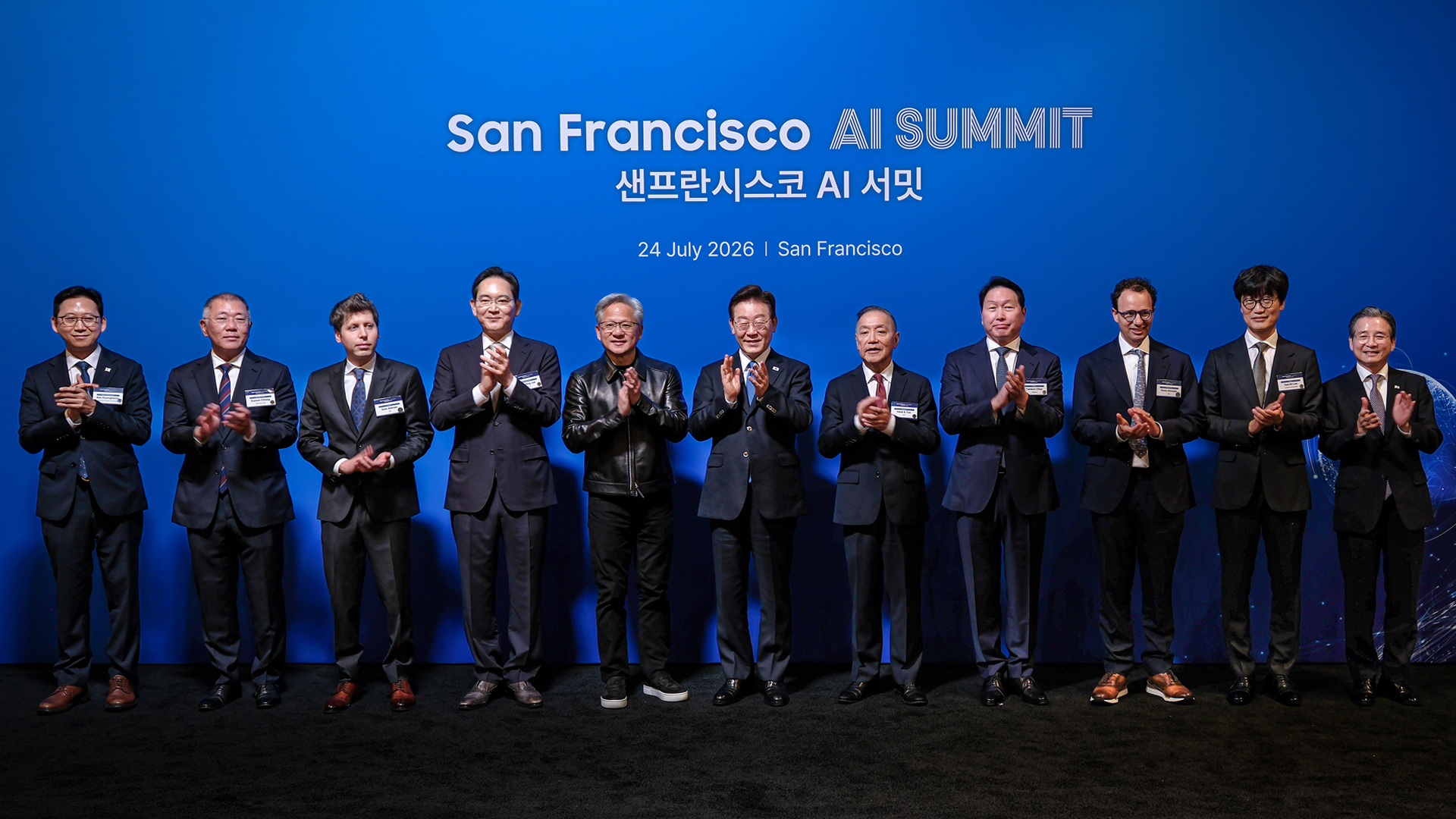
At this week’s AI Summit in San Francisco, South Korean President Jae Myung Lee and some of the country’s top business leaders and researchers are meeting with NVIDIA and ecosystem partners to chart Korea’s AI progress. Building on NVIDIA founder and CEO Jensen Huang’s visit to Korea last month, this week’s discussions and announcements advance […]
Microsoft AI released two new in-house models into public preview on Wednesday — MAI-Image-2.5-Pro , its highest-fidelity image generator to date, and MAI-Voice-2-Flash , a speech model built for high-volume enterprise workloads — while publishing production data that amounts to the company's most aggressive argument yet that it can power its own products without leaning on OpenAI's frontier models. The announcement, made by Microsoft AI's Superintelligence team , lands roughly a year after the company committed to building purpose-built models internally, and it arrives with an unusual level of specificity about where those models now run: Bing , PowerPoint , OneDrive , Dynamics 365 , Excel , GitHub Copilot , and Azure . The message to enterprise buyers — and, implicitly, to OpenAI — is that Microsoft's homegrown models are no longer research projects. They are production infrastructure serving millions of users. "Each of these enhancements is a step toward the same goal: Microsoft products, powered by Microsoft models," the company wrote in its announcement blog. How MAI-Image-2.5-Pro and MAI-Voice-2-Flash stake out opposite ends of the AI cost curve The two new releases occupy opposite ends of what Microsoft calls the quality-speed-cost curve, and the positioning is deliberate. MAI-Image-2.5-Pro targets the premium tier: hero imagery, detailed editing, and precise in-image text rendering — the last of which has long been a notorious weak spot for image generation models. Microsoft priced the model at $5 per million text input tokens, $8 per million image input tokens, and $106 per million image output tokens. The base MAI-Image-2.5 model recently launched at No. 2 for image editing on Arena , the community leaderboard that has become a de facto scoreboard for generative media. The creative industry appears to be taking notice. Rob Reilly, global chief creative officer at advertising giant WPP, called the Pro model "a strong leap forward for GenMedia tools" in a statement included in Microsoft's announcement, adding that "Microsoft has firmly established itself among the leaders in generative AI." MAI-Voice-2-Flash goes the other direction. First previewed at Microsoft's Build conference , Flash runs twice as fast as MAI-Voice-2 and costs 32% less, priced at $15 per million characters. It is designed for the unglamorous but enormous market of high-volume voice — call centers, voice agents, and real-time speech applications where latency and cost-per-call matter more than marginal gains in expressiveness. Together, the two models reflect a strategy of building families of models rather than a single flagship, because, as the company put it, a creative studio chasing maximum fidelity has very different needs from a customer service operation handling millions of calls a day. Microsoft's production metrics show in-house models cutting GPU costs by up to 89% The model launches are arguably less newsworthy than the deployment metrics Microsoft attached to them — numbers that read like a systematic case for swapping out third-party frontier models across its product portfolio. Bing Image Creator now runs entirely on MAI-Image-2.5 , end to end, marking the first time the consumer image tool is fully in-house. In PowerPoint, Microsoft says MAI-Image-2.5 reduces GPU costs by up to 84% compared with GPT-Image-2, OpenAI's image model. In OneDrive, where MAI-Image-2.5 is now the default for key image-editing scenarios, the company reports a 26% increase in save rates, roughly 25% lower P95 latency, and 2.5 times greater efficiency under medium-utilization production workloads. On the voice side, MAI-Voice-2-Flash now powers Dynamics 365 Contact Center — the platform used by customers including T-Mobile and EasyJet — where Microsoft claims GPU cost reductions of up to 89%. The model is also integrated into Azure Voice Live for developers building speech-to-speech agents. Perhaps the most consequential deployment sits in healthcare. Microsoft's Dragon Copilot , used by 170,000 medical providers and responsible for processing 28 million patient encounters last quarter, now runs on MAI-Transcribe-1.5 for its multilingual workflow across 58 languages. Microsoft says internal evaluations show a 50% relative reduction in both transcription and language-identification error rates across most languages — a meaningful claim in a domain where transcription errors can propagate directly into clinical notes. Inside the 'hill-climbing' strategy that lets small models beat GPT-5.6 in Excel In a companion post published the same day, Microsoft detailed the methodology behind these results — what it calls its " hill-climbing machine ," an integrated flywheel of data, models, and the product "harness" that surrounds them. The clearest example is MAI-Code-1-Flash , the lightweight coding model launched in GitHub Copilot in June. Microsoft says the model achieves an approximately 10% higher code accept rate than GPT-5.4 Mini and Claude Haiku 4.5 in VS Code, while using 10% fewer median tokens. Developer retention tells a similar story: users were 6% more likely to return across multiple days than with GPT-5.4 Mini, and 11% more likely than with Claude Haiku 4.5. Then Microsoft did something more interesting. It took the MAI-Code-1-Flash checkpoint and further trained it inside an Excel reinforcement learning environment , teaching a coding model the tools and workflows of spreadsheet knowledge work. The result, according to production user feedback, is a model on par with GPT-5.6 for the most common Excel tasks — while being small enough to run on Nvidia's older H100 and even A100 GPUs rather than requiring the latest-generation accelerators. That hardware detail deserves emphasis. Every major AI company is fighting for allocation of cutting-edge chips, and a model that delivers frontier-adjacent quality on two-generation-old silicon fundamentally changes the deployment economics. It also frees the newest hardware — including Microsoft's now-operational GB200 cluster — for training rather than serving. Satya Nadella's 'frontier diffusion' manifesto redraws the OpenAI relationship Microsoft CEO Satya Nadella framed the announcements in a lengthy post on X titled " Frontier Diffusion & Control ," which functions as something close to a strategic manifesto. "We can now take saturated frontier capabilities and deliver them at scale and at lower cost through models optimized for high-usage products, while continuing to use frontier models for frontier needs," Nadella wrote, adding that Microsoft is "beginning to route traffic across our first-party surfaces to MAI whenever our models match or outperform frontier alternatives." Translated from executive prose: capabilities that were state-of-the-art a year ago are now table stakes, and Microsoft believes it can replicate them cheaply for the specific, repetitive tasks that dominate real product usage. Why pay frontier prices for a frontier model when a user just wants to reformat a spreadsheet column? Nadella was careful to note that "frontier models from OpenAI and Anthropic are part of the orchestration system alongside MAI" — but he also articulated a pointed principle of model independence, arguing that a company's evaluations "should continue to hill climb even when any given model has been removed." “Keeping the harness, memory, context, and skills outside the model, he argued, is what gives Microsoft control. The subtext is hard to miss. Reuters reported in April that Microsoft’s exclusive license to OpenAI’s technology had been revised into a non-exclusive arrangement, and The Information reported last September that Microsoft had begun incorporating Anthropic models into some products. Wednesday’s announcement completes the triangle: Microsoft as orchestrator, with its partners’ frontier models as interchangeable components and its own models absorbing an ever-larger share of routine traffic.” Developers cheer cheaper task-specific models while skeptics question Microsoft's track record The response online captured both the appeal and the skepticism surrounding the strategy. "I love when people use small models for niche tasks," wrote one X user, @mavihsk , responding to Nadella's post. "Why do I have to use the all-knowing model just to change my field in Excel?" Another user, @nabu_lines , distilled the pitch neatly: "cost and performance both improve when you stop overusing the biggest model." Others were less charitable about Microsoft's execution track record. "Microsoft is the worst when it comes to listening to user feedback," wrote designer @designedbyabin , arguing the company "will lose the AI race because they repeatedly failed to understand user needs." And one user, @tokenoverflow , offered a drier critique of the model-independence pitch: "i want it keep hill climbing after removing microsoft." The skeptics raise a fair point. Microsoft's self-reported metrics — accept rates, save rates, GPU savings — come from its own internal evaluations, not independent benchmarks, and the company chooses which comparisons to publish. But the strategy's logic does not depend on any single number. Nadella's framing that software now has " real marginal cost for the first time " explains why Microsoft is obsessive about tokens, GPUs, and serving costs: when AI features run on every keystroke across a billion-user product portfolio, an 84% GPU cost reduction is not an optimization. It is the difference between a viable business and a money pit. Why Microsoft is turning its internal AI playbook into an Azure product The final piece of the strategy is that Microsoft is selling the playbook, not just the models. Nadella explicitly positioned the hill-climbing approach as "a template for every other AI native, SaaS, or Enterprise company," and Microsoft is packaging the toolchain through Foundry and what it calls Frontier Tuning — letting enterprises train specialized models against their own proprietary evaluations and reinforcement learning environments. That turns Microsoft's internal cost-cutting exercise into an Azure product, and it gives enterprise customers a reason to run their AI workloads on Microsoft's cloud even if the models themselves come from elsewhere. The company's emphasis on models trained "on clean, traceable, enterprise-grade data, without distillation from third-party models" serves the same commercial end. In an industry facing mounting scrutiny over training data provenance, Microsoft is betting that enterprise buyers — and courts — will care where model capabilities come from. Microsoft says it is now extending the hill-climbing approach to Copilot Chat , Outlook , and PowerPoint , and both new models are available in public preview through Microsoft Foundry and the MAI Playground . "None of this is an endpoint," the company wrote. "We're just getting started." Seven years ago, Microsoft bet more than $13 billion that OpenAI would build the future of AI. Wednesday's announcement suggests the company has since learned a cheaper lesson: the future of AI may belong to whoever builds the frontier, but the profits belong to whoever makes it ordinary.
1 point 0 comments on Hacker News · github.com
Xbox's cloud gaming service is getting an ad-supported tier, and Microsoft is testing it out now on Xbox and other devices with Xbox Insiders.
Most of those evacuated were tourists from campsites around Arcachon Bay in France's Gironde region.
Travis Kalanick, the former CEO of Uber, said with ATOMS, he hopes to create physical automation to transform industry. The post Uber co-founder raises $1.7B for new robotics startup ATOMS appeared first on The Robot Report .
AMD has launched the Ryzen AI Embedded X100 and Kria AI SoM, bringing unified memory and real-time control to challenge NVIDIA in robotics. The post AMD unveils Kria module for real-time control, unified memory for robots appeared first on The Robot Report .
You can now play games right inside the Prime Video app.
Across 107 enterprises, AI infrastructure spending is accelerating well ahead of the ability to see or steer its economics. Most organizations run their AI on a familiar base of hyperscalers and model-provider APIs, yet the next dollar is aimed at specialized compute almost none of them use today; a majority intend to switch or add providers within the year, many within a quarter. Buying decisions turn on integration and total cost of ownership rather than headline token price — which is fortunate, because most enterprises cannot yet see their unit economics clearly: GPUs sit at half utilization or less, and fewer than half rigorously track what their compute actually costs. The result is a compute gap — heavy, fast-moving investment running ahead of the visibility needed to control it. This wave of VentureBeat Pulse Research examines enterprise AI infrastructure and compute: where organizations are in their deployment journey, what they run AI on today, how satisfied they are, what would make them switch, where they plan to evaluate their investments, and — most revealingly — how well they can measure and control the economics of the compute underneath it all. The central finding is a compute gap — the distance between how aggressively enterprises are investing in AI infrastructure and how little of its economics they can see. Only about one in five (21%) run AI in production at scale, yet spending intentions are outrunning that maturity: the single largest planned area enterprises plan to evaluate over the next year is AI-specialized clouds (45%), a layer almost none of these enterprises use today. Meanwhile the compute already in place runs cold — 83% report GPU utilization of 50% or less — and fewer than half (44%) can rigorously track what their AI compute costs. Enterprises are buying more infrastructure faster than they can account for what they already own. Enterprises are not settled on their infrastructure vendors, either: A clear majority (64%) plan to switch or add an infrastructure provider within twelve months, and 38% within the next quarter — unusually high churn intent for a category this foundational. When they choose, they choose on integration with the existing stack (41%) and total cost of ownership (35%), not on headline price: cost per million tokens is the deciding factor for just 8%. And the frontier constraint that will shape the next round of decisions — the shift from GPU compute to memory bandwidth as inference scales — is barely on the radar, with roughly one in five enterprises either unaware of it or yet to address it. This report is one of five in VentureBeat Research's Q2 study of the agentic stack. Cost is the control with the least instrumentation: More than eight in ten GPU operators report utilization at half capacity or less, and a minority rigorously track compute cost and return. The executive summary, "VentureBeat Research: Where enterprise AI agent governance hasn't caught up," places that finding in the full pattern. Methodology VentureBeat fielded this survey as part of its ongoing Pulse Research series, this survey focused on enterprise AI infrastructure, compute, and inference economics. Responses are filtered to organizations with more than 100 employees (n=107; the survey’s smallest size band, 1–100 employees, is excluded), drawn from a single Q2 2026 (June) wave. Because this is one wave rather than a pooled multi-month sample, the report reads cross-sectionally and does not infer month-over-month trends. Several questions were multiple-select, so those shares can sum to more than 100%. By organization size the sample concentrates in the mid-market: 101–250 employees (36%) and 251–1,000 (27%) lead, with 1,001–5,000 (22%), 5,001–10,000 (8%), and 10,001+ (7%) above them. By role it spans managers (38%), individual contributors (28%), VPs and directors (19%), and the C-suite (13%); on purchasing authority it is buyer-credible, with 45% final decision-makers and another 30% recommenders or influencers for AI solutions. Technology/Software is the largest industry at 26%, followed by Healthcare/Life Sciences (15%), Financial Services (13%), and Retail/E-commerce (12%). At 107 respondents the sample is large enough to read directionally but should be treated as a directional signal rather than a precise measurement; it is self-selected and is not a probability sample. It also skews toward the mid-market and toward earlier-stage adopters, so it is best read as the view from organizations actively building out AI infrastructure rather than from the largest hyperscale operators. Finding 1: Ambition outpaces production Only one in five run AI in production at scale We asked where organizations sit in their AI deployment journey. Most are still building toward production rather than operating at scale. The maturity curve is front-loaded. Three-quarters of enterprises (76%) are either experimenting or running only some workloads in production, and just 21% describe AI in production at scale. This matters for everything that follows: the infrastructure decisions in this report are being made largely by organizations still early in deployment, whose compute footprint — and whose costs — are about to grow. The evaluation and switching intentions in Findings 3 and 4 are the leading edge of that build-out, not the settled preferences of operators who have already found what works. Finding 2: Enterprises run on hyperscalers and model APIs The specialized GPU clouds barely register — today We asked which providers and platforms enterprises currently use to run their AI. The answer is a familiar one: the incumbents. The current stack is hyperscaler-and-API. Google Cloud leads at 48%, and the general-purpose clouds (Google, Microsoft, AWS, Oracle) together with the major model APIs (Gemini, OpenAI, Anthropic) account for essentially all current deployment. The specialized “neocloud” GPU providers that dominate AI-infrastructure headlines — CoreWeave, Lambda, Crusoe, Nebius and peers — register at or near zero among these enterprises today. Only 6% run their own on-prem GPU clusters and 4% a custom open-source stack. Enterprises are, for now, running AI on the providers they already buy from — which makes the evaluation intentions in Finding 3 all the more striking. (A note on reading these shares. As described in the methodology section, this sample is self-selected and skews mid-market, and this question counted every provider a respondent uses — an average of 2.1 selections each — so the figures measure presence in the stack rather than spending or primary status. A sample built this way will show a different provider mix than a spend-weighted census of the broader market; Google's strength here, for example, is consistent with its long-standing position among smaller enterprises building on AI. Read these shares as a portrait of what this AI-active cohort runs today, and treat gaps between these figures and industry-wide market share estimates as a property of the sample rather than a contradiction of either.) Finding 3: The next dollar goes to infrastructure they don’t yet run AI-specialized clouds top the evaluations list We asked where enterprises planned to evaluate AI infrastructure over the next 12 months. Their answers point away from the stack they run today. Here is the report’s sharpest tension. The single most-cited planned evaluation area — AI-specialized clouds, at 45% — is the very category almost none of these enterprises use today (Finding 2). Nearly a third (32%) intend to evaluate non-Nvidia accelerators, and 28% in next-generation Nvidia silicon; even decentralized compute networks (16%) and sovereign compute (11%) draw meaningful interest. Read against current usage, this is not incremental — it is the leading edge of a re-platforming. The direction-of-travel question tells the same story: every infrastructure approach is net-expanding, but specialized AI clouds carry the highest net momentum (+24), edging out even the hyperscalers (+22). Enterprises are preparing to move a meaningful share of AI compute off the general-purpose cloud. This continues a trend we saw in our April-May survey wave. Back then, usage of the AI-specialized clouds was equally marginal — CoreWeave at 3%, Lambda at 4%, Crusoe at 2% of enterprises. When we asked enterprises what change they planned in their AI infrastructure strategy over the next twelve months, the most-cited answer was moving workloads to specialized AI clouds, at 33%. Asked in April-May which emerging compute option they were most likely to evaluate AI-specialized clouds again drew the most responses. Two waves, two differently worded questions, one consistent picture: the type of cloud enterprises are most eager to assess is the type they have barely begun to use. Finding 4: A switching wave is building Six in 10 plan to change providers within a year — many within a quarter We asked whether and when enterprises plan to switch or add an infrastructure provider. Very few intend to stand still. For a category as foundational as compute, this is a remarkable amount of intended movement. Only 36% have no plans to change, meaning a clear majority (64%) intend to switch or add a provider within twelve months — and 38% within the next quarter alone. Where that interest points is telling: the providers drawing the most switching consideration are again the incumbents — Microsoft Azure and Google Cloud (33% each), OpenAI (30%), and Gemini (22%) — which suggests much of the near-term movement is reshuffling among the majors and consolidating spend rather than defecting to new entrants. The neocloud interest in Finding 3 is a 12-month evaluation thesis; the switching in the next quarter is mostly incumbents trading share. ( Method note: Respondents who selected both "no plans to change" and a specific switching window are counted as switchers, on the logic that naming a timeframe is the more specific answer; three respondents were reclassified under this rule. ) Finding 5: Nobody buys on token price Integration and total cost of ownership decide — not sticker price We asked what matters most when enterprises select an AI infrastructure provider. Headline price finished last. Enterprises do not buy AI infrastructure on pricing, which is the place vendors compete on hardest. Integration with the existing stack (41%) and total cost of ownership (35%) dominate, while the headline metric — cost per million tokens — is the deciding factor for just 8%, dead last. The pattern is coherent: buyers are optimizing for how a provider fits and what it truly costs to operate, not for the advertised unit rate. It also foreshadows Finding 7 — enterprises say TCO matters most, yet most cannot yet measure it rigorously. The stated priority and the measured capability are out of step. Finding 6: Expensive GPUs, idle most of the time 83% report GPU utilization of 50% or less We asked what share of their GPU capacity enterprises actually utilize. The answer is a well-known but rarely quantified inefficiency. Disclosure: Band percentages count every selection against all 107 qualified respondents; 14 respondents selected more than one band, so bands overlap. At the respondent level, 83 of the 100 GPU-operating enterprises reported utilization at or below 50% The compute already in place runs cold. Adding the bands at or below half capacity, 83% of enterprises that operate GPUs report utilization of 50% or less, and nearly half (49%) run at 25% or below. Only 12% clear the 50% mark, and a further 8% do not measure utilization at all. Idle accelerators are expensive accelerators, and this is the clearest single measure of the compute gap: enterprises are planning to buy more GPUs and specialized compute (Finding 3) while the capacity they already own sits substantially unused. The efficiency headroom in the current fleet is large — and largely unmeasured. Finding 7: Spending fast, measuring slowly Fewer than half rigorously track what their compute costs We asked whether enterprises can quantify the cost and return of their AI infrastructure spend, and how satisfied they are with what they run. Confidence in the ledger lags the spending. Measurement trails money. Fewer than half of enterprises (44%) rigorously track the cost and return of their AI compute; the majority track only partially (39%), cannot quantify it yet (20%), or have not prioritized it (6%). That gap is consequential given Finding 5, where total cost of ownership was the second-ranked buying criterion — enterprises are choosing providers on an economic basis they mostly cannot yet measure. Satisfaction with current infrastructure is moderately positive but not enthusiastic: on a five-point scale, overall satisfaction averages 4.0, with ease of implementation (3.8) and value for money (3.9) trailing slightly — the softness landing, tellingly, on cost. Enterprises are spending quickly and accounting slowly. Finding 8: The next bottleneck few are watching As inference shifts from compute to memory, the field scatters Finally, we asked how enterprises would address the emerging constraint in large-scale inference — the shift from GPU compute to memory, specifically KV-cache capacity. The responses reveal a frontier that is not yet a priority. The memory frontier is real but barely governed. Asked which approach they would rely on as the binding constraint in inference shifts from compute to memory bandwidth, enterprises scatter: Dell leads at 31%, Nvidia follows at 16%, and the rest fragments across storage vendors, open-source tooling, and model-level efficiency techniques. Most telling is that roughly one in five (18%) either do not recognize the constraint or have not begun to address it. For a shift that will reshape inference cost and architecture, this is an early and unsettled market — and, consistent with the measurement gap in Finding 7, one where many enterprises simply do not yet have a view. It is the next chapter of the compute gap, arriving before most have closed the current one. The bottom line: A compute gap that faster spending will widen, not close Organizations with more than 100 employees are investing in AI infrastructure faster than they can measure it. Most are still early in deployment, yet their spending intentions point past their current stack — toward specialized clouds and alternative accelerators almost none of them run today — and a clear majority intend to change providers within the year. They buy on integration and total cost of ownership rather than headline price, which is rational; the difficulty is that most cannot yet see those economics clearly. The visibility gap is concrete. The GPUs enterprises already own run at half utilization or less for the overwhelming majority, and fewer than half can rigorously track what their compute costs or returns. Satisfaction is decent but unenthusiastic, softest on value for money — the dimension hardest to judge without measurement. And the next constraint, the shift from compute to memory in large-scale inference, is arriving while most enterprises are still unaware of it. At 107 respondents in a single Q2 wave this is a directional read, skewed toward the mid-market and earlier-stage adopters — but the direction is consistent: the appetite to spend is running well ahead of the instrumentation to spend well. The compute gap is not a capacity problem that more hardware will solve on its own; it is, first, a problem of seeing what the hardware already costs. The open question for later waves is whether enterprises build that visibility before the re-platforming arrives — or buy the next layer of infrastructure as blind to its economics as the last. Based on survey responses from 107 qualified enterprise respondents (100+ employees), drawn from a single Q2 2026 (June) wave. Because this is one wave rather than a pooled multi-month sample, the results read cross-sectionally rather than as a month-over-month trend, and at 107 respondents this is a directional signal rather than a precise measurement — the sample is self-selected, skews mid-market, and leans toward earlier-stage adopters rather than the largest hyperscale operators. Respondents include managers, individual contributors, VPs/directors, and the C-suite, with buyer-credible purchasing authority, across Technology/Software, Healthcare/Life Sciences, Financial Services, Retail/E-commerce, and other industries.
Across 107 enterprises, AI agents are being given real access to systems and data while the controls meant to contain them lag behind. More than half have already had a confirmed agent security incident or a near-miss; only about a third give every agent its own scoped identity, and most agents still share credentials; and only three in ten isolate their highest-risk agents. The security stack is overwhelmingly borrowed from the model providers and hyperscalers rather than purpose-built for agents, spending remains a thin slice of the security budget, and enterprises are evenly split on whether their defenses are keeping pace with AI-enabled attackers. The result is an agent security gap — autonomous agents proliferating faster than the identity, isolation, and enforcement controls needed to hold them. This wave of VentureBeat Pulse Research examines how enterprises secure their AI agents: what tooling they run, how they manage agent identity and isolation, what has already gone wrong, how much they spend, and whether they believe their defenses are keeping pace with AI-enabled attackers. The central finding is an agent security gap — the distance between the autonomy enterprises are granting their agents and the controls in place to contain them. More than half of organizations (54%) have already experienced a confirmed agent security incident (18%) or a near-miss caught before harm (36%). The structural weakness beneath those numbers is identity: only about a third (32%) give every agent its own scoped, managed identity, while the rest report that some agents share credentials or that agents mostly run on shared API keys and human or service-account credentials. When agents share credentials, a single compromised or over-permissioned agent carries a wide blast radius — and only three in ten enterprises (30%) isolate their highest-risk agents in sandboxes to bound that radius. What makes the gap notable is how comfortable enterprises are inside it. The security stack is overwhelmingly provider-native — OpenAI’s guardrails (51%), Google’s and Microsoft’s cloud controls, and Anthropic’s managed-agent controls dominate, while the dedicated agent-security specialists barely register — and satisfaction with that borrowed stack is high, averaging 4.2 out of 5. Yet spending remains a thin slice of the security budget, only a third of enterprises believe their AI defenses are ahead of AI-enabled attackers, and a clear majority plan to change tooling within the year. Enterprises are satisfied with controls they are simultaneously preparing to replace. Methodology VentureBeat fielded this survey as part of its ongoing Pulse Research series, this instrument focused on enterprise agent security — the tooling, identity, isolation, and enforcement controls organizations use to secure autonomous AI agents. Responses are filtered to organizations with more than 100 employees (n=107; the survey’s smallest size band, 1–100 employees, is excluded), drawn from a single June 2026 wave. Because this is one wave rather than a pooled multi-month sample, the report reads cross-sectionally and does not infer month-over-month trends. Several questions were multiple-select, so those shares can sum to more than 100%. By role the sample is senior and buyer-credible: 45% are final decision-makers for AI purchases and another 30% recommenders or influencers. Managers (43%), individual contributors (24%), VPs and directors (15%), and the C-suite (11%) make up the seniority mix. By organization size the sample is mid-market-weighted: 251–1,000 (42%) and 101–250 (25%) employees lead, with 1,001–5,000 (19%), 5,001–10,000 (8%), and 10,001+ (7%) above them. Technology/Software is the largest industry at 23%, followed by Manufacturing (15%), Retail/E-commerce (14%), and Healthcare/Life Sciences (13%). At 107 respondents the sample is large enough to read directionally but should be treated as a directional signal rather than a precise measurement; it is self-selected and is not a probability sample. It skews toward the mid-market, so it is best read as the view from organizations actively standing up agent security rather than from the largest operators. Satisfaction ratings are computed on the respondents who answered each rating question; the overall satisfaction score reflects 82 of the 107 qualified respondents. Finding 1: The incidents are already here More than half have had an agent security incident or near-miss We asked whether organizations had experienced an agent security incident — a confirmed breach, or a near-miss caught before harm. Most that run agents in production had. This is the report’s defining number. More than half of organizations (54%) have already had an agent security event — 18% a confirmed incident and 36% a near-miss caught before it caused harm. Only 42% report nothing, and a small remainder either run no agents in production or don’t track such events. That so many report near-misses rather than only confirmed incidents is telling: enterprises are catching problems, but they are catching them close to the edge. The controls examined in the rest of this report — identity, isolation, enforcement — are what determine whether the next near-miss stays a near-miss. Exposure scales with company size, but containment does not. The incident-or-near-miss rate rises from 49% in the mid-market (companies with 101-1,000 employees) to 63% at larger enterprises (above 1,000 employees), while sandbox isolation of high-risk agents falls from 35% to 20%, and satisfaction with security tooling drops from 4.36 to 3.97. The organizations running the most agents across the most systems carry the most incidents and the least of the one control that bounds an incident's blast radius. Finding 2: The identity gap Only a third give every agent its own scoped identity We asked how enterprises manage the identity of their AI agents — whether each agent has its own credentials, or agents share them. Full per-agent identity is the exception. Rolled together, the overlapping answers show 69% of enterprises (74 of 107) with credential sharing somewhere in the agent fleet. Identity is the structural weakness beneath the incidents. Only about a third of enterprises (32%) give every agent its own scoped, managed identity — the precondition for least-privilege access and clean attribution. Nearly half (48%) say some agents have scoped identities but many still share credentials, and another 32% say agents mostly run on shared API keys or borrowed human and service-account credentials. (Respondents could describe more than one pattern across their agent fleet, so these overlap.) The consequence is direct: when agents share credentials, an over-permissioned or compromised agent can act with far more reach than intended, and forensics after an incident cannot cleanly tell which agent did what. The non-human identity problem — giving every agent its own governed identity — is the single largest unfinished piece of enterprise agent security. Moreover, a company’s agent credential posture is correlated with incidents. Organizations with credential sharing anywhere in the fleet were hit — with an incident or a near-miss in the past twelve months — at 63.5% (47 of 74). Organizations where every agent carries its own scoped identity were hit at 40.9% (9 of 22). The fully-scoped group is small, so for now the relationship is an association rather than proven causation, and the gap is concentrated in the mid-market — but within a single survey, a twenty-three point difference in incident rate suggests significance. Finding 3: Observe and enforce, but rarely isolate Only three in 10 sandbox their highest-risk agents We asked what an organization’s agent security posture looks like in practice — whether they observe, enforce, isolate, or some combination. The control that bounds damage is the least common. Monitoring and enforcement are reasonably common; containment is not. Roughly half of enterprises observe agent activity (47%) or enforce scoped permissions at runtime (49%), but only 30% isolate their highest-risk agents in sandboxes that bound the blast radius when the other controls fail. That ordering is backwards from a defense-in-depth standpoint: observation tells you what happened, enforcement tries to prevent it, but isolation is what limits the damage when prevention fails — and it is the control enterprises have adopted least. Combined with the identity gap in Finding 2, the picture is of agents that are watched and permissioned but rarely boxed in, which is precisely the configuration in which a single failure propagates. Finding 4: Security runs on borrowed, provider-native controls Guardrails from OpenAI, Google and Microsoft dominate; specialists barely register We asked which agent security tooling enterprises use, and which is their primary layer. The answer favors the model providers and hyperscalers over the dedicated security vendors. Enterprises are securing agents with tools that came bundled with their models and clouds. OpenAI’s guardrails lead at 51%, followed by Google’s and Microsoft’s cloud-native controls and Anthropic’s managed-agent controls — and when asked to name their single primary security layer, 82% name one of these provider-native offerings. The purpose-built agent-security category — Palo Alto’s Prisma AIRS, CrowdStrike, Cisco AI Defense, Zenity, HiddenLayer, Check Point’s Lakera, Okta for AI Agents, non-human identity platforms — barely registers, each in the low single digits, and only 5% run no dedicated tooling at all. As with retrieval and evaluation elsewhere in this series, the provider bundle is winning the default: enterprises reach first for the guardrails their platform ships, and the independent security layer that would address the identity and isolation gaps has not yet been adopted at scale. The provider-default pattern is consistent across both Q2 survey waves. In April–May (n=110), usage was led by the same names — OpenAI's controls at 26%, Azure at 15%, AWS at 14%, Google at 12% — with every dedicated agent-security specialist at 3% or below and one in ten using no dedicated tooling at all. The common finding from the two surveys: Enterprises are defaulting to the solutions provided by the platform they’re using, and the specialist category vendors have yet to become big players here. ( A note on reading these shares. As described in the methodology section, the respondent sample is self-selected and skews mid-market, and the usage question counted every vendor or approach a respondent has in place — so the figures measure presence in the security stack rather than spending or exclusivity. Individual vendor percentages therefore carry all the usual sample caveats. The structural pattern, however, held across both Q2 waves on two differently worded questions: provider-native and hyperscaler controls lead, and dedicated agent-security specialists remain in low single digits. Read the individual shares loosely and the pattern with confidence.) Finding 5: And enterprises are comfortable with it Satisfaction is high, even as incidents mount and identity lags We asked how satisfied enterprises are with their current agent security tooling. The comfort is notably out of step with the exposure documented above. Satisfaction with agent security tooling is high — 4.2 out of 5 overall, and 4.1 for value for money — among the most positive readings in this series. That is the striking part: enterprises are highly satisfied with a stack that is mostly borrowed provider guardrails, even though more than half have already had an incident or near-miss and only a third give their agents scoped identities. The comfort appears to rest on the convenience and low friction of provider-native controls rather than on demonstrated containment. It is a false comfort in the making — the same enterprises expressing satisfaction are, as Finding 8 shows, a clear majority planning to change tooling within the year, which suggests the confidence is thinner than the score implies. Finding 6: Budgets haven’t caught up Most spend under a tenth of the security budget on agents We asked what share of the security budget enterprises allocate to securing AI agents. For a fast-emerging risk, the allocation is modest. Spending on agent security is still a thin slice. The most common allocation is 6–10% of the security budget (46%), and a third of enterprises (34%) spend 5% or less; only a quarter (24%) devote more than a tenth. Given the incident rate in Finding 1 and the identity and isolation gaps in Findings 2 and 3, the budget looks like a lagging indicator — the risk has arrived faster than the funding to address it. The enterprises spending more than a tenth of their security budget on agents are a distinct minority, and they are likely the ones building the scoped-identity and isolation controls the rest have not. Finding 7: The arms race is even, at best Only a third think their AI defenses are ahead of AI-enabled attackers We asked how enterprises assess the balance between their AI-enabled defenses and AI-enabled attackers. Confidence is far from settled. Enterprises are split on whether they are winning. Only about a third (35%) believe their AI-enabled defenses are ahead of AI-enabled attackers; the rest are less sure — 32% call it roughly even, 21% think attackers are ahead, and another 21% say it is too early to tell. Taken together, a clear majority (53%) rate the balance as even or tilted toward the attacker. That uncertainty sits uneasily beside the high satisfaction of Finding 5: enterprises are content with their tooling yet unconvinced it is winning the contest it exists to win. In a domain where the offense is also compounding with AI, an even race is not a comfortable place to be. Finding 8: A security reshuffle is coming Nearly six in 10 plan to adopt or switch tooling within a year We asked whether enterprises plan to adopt a new, additional, or replacement agent security solution, and which they are considering. Few intend to stand pat. The security stack is not settled. While 41% have no plans to change, a clear majority (59%) intend to adopt a new, additional, or replacement agent security solution within twelve months, and 29% within the next quarter — a strong signal that, high satisfaction notwithstanding, enterprises know the current stack is provisional. Incidents are what start the buying cycle. Among organizations that have been hit, 42.1% plan to adopt, add, or replace agent security tooling within the next ninety days, against 14.0% of organizations with no incident — and after a confirmed incident it becomes majority behavior, at 52.6%. Getting hit also changes the threat assessment: 33.3% of hit organizations say AI-armed attackers are ahead of their defenses, against 8.0% of the unhit. Experience, in this data, is the strongest predictor of both urgency and pessimism. The consideration set still leans provider-native (OpenAI 34%, Google 30%, Anthropic 29%, Azure 25%), but the dedicated security vendors — Cloudflare, Cisco, Palo Alto, Okta, Check Point’s Lakera — draw early interest in the mid-to-high single digits, more than their current footprint. What the shopping does not yet include is the identity layer specifically. Twelve percent of the respondents include an agent-identity product — Okta for AI Agents, Microsoft Entra Agent ID, or a non-human identity platform — anywhere in their consideration set, and among the credential-sharing organizations that have already had an incident, identity consideration is essentially unchanged, at roughly one in ten. The control most directly implicated by the incident data is the one largely missing from the purchase plans. Whether this wave hardens the provider-native default or finally opens the door to purpose-built agent security — the identity and isolation controls the incidents call for — is the question this series will keep tracking. The bottom line: A security gap that autonomy will test first Organizations with more than 100 employees are giving AI agents real reach into systems and data while securing them with controls built for something else. More than half have already had an incident or near-miss; only a third give every agent its own scoped identity, and most still share credentials; only three in ten isolate their highest-risk agents; and the stack doing this work is overwhelmingly borrowed from the model providers and hyperscalers rather than purpose-built for agents. The uncomfortable pairing is confidence with exposure: satisfaction with the current tooling is among the highest in this series, yet spending is a thin slice of the security budget, only a third believe their defenses are ahead of AI-enabled attackers, and a clear majority are already planning to replace what they have. At 107 respondents in a single wave this is a directional read, skewed toward the mid-market — but the direction is clear: agent adoption is running ahead of agent security, and the controls that matter most when something fails — scoped identity and isolation — are the ones enterprises have built least. The agent security gap is not a coverage problem that a provider guardrail will close on its own; it is a problem of identity, isolation, and enforcement built for autonomous software. The open question for later waves is whether enterprises close it deliberately — or whether a confirmed incident closes it for them. Based on survey responses from 107 qualified enterprise respondents (100+ employees), drawn from a single June 2026 wave. This is a directional read, not a precise measurement — the sample is self-selected and skews mid-market, so it's best read as the view from organizations actively standing up agent security rather than from the largest operators. Respondents are senior and buyer-credible (45% final decision-makers, 30% recommenders/influencers), spanning managers through the C-suite, and drawn primarily from Technology/Software, Manufacturing, Retail/E-commerce, and Healthcare/Life Sciences.
Hi Hacker News, I'm Louis. I built Screenpipe ( https://screenpipe.com ), an app that records your screen and audio locally (only!), and gives AI agents a searchable memory of what you've seen, said, and heard. This makes it easier to automate your repetitive tasks, turn them into SOPs (Standard Operating Procedure) and so on. I made a HN-style demo video at https://www.tella.tv/video/build-your-ai-second-brain-with-s... and there’s a marketing video at https://www.youtube.com/watch?v=c1jV6E9pyug . I’ve been obsessed with this for a long time. I’ve been maintaining a “second brain” since 2020, in which I would store journals, handwritten notes, music I listen to, projects I'm working on, conversations I have with people, personal CRM etc. I experimented a lot of RAG in the early days with ParlAI, hundreds of fine-tuned GPT2 models, and GPT3 ( https://forum.obsidian.md/t/fine-tuning-openai-api-gpt3-on-y... ). Later I built Ava, the first Obsidian AI plugin, which grew to a few thousands of users quickly. It then became Embedbase, an API to make it easier to build AI apps powered by RAG. What I learned from all this is how important it is for the models to have context about what you’re doing on your computer, in order to get them to do what you want. In the early days there was fine tuning but it was too much pain, then there was tool calling so that AI can access software you use but still kinda not autonomous enough. needing micro management. Then MCP came, but it felt too static, and non technical users struggled to build and use MCP. Then we got skills. Most recently we’ve seen Karpathy’s LLM-maintained wiki, Garry's GBrain, etc., where an agent incrementally maintains a persistent collection of Markdown pages. New sources update entity pages, strengthen or contradict existing claims, and improve a synthesis that compounds over time. I like this pattern, but it still begins with someone selecting and importing the sources. There is still no way AI can know what you and your company are doing every day, across apps, not just inside of apps. Of course, not everyone wants this. But I do! I want AI to know what I'm doing and never lose memory ever again, and I want it to use the same software that humans do, without painful context switches. I started building Screenpipe for myself in 2024 - a CLI to record your screen and plug this context into AI. An HN user posted it in 2024 ( https://news.ycombinator.com/item?id=41695840 ) and that discussion influenced the product. The most useful criticism concerned recording consent, local security, CPU usage, signal-to-noise, and whether agents could act on top of the data. The naive implementation started from continuously recording video and running OCR over every frame. But that creates duplicate data, consumes substantial resources (it basically turns your computer into a space heater!), and discards structure the operating system already knows. Screenpipe now instead listens for events such as app switches, clicks, typing pauses, scrolling, and idle fallbacks. When something meaningful changes, it pairs a screenshot with the operating system’s accessibility tree at the same timestamp. OCR is used when structured accessibility data is unavailable. We also capture audio continuously, identify speakers and transcribe locally through Parakeet/Whisper or using cloud models. Everything is indexed in a local SQLite database, mp4 files, and sometimes md files. An AI friendly API on port 3030 is open for agents, with authentication and a MCP and skills. Once Screenpipe has been up and running for a while, you can use it through our built-in chat, Claude, ChatGPT, Hermes, Openclaw, or any agent, to do things like: - adding context to your current chat, e.g. "gather all context about task X", then requiring less prompts to achieve your goal - retrieve information, e.g. "retrieve the tasks i was working on from 8 am to 4 pm, make a list of what got done and what's left" - create and maintain a personal wiki / second brain for your agents: "every 1h organize everything i do in projects, people, tasks, meetings in my Obsidian vault as markdown files and folders" - create automations: whenever i visit someone's profile on linkedin, update my crm - find automation opportunities: look at everything my team has done this week and turn it into a list of automation opportunities Screenpipe data is stored locally, though we also offer an enterprise plan to discover automation opportunities and for that the company decides where the data lives. We built our own AI PII model to redact sensitive information, it runs locally on Apple MLX or Windows DirectML, we also support cloud confidential inference for low end devices, although our local models are meant to use <1% CPU and <400 mb RAM. Users can set apps, windows, and urls to filter, in addition to browser incognito mode. We also support recording schedules and other privacy features. Most of our codebase is written in Rust, MLX, Onnx, we like cidre or direct C call for Apple APIs and windows-rs for Windows API. We also experimentally support Linux. We have a desktop app ( https://screenpipe.com/how-to-install ) and a CLI: npx screenpipe record You can run that without creating an account. All the code is source-available at https://github.com/screenpipe/screenpipe . We took the dreaded step of making our own Screenpipe Commercial License. I know HN strongly prefers OSI open source (MIT/Apache/etc.) but couldn’t find a sustainable way to keep developing Screenpipe while companies were using it commercially for free. So now personal non-commercial, nonprofit, educational, and research use is free, but commercial use requires a license. Versions released before the license change remain available under MIT. We have a free tier, and other plans, including Enterprise which helps companies find automation opportunities. Would love to hear any feedback, things you've done with screenpipe, or features you'd want
Hacker News
“Kubernetes complexity is pushing teams back to boring servers”