SecuritySecurity Advisory
Inside the London hacker house taking a stand against founder burnout
How one founder house is betting work-life balance can beat burnout .
TechCrunch1 min read
Explore
Security news, CVEs, vulnerabilities and industry advisories.
301 results • Page 8 of 26
How one founder house is betting work-life balance can beat burnout .
An attacker drained 1,196 Bitcoin addresses in 41 minutes on July 30, taking 1,082.65 BTC worth about $70.2 million at the time. Galaxy Research mapped the sweep and tied it to a firmware flaw in Coldcard, the Bitcoin-only hardware wallet made by Canadian firm Coinkite. A March 2021 firmware integration error routed seed generation to a deterministic software pseudorandom number generator (PRNG
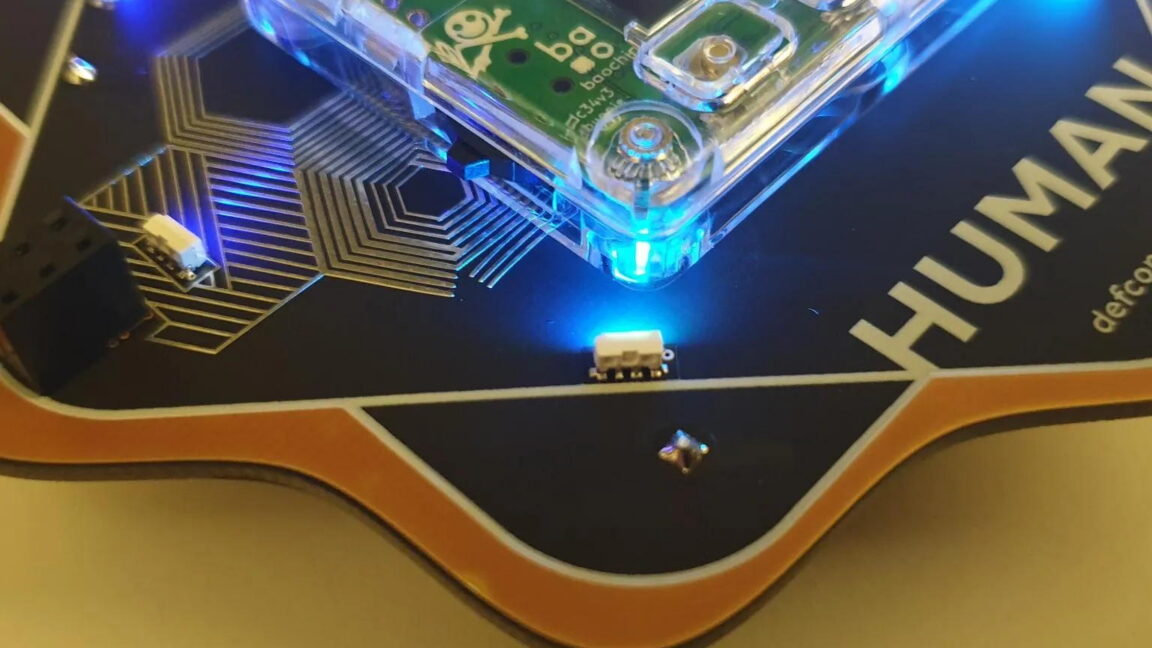
A removable chip lets hackers inspect their badge—and keep using it after Defcon.
Attackers modified a JavaScript file served by advertising technology company Adform, turning it into a browser-side tool that rewrites cryptocurrency wallet addresses. Adform detected the incident on July 27, 2026, removed the malicious code, notified affected clients, and reported it to authorities. Anyone who visited a site carrying the affected script on July 27 and copied a Bitcoin,
Adobe has released security updates to address a maximum-severity security flaw in Campaign Classic (ACC), its enterprise-focused marketing automation platform, that could result in arbitrary code execution. The vulnerability, tracked as CVE-2026-48449, carries a severity score of 10.0 on the CVSS scoring system. It has been described as a case of incorrect authorization that could result in
A fake browser update served over hijacked hotel Wi-Fi has been used to deliver CornFlake, a remote access trojan (RAT) that can capture webcam images, microphone audio, and keystrokes, Microsoft said in its latest report. Researchers track the operation as CaptiveCrunch and attribute it to Storm-2945. It assesses Storm-2945 to be an operational sub-cluster of Midnight Blizzard, also known as
A Chinese-speaking threat actor is suspected to be behind a fresh wave of cyber attacks targeting government organizations mainly located in Central Asia, including Afghanistan, Kyrgyzstan, Tajikistan, Uzbekistan, Kazakhstan, and the Syrian Arab Republic, since January 2025. These targeted organizations operate across several sectors, such as healthcare, research, government offices,
Cybersecurity researchers have shed light on a previously undocumented Go-based loader framework called HollowFrame and a Rust-based malware family tracked as Matryoshka. According to Blackpoint Cyber, the intrusion sequence begins with a spear-phishing message containing a link to an encrypted archive, which holds a Windows Shortcut (LNK). Executing the file triggers a multi-stage chain that
Google on Thursday announced that it fixed a whopping 1,072 security bugs in Chrome versions 149 and 150, surpassing the total number of flaws the company fixed across the prior 23 milestones combined. Both versions were released last month. In its latest patch for Chrome 151, released Wednesday, the tech giant resolved 370 flaws, out of which 349 were reported by Google itself. Seven of the
An academic study has disclosed a "widespread class" of security vulnerabilities impacting 4G and 5G core networks that, if successfully exploited, could trigger denial-of-service (DoS) attacks and even session hijacking, allowing an attacker to seize control of a user's network session. The findings have been released by a group of researchers from Singapore's Nanyang Technological University
Device code phishing - the abuse of the OAuth 2.0 device authorization grant to steal access tokens - has evolved from a niche red-team technique to an industrial-scale threat in under six months. Designed for input-constrained devices like smart TVs, printers, and so on, the device authorization login flow has been adopted by a wide range of apps and use-cases that it wasn't originally
Palo Alto Networks' Unit 42 says a Chinese-speaking threat actor used DeepSeek through the open-source Hermes Agent framework to launch attacks autonomously. After an initial Telegram instruction, the agent found internet-facing systems and selected public exploits. The researchers recovered no further operator input in the session. The operator, tracked through the aliases knaithe and KnYuan,
r/netsec
“A critical zero-day is being actively exploited in the wild”