ProgrammingNews
AI Conquered Coding. Fast Food Is Next
Your next drive-thru order might be taken by a bot. And you might not even notice.
Wired1 min read
Explore
Latest programming news, frameworks, languages and developer tools.
220 results • Page 4 of 19
Your next drive-thru order might be taken by a bot. And you might not even notice.
3 points 0 comments on Hacker News · cisa.gov
How a branch-free loop and byte-space arithmetic let GitHub case-fold every byte of code search at >45 GiB/s on a single core. The post Don’t stop early: Case-folding source code at memory speed appeared first on The GitHub Blog .
Your semantic layer is a risk mitigation strategy. Not risk in the abstract, compliance-framework sense, but the practical, operational risk that quietly drains organizations every day.
Ryan welcomes WPEngine CTO Ramadass Prabakar to the show to chat about what happens—and what we should do—when agents start acting like humans online, how our internet is evolving to serve both human and agentic experiences from the same interface, and what we can do to differentiate and protect human actions online from malicious bot activity.
Just two weeks after Thinking Machines released Inkling , its first open source AI language model, the well-funded startup led by former OpenAI chief technology officer Mira Murati today introduced Inkling-Small without sacrificing much of any performance — and in fact, the new model surpasses its larger predecessor on several benchmarks. Inkling Small is a 276-billion-parameter multimodal reasoning model with a permissive Apache 2.0 license that comes within a single point of its larger sibling on the third-party Artificial Analysis Intelligence Index , despite the original Inkling being 975 billion parameters (internal model settings). It accepts text, image and audio inputs, produces text, and supports a context window of up to one million tokens. Inkling Small uses 12 billion active parameters per token, compared with Inkling’s 41 billion active parameters, while preserving much of the flagship’s coding, reasoning and multimodal performance. For enterprises, the appeal is not simply that Inkling-Small is smaller. It is that developers appear to give up relatively little capability while reducing the model’s compute requirements, inference costs and deployment footprint. The model remains far too large for a laptop or conventional workstation, but it is materially easier to operate than the 3.5X larger flagship, making it a good fit for enterprises with some — but not a lot — of their own graphics processing units (GPUs). Thinking Machines has released the full weights on Hugging Face and added support for fine-tuning through its Tinker model training application programming interface (API). At launch, the company is advertising a limited-time 50% discount, bringing API pricing for the standard 64K-context Inkling-Small model to $0.58 per million prefill (input) tokens, $1.44 per million sampled (output) tokens, and $1.73 per million training tokens, with cached prefill requests priced at $0.116 per million tokens. A 256K-context variant is also available at higher rates. Nearly the same performance at a quarter the size Artificial Analysis assigned Inkling-Small a score of 40 on its Intelligence Index, compared with 41 for Inkling. That result is notable because Inkling-Small has 276 billion total parameters and 12 billion active parameters, while Inkling has 975 billion total parameters and 41 billion active parameters. Artificial Analysis also reported that no open-weight model at Inkling-Small’s size or smaller scored higher on the index. The model does more than merely approach the flagship’s aggregate score. On several evaluations, it surpasses Inkling. Thinking Machines reports that Inkling-Small scores 80.2% on SWE-bench Verified, compared with Inkling’s 77.6%, and 64.7% on Terminal Bench 2.1, compared with 63.8% for the larger model. It also edges ahead on SciCode, Humanity’s Last Exam, GPQA Diamond and CritPt. The gains are not universal. Inkling retains a clear advantage on factual knowledge and some agentic tasks. Inkling-Small scores 15.5% on τ³-Banking, compared with 23.7% for Inkling, and its AA Omniscience score is negative, reflecting weaker factual coverage even though its reported hallucination rate is slightly lower. That tradeoff matters for enterprises. Inkling-Small may be attractive for coding assistants, tool-use systems, retrieval-augmented generation, document analysis and multimodal workflows, but organizations using it for high-stakes factual tasks will still need retrieval, verification and human review. How a 276B model uses only 12B parameters at a time Inkling-Small is a sparse Mixture-of-Experts model. According to the model card published by Thinking Machines, its 42-layer decoder routes each token to six of 256 specialized experts, along with two shared experts that remain active for every token. That architecture helps explain the distinction between the model’s 276 billion total parameters and its 12 billion active parameters. The system retains a large pool of learned capacity but activates only a fraction of it during each inference step. It is also natively multimodal. Images, audio and text are projected into a shared representation and processed jointly by the decoder rather than being handled through completely separate external systems. Thinking Machines lists coding assistants, agentic applications, chatbots, RAG systems and other multimodal applications among its intended uses. The company also supports variable reasoning effort, allowing developers to increase or reduce the model’s test-time compute depending on the difficulty of the task. That gives engineering teams a direct way to balance quality, latency and cost across different workloads. Unfortunately, small does not mean it runs on a laptop Despite its name, Inkling-Small is not a consumer-scale model. The standard BF16 checkpoint requires at least 600 GB of aggregate GPU memory, according to Thinking Machines. The company lists two supported configurations: 4x NVIDIA B300 GPUs or 8x NVIDIA H200 GPUs. A quantized NVFP4 checkpoint lowers the requirement to roughly 180 GB of aggregate VRAM. Thinking Machines says that version can run in W4A4 mode on a single NVIDIA B300, or in W4A16 mode on two H200 GPUs. That rules out ordinary laptops, MacBooks, desktop gaming PCs and most developer workstations. Even heavily equipped local systems generally fall far short of the required memory. The practical deployment targets are enterprise GPU servers, cloud clusters and specialized inference providers. The “Small” label is therefore relative to Inkling, not to the broader universe of local models. Still, the reduction is meaningful. A model that approaches Inkling’s performance while needing substantially less aggregate memory can lower hosting costs, make capacity planning easier and widen the group of organizations capable of self-hosting it. For companies that want control over data, model behavior and fine-tuning, that smaller footprint may be more important than chasing the highest possible benchmark score. And of course, it being open source means that it will no doubt be rapidly quantized (made less precise but requiring less compute) and likely blended with other models to be made even smaller for consumer-grade hardware. Apache 2.0 is the gold standard for enterprise open source models The licensing may be as important as the benchmarks. Inkling-Small is released under Apache 2.0, one of the software industry’s most familiar permissive licenses. It generally allows organizations to use, modify, fine-tune, redistribute and commercialize the model, including inside proprietary products, provided they comply with the license’s notice and attribution requirements. That gives enterprises far more legal flexibility than many custom “open” AI licenses, which may include revenue thresholds, branding obligations, use restrictions or separate conditions for large-scale commercial deployment. The distinction is increasingly relevant as more AI companies publish model weights without using a conventional open-source license. Chinese AI darling Moonshot for example, made the weights of its frontier class Kimi K3 model available earlier this week under a custom "open" license that includes additional commercial conditions rather than the comparatively straightforward terms of Apache 2.0. For legal, procurement and platform teams, that difference can materially simplify adoption. Apache 2.0 does not eliminate the need to review acceptable-use policies, data provenance, regulatory exposure or downstream safety obligations. But it gives organizations a clearer starting point for building internal systems, shipping commercial products and maintaining modified versions of the model. A more repeatable model-development pipeline Inkling-Small also shows how quickly Thinking Machines has turned its first large model release into a repeatable engineering process. Thinking Machines researcher Horace He contrasted the two launches in a post on X : “Whereas I felt like it took a village to release Inkling, Inkling-Small felt much more routine 😆 We just took the pipeline used for Inkling, passed in a smaller model, and voila — new model! Inkling Small benefited quite a bit vs Inkling from some minor improvements, but there’s still so much more left in the tank...” The comment suggests the company is no longer treating each model as a one-off research project. Instead, it is building a reusable pipeline for pre-training, post-training, reinforcement learning, evaluation and release. Thinking Machines says Inkling-Small benefited from an improved pre-training data mix, changes to the machine-learning recipe and on-policy distillation using Inkling as a teacher. The team then continued agentic coding reinforcement learning for two weeks. Mira Murati emphasized the same point in her own post, describing Inkling-Small as comparable to Inkling at one quarter of the size and highlighting that the weights were open and fine-tunable on Tinker immediately. How enterprises and AI builders should think about Inkling Small The company is also distributing full BF16 and NVFP4 checkpoints and supporting deployment through SGLang, vLLM, TokenSpeed, Unsloth and Hugging Face tooling. That combination gives developers several deployment paths: use an API, fine-tune through Tinker, rely on a third-party inference provider, or operate the model on private infrastructure. Inkling-Small is not a model that most individuals will download and run locally. But for businesses deciding between a very large flagship and a more manageable open-weight system, it presents a compelling compromise: nearly the same measured intelligence, stronger results on several coding and reasoning tasks, lower token pricing, a smaller hardware footprint and a license that permits broad commercial development. The broader signal may be just as important. Thinking Machines is showing that Inkling was not a one-time release. The company is already compressing its model family, refining its training pipeline and moving toward a cadence in which open-weight multimodal systems can be produced, improved and deployed more routinely.
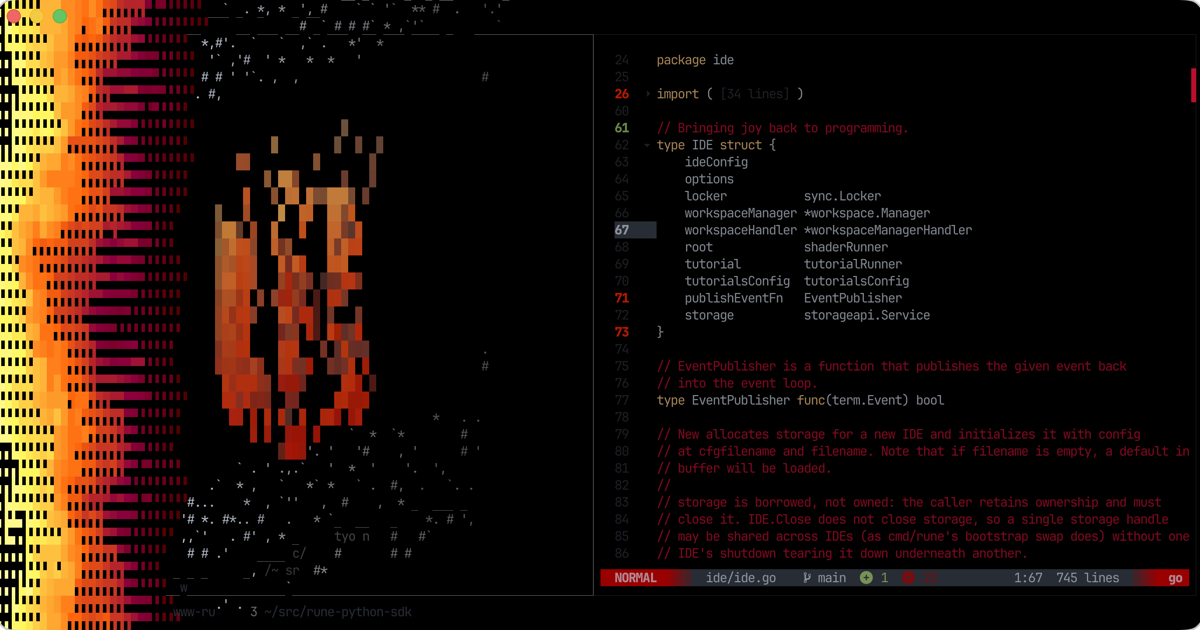
72 points 23 comments on Hacker News · rune.build
This week on Uncanny Valley, we discuss the open- vs. closed-source debate in AI, key players in White House AI policy, and how to stop your chatbot logs from showing up in search-engine results.
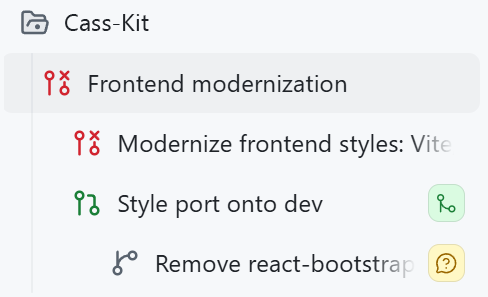
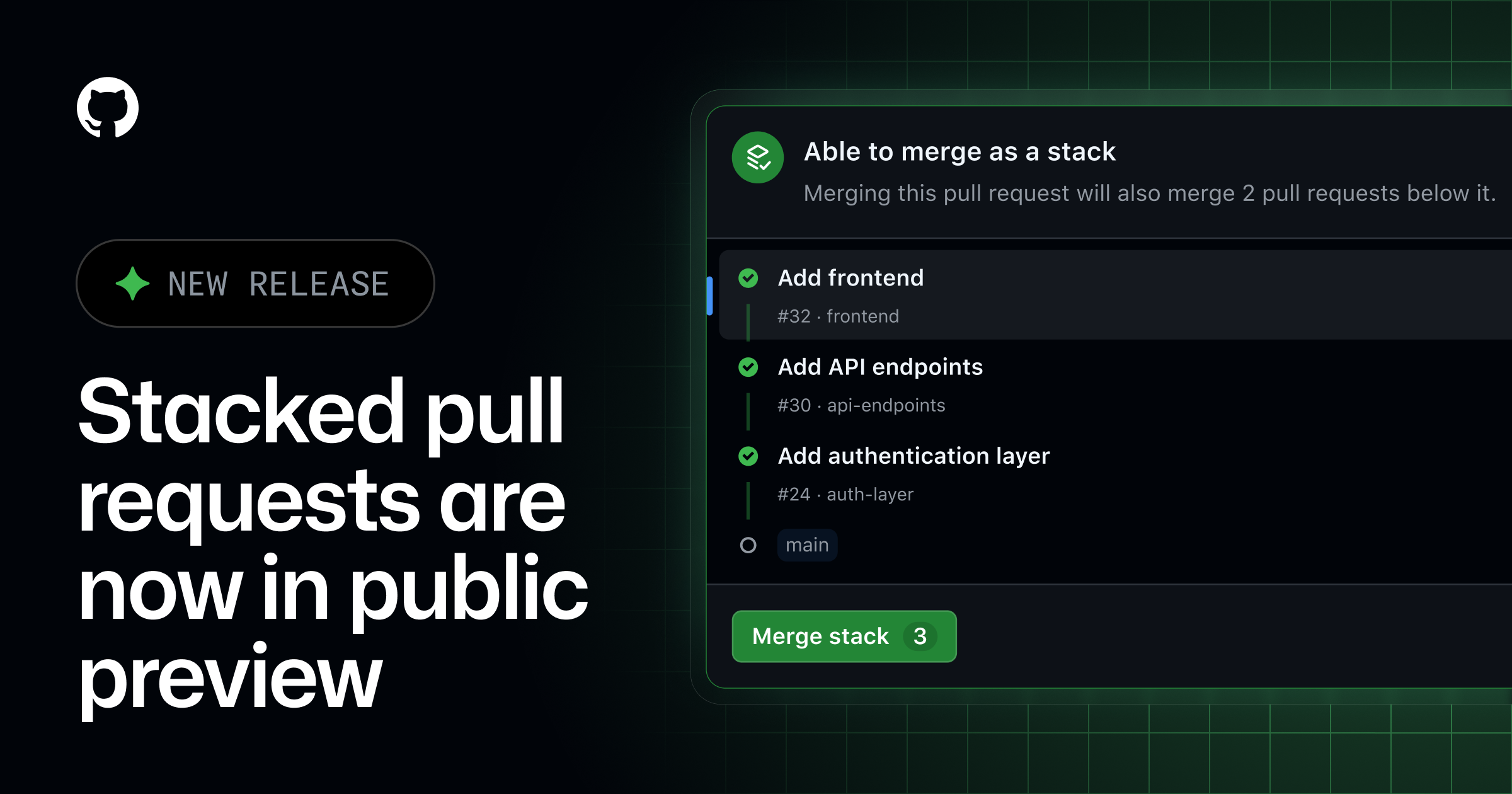
Learn how I modernized an old codebase of mine using stacked sessions and pull requests in the GitHub Copilot app. The post Stacked sessions and pull requests in the GitHub Copilot app appeared first on The GitHub Blog .
764 points 285 comments on Hacker News · github.blog
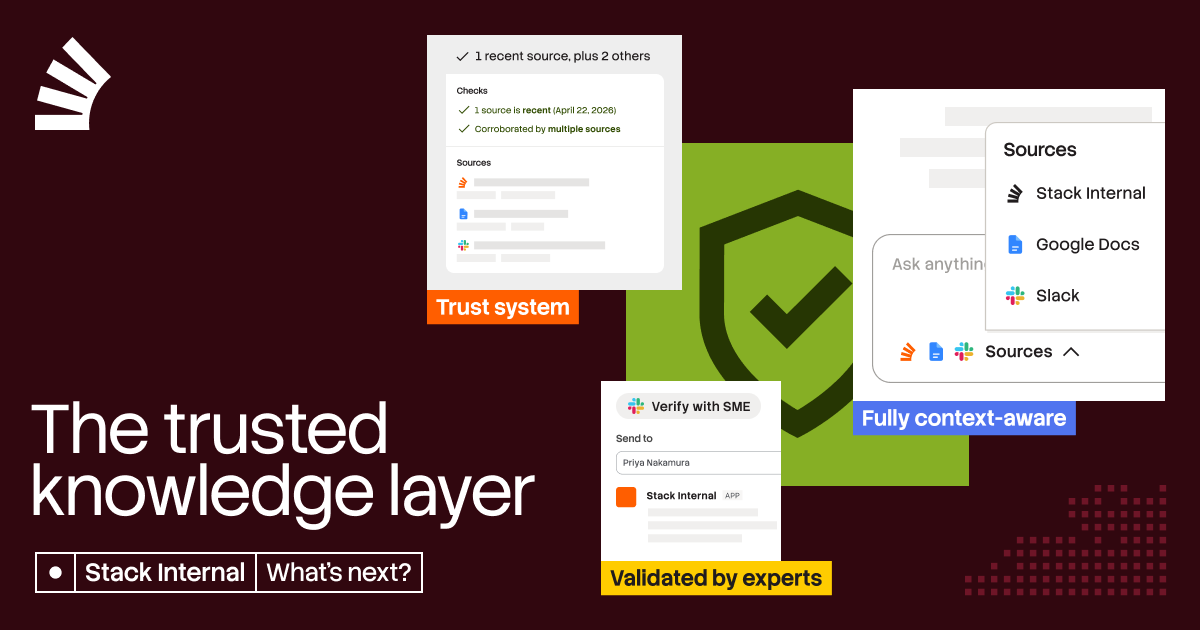
Introducing new Stack Internal capabilities as part of our upcoming platform experience. Our latest release turns your existing foundation of knowledge into enterprise memory that your people, teams, and AI agents can act on. Learn how we’re building the trust layer for enterprise AI.
1 point 0 comments on Hacker News · github.com