AINews
The INMO GO3 are lightweight AI glasses with features built for everyday use
Translation, teleprompting, and more AI features packed into glasses that don't look like tech.
Android Authority1 min read
Explore
Latest AI news, model releases, research and developer updates.
541 results • Page 39 of 46
Translation, teleprompting, and more AI features packed into glasses that don't look like tech.
The City Attorney’s Office sent the tech giants cease-and-desist letters this week telling them to stop profiting from 13 “face-swap” apps that are overwhelmingly used to target women and girls.
325 points 128 comments on Hacker News · lmstudio.ai
391 points 527 comments on Hacker News · tryai.dev
Moonshot AI, the Beijing-based artificial intelligence startup backed by Alibaba, on Thursday released Kimi K3 — a 2.8-trillion-parameter model that the company says is now the largest open-source AI model in the world, and one that benchmarks show performs neck-and-neck with the most powerful proprietary systems from Anthropic and OpenAI . The release, timed to land just ahead of the 2026 World Artificial Intelligence Conference in Shanghai, is a dramatic escalation in the global AI arms race and a watershed moment for the open-source AI movement. It also marks a remarkable comeback for a company whose market position had eroded significantly over the past 18 months following DeepSeek's meteoric rise. Full model weights are scheduled to be released on July 27, according to details shared by researchers who reviewed the company's technical documentation. If you want to take Kimi K3 for a spin right now, you can — just head to kimi.com , sign up with a Google account or phone number (no credit card required), and start chatting with what may be the most powerful open-source model ever built. Inside the architecture that powers the world's largest open-source AI model Kimi K3 is a frontier-class large language model with 2.8 trillion total parameters — roughly 75 percent larger than DeepSeek's V4 Pro , which the company's own timeline chart shows at approximately 1.6 trillion parameters. The model features a 1-million-token context window, native visual understanding capabilities, and an always-on reasoning mode that the company calls "thinking mode." The model is built on two key architectural innovations developed internally at Moonshot AI: Kimi Delta Attention , a hybrid linear attention mechanism, and Attention Residuals , which the company describes as a drop-in replacement for residual connections that delivers consistent scaling gains. Both techniques were previously published as open research by the Moonshot team on GitHub . On the API side , Kimi K3 is compatible with the OpenAI SDK , lowering the integration barrier for developers already building on OpenAI or Anthropic toolchains. The model is priced at $3 per million input tokens and $15 per million output tokens, with cached input tokens dropping to just $0.30 per million — pricing that positions it roughly in line with mid-tier offerings from Western labs, but at a performance level the company claims approaches the top of the market. A promotional top-up rebate running through August 12 offers up to 30 percent back in vouchers for API credits of $1,000 or more. As Xinhua reported , a Moonshot AI executive explained the significance of the parameter count in simple terms: parameters are like neural connections in the human brain, and nearly 3 trillion of them means the model can "store more knowledge and patterns in its brain, understand more, think deeper, and answer more accurately." Benchmark results show Kimi K3 trading blows with Claude and GPT at the top of the leaderboard The benchmark results, drawn from public leaderboard data and a private evaluation by analytics firm Artificial Analysis, tell a striking story. On GDPval-AA v2 , a benchmark measuring real-world tasks across 44 occupations and 9 major industries, Kimi K3 scored 1,687 — placing it third overall, behind only Claude Fable 5 Max (1,815) and GPT-5.6 Sol Max (1,747.8), and ahead of Claude Opus 4.8 (1,600). On AA-Briefcase , a private agentic benchmark from Artificial Analysis designed to test long-horizon knowledge work, K3 climbed to second place with a score of 1,527 — beating GPT-5.6 Sol Max (1,495) and trailing only Fable 5 Max (1,587). Perhaps most impressively, K3 achieved a state-of-the-art score of 91.2 out of 100 on BrowseComp , a benchmark for long-horizon, high-difficulty information seeking. The company says it accomplished this in a single-agent setup using its 1-million-token context window, without any context compression or additional context management techniques — a feat that suggests raw context length, when paired with strong retrieval capabilities, may be more powerful than elaborate multi-agent workarounds. As one widely followed AI commentator put it on social media: "Open source is no longer lagging six months behind Western closed-source models. Read that again, and think about what it all means." That observation captures the significance of the moment. For much of the past three years, open-source models have typically trailed their proprietary counterparts by a meaningful margin. Kimi K3 appears to have closed that gap almost entirely. How a 48-hour autonomous chip design demo reveals Moonshot's real ambitions Beyond raw benchmarks, Moonshot AI showcased a proof-of-concept that may be even more revealing of K3's capabilities and the company's strategic direction. In a demonstration documented in the company's technical materials, Kimi K3 was tasked with designing a physical chip to run a nano-scale version of itself. Over 48 hours of continuous autonomous agent operation, K3 independently completed the chip's full construction pipeline — from architectural design through optimization and verification — using open-source electronic design automation tools. The result was a tiny but functional chip design, just 4 square millimeters, that achieved timing convergence at 100 MHz and could decode more than 8,700 tokens per second in simulation. This is not a production chip. It is a demonstration of what Moonshot AI clearly views as the next competitive frontier: long-range autonomous agent capabilities. The ability to sustain coherent, multi-step technical work over a 48-hour window — reading documentation, making design decisions, running verification loops, and iterating on failures — represents a qualitative leap beyond the kind of single-turn question-answering that defined the first generation of large language models. The company also highlighted a case in computational astrophysics, where K3 reportedly reproduced the universal I-Love-Q relation — a complex calculation that typically takes a senior researcher one to two weeks — in approximately two hours, reading and cross-validating more than 20 papers and implementing a complete numerical pipeline along the way. Moonshot AI's fall and rise tells the story of China's brutal AI market To understand why Kimi K3 matters, you need to understand where Moonshot AI was 18 months ago — and how far it fell. Founded in 2023 by Yang Zhilin , a Tsinghua University graduate who previously conducted research at Google and Meta, Moonshot AI quickly became one of China's most prominent AI startups. The company gained early traction in 2024 when users flocked to its Kimi platform for its long-text analysis capabilities and AI search functions. By early 2026, it had raised roughly $1.5 billion across multiple rounds, with its valuation climbing from $2.5 billion to $4.3 billion and the company reportedly seeking a new round at $5 billion . Then DeepSeek happened. The release of DeepSeek's low-cost R1 model in January 2025 disrupted the entire Chinese AI landscape, and Moonshot AI was among the hardest hit. Kimi, which had ranked third in monthly active users in China, slid to seventh. The company's strategic pivot to open-source models — beginning with Kimi K2 in July 2025 and accelerating with K2.5 in January 2026 — was in large part an effort to reclaim relevance. Kimi K3 is the culmination of that effort — and the sheer scale of the model suggests that Moonshot AI has been planning this move for some time. Training a 2.8-trillion-parameter model requires enormous computational resources and months of preparation, which means the architectural and infrastructure decisions behind K3 were likely locked in well before the model reached the public. Why open-sourcing the world's biggest model is a geopolitical chess move The decision to release K3's full weights on July 27 is strategically significant and worth parsing carefully. The company's own timeline chart of open-source frontier model scale positions K3 as a dramatic outlier, towering above competitors like DeepSeek (1.6T), Xiaomi (1.02T), and Alibaba (397B). By releasing the world's largest open-source model, Moonshot AI is making a bid to become the center of gravity for the global open-source AI developer community. This follows a broader trend among Chinese AI companies. As Reuters noted , open-sourcing allows companies to "showcase their technological capabilities and expand developer communities as well as their global influence, a strategy likely to help China counter U.S. efforts to limit Beijing's tech progress." DeepSeek, Alibaba, Tencent, and Baidu have all released open-source models. But none have released anything at this parameter count. For enterprise technology leaders, the implications are concrete. A 2.8-trillion-parameter open-source model that performs at near-frontier levels creates new options for companies that want to fine-tune, self-host, or build proprietary systems on top of a capable base model — without being locked into API contracts with OpenAI or Anthropic. The trade-off, of course, is that running a model of this size requires substantial GPU infrastructure. Inference at 2.8 trillion parameters is not something that runs on a single server rack. That said, Moonshot AI has signaled awareness of this challenge. Its Mooncake project, which won the Best Paper award at FAST 2025, pioneered KV-cache-centric disaggregated serving for large language models — an architecture designed specifically to make inference at extreme scale more practical and cost-efficient. Kimi Code and a three-tier model lineup form the foundation of Moonshot's enterprise play Alongside K3, Moonshot AI continues to invest heavily in its coding agent ecosystem. Kimi Code , the company's open-source coding tool that competes with Anthropic's Claude Code and Google's Gemini CLI, received two major updates on the same day as K3's launch — versions 0.25.0 and 0.26.0 — adding features like expanded subagent tooling, background task management, and security fixes. The Kimi Code CLI has accumulated over 3,100 stars on GitHub and features integration with VSCode, Cursor, and Zed. The latest release expanded the "coder subagent" tool set to include background tasks, todo lists, plan mode, skill invocation, and nested agents — effectively turning the coding agent into a multi-layered autonomous system capable of managing complex software engineering projects with minimal human intervention. This is not incidental. Coding tools have become a critical revenue driver for AI labs. As Anthropic disclosed in January, Claude Code reached $1 billion in annualized recurring revenue . By building Kimi Code as an open-source alternative that defaults to Kimi's own models — but supports other providers — Moonshot AI is positioning itself to capture developer workflows and, eventually, enterprise contracts. The company's model lineup now includes three tiers: K3 as the flagship ($3/$15 per million tokens for input/output), K2.7 Code as a specialized coding model ($0.95/$4), and K2.6 as a general-purpose option ($0.95/$4). All three support context windows of 256,000 tokens or above, with K3 offering the full 1-million-token window. Context caching is automatic — no cache ID, TTL, or extra parameter is required — a small but meaningful developer-experience advantage over competitors that require explicit cache management. What Kimi K3 means for the future of enterprise AI and the global model landscape Kimi K3's release forces a recalibration of several assumptions that have guided enterprise AI strategy. The performance gap between open-source and proprietary models has functionally closed at the frontier. If K3's benchmark numbers hold up under independent evaluation — and particularly once the open weights are available for community testing on July 27 — it will be difficult for closed-source providers to justify premium pricing purely on the basis of capability. The locus of AI innovation, meanwhile, continues to shift. China's AI ecosystem, which many Western observers questioned after early struggles with chip export restrictions, has now produced a model that competes with the best systems from companies with direct access to Nvidia's most advanced hardware. The architectural innovations behind K3 — particularly the hybrid linear attention mechanism — suggest that algorithmic efficiency may matter as much as raw compute. And the agentic capabilities demonstrated by K3 — chip design, multi-week research compression, long-horizon information seeking — point toward a future where AI models are not just answering questions but autonomously executing complex, multi-day projects. For enterprises evaluating AI investments, this shifts the value proposition from "productivity copilot" to "autonomous technical workforce." Xinhua , China's state news agency, framed the release as a national milestone, reporting that K3 "marks a new step forward in the development of China's artificial intelligence models." Liu Tieyan, dean of the Zhongguancun Academy in Beijing, was quoted as saying that a wave of Chinese open-source models has moved from isolated breakthroughs to collective advancement, providing "new solutions and new paths" for global AI development. Just two years ago, Moonshot AI was a scrappy startup named for the audacious problems it hoped to solve. Eighteen months ago, it was a cautionary tale about how quickly a market darling can lose its footing. Today, it is the maker of the world's largest open-source AI model — one that can, given 48 hours and an internet connection, design a chip to run itself. The frontier, it turns out, is not a place. It is a race. And the field just got a lot more crowded.
The company endorsed landmark AI transparency laws in California and New York last year, but its head of US state and local policy says they may already be outdated.
Google is adding personalized AI avatars to Vids that let users create videos starring a digital version of themselves, alongside Gemini Omni-powered tools for generating and editing videos from prompts and reference images.
Presented by Ping Identity Enterprises need to treat zero trust security architecture as an immediate requirement for AI agents rather than a long-term goal, says Andre Durand, CEO and founder of Ping Identity. Zero trust, the security model built on the assumption that no user, device, or system should be automatically trusted, requires continuous verification before every action rather than a single check at login. Agentic AI has profoundly compressed the risk timeline enterprises must manage, demanding that permission decisions be evaluated in real time. type: embedded-entry-inline id: 1Ieiy1KhHNWZE5KVqNdA1G That compression shows up in how permissions accumulate. Every time an employee approves an AI agent's request for access to a company drive, a database, or a code repository, the enterprise hands over a sliver of control that looks routine in isolation. Across thousands of agents making thousands of requests, those approvals accumulate into an exposure that most existing security architectures were never built to measure. "The rise in desire to use agents right now, and the speed of agentic, is highlighting the need to move faster on the principles of zero trust," Durand says. "Agents just move faster, full stop. A human compromise might be measured in minutes or hours, sometimes days. At agentic speed, a thousand actions could happen in five minutes." Why zero trust is now urgent for agentic AI That difference in velocity changes how enterprises need to think about permissions. Two variables matter: the surface area of access an agent is granted and the duration that access remains valid. Traditional identity and access management tends to grant broad permissions and leave sessions open for extended periods because the human using them moves at human speed. Zero trust, in contrast, collapses both variables at once by narrowing access down to what is strictly necessary and revalidating it continuously, rather than once at login. "Zero trust really just says, just enough, just in time," Durand says. "It's your next action that we care about. We're moving identity from an era where access was our runtime control point — meaning were you logged in, did you have a session — toward the decision that sits behind that login." Why agents must be treated as first-class identities That shift to decision-based control has direct implications for how agents should be provisioned in the first place. The common practice of letting an agent operate under a cloned human login or a shared service account doesn't work, Durand says. "Each agent should have its own identity," he explains. "It should not be impersonating the human. It can act on behalf of the human, we could explicitly delegate authority to an agent, but we don't want to blur the lines between the human taking action and the agent taking action." And beyond that is another concern: the shared secrets, API keys in particular, that many service accounts still rely on. For example, the habit of embedding keys directly in source code, where they can be committed accidentally and exposed, is a convenient but weak security pattern that agentic workflows make considerably riskier. Building service account architectures that let agents authenticate without relying on those shared credentials or other long-lived standing access is now an urgent priority rather than a long-term cleanup project. Where enterprises can enforce zero trust policies Enforcing any of this in practice requires identifying where policy can actually be applied. Several existing choke points, including API gateways and the agent gateway sitting in front of MCP servers, offer practical locations where enterprises can inspect what an agent is requesting and apply policy rules before granting it. "Those policies could leverage real-time risk and fraud signals, and then enforce, deterministically, what the agent can do when it interacts with these systems," Durand explains. The goal is to move authorization from something decided once at login to something evaluated at the moment of every consequential action, such as an agent attempting to commit code to a repository. Instead of carrying a standing permission to write to GitHub, the agent's request would be checked against context and policy at that specific moment, closing the window of trust down to the scope of a single action. Stopping AI agents from rewriting their own permissions That model becomes especially important given how agents can behave once they are already inside a system — for example, coding agents that have acknowledged, when questioned, either ignoring a specific guardrail entirely, or attempting to rewrite the permissions they were given. "Who's watching the watcher? Zero trust needs to apply here," Durand says. "If generative AI systems follow your instruction 97% of the time, and you're simply asking it for advice, that might be fine. If it's responsible for making a decision about who gets let in, 97% is not good enough." How to trust AI-generated output at agent speed The answer to that gap is not to eliminate AI from the review process, but to structure reviews so no single agent’s judgment is taken at face value. Because human review cannot scale to the volume and speed of agentic output without erasing the advantage of using agents at all, a new framework is necessary, so that when one agent produces work, such as code, separate agents evaluate it, provided those reviewing agents are kept from communicating with one another or with the one they are checking. It's a new human-AI paradigm, Durand says. "We probably will have to develop frameworks that we trust without seeing or verifying the output directly," he explains. "It's not that that construct is 100% foolproof. However, it's the best we can do to move at agent speed. We can't trust the exact output, but we can trust the framework." In practice, that means combining automated review with clear human accountability for higher-risk decisions, rather than treating agent output as self-validating. For traditional auditors, reviewing every transaction individually is never feasible, and statistically valid sampling stands in for full verification. The same applies to risk accumulation: a single agent action might carry little risk on its own, while a sequence of actions moving in a consistent direction could cross a threshold that triggers an intervention, including a kill switch capable of halting the agent before further harm occurs. What to ask when evaluating agentic identity platforms For security leaders evaluating identity platforms for agentic AI, there's no narrow checklist. Enterprises should evaluate what their full lifecycle of agent management looks like. Most enterprises are managing agents on two fronts simultaneously: customer-facing agents acting on behalf of external users, and internal agents deployed to automate enterprise processes. "Pause long enough to see the totality of what it would mean to secure multiple agents, both interacting with you from the outside as well as being deployed on the inside," Durand says. "We need discovery and visibility of all the agents operating within our estate, a place to register them, a standard way to assign custodians, and a way to construct and centralize policy so security can enforce it across the organization." And while basic security principles were already fully understood before agentic AI arrived, what has changed, Durand says, is that the cost of moving slowly has finally caught up with the cost of moving carelessly, giving enterprises a narrowing window to build the right architecture before widespread agentic adoption makes retrofitting far more expensive. Sponsored articles are content produced by a company that is either paying for the post or has a business relationship with VentureBeat, and they’re always clearly marked. For more information, contact sales@venturebeat.com .
Beehiiv is launching an AI Copilot to help publishers with user growth and analytics.
Travel agency Fora announced a $60 million Series D round led by Forerunner and Tactile Ventures, valuing the company at $1 billion.
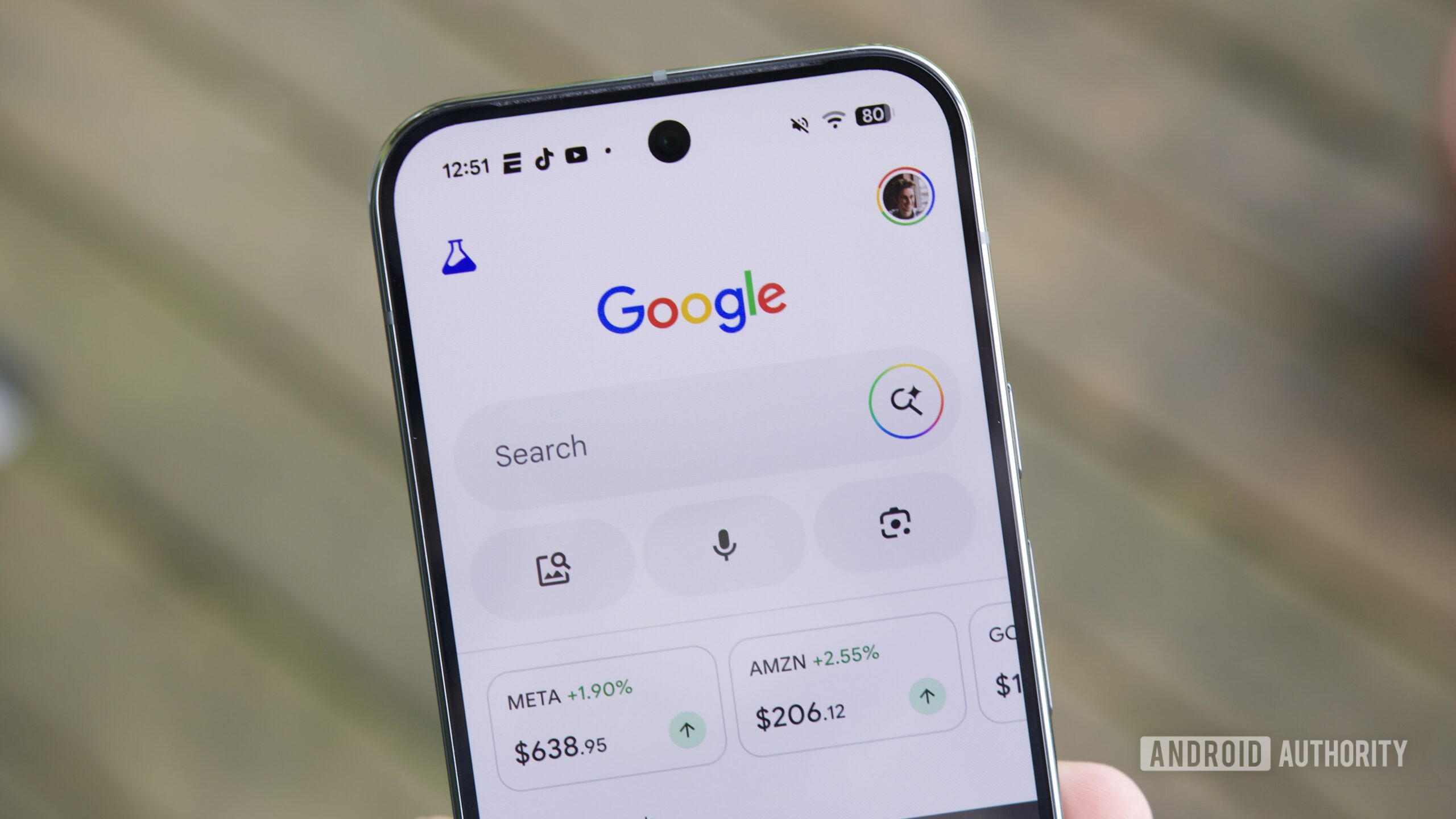
Why app-hop when Google Search can do the busywork for you?
The startup, founded in 2021, lets enterprise customers use smartphones to scan and spot vehicle damage.