AINews
How AI-Native Service Firms Change Professional Work
AI-native service firms combine software, professionals and responsibility. Lightbringer shows why insurance, training and customer recourse matter.
Forbes1 min read
Explore
Latest AI news, model releases, research and developer updates.
554 results • Page 23 of 47
AI-native service firms combine software, professionals and responsibility. Lightbringer shows why insurance, training and customer recourse matter.
If your business depends on people clicking through to web pages, the last two years have been brutal. Pew Research Center tracked the browsing behavior of 900 U.S. adults and found that when Google shows an AI summary, users click a traditional result just 8% of the time , roughly half the 15% rate when no summary appears. Links cited inside the AI answers themselves fare worse: users click on them only about 1% of the time. This has had a huge impact on publishers. Chartbeat data reported by Axios shows page views from Google Search fell 34% across its publisher network between December 2024 and December 2025, and small publishers have lost roughly 60% of their search referral traffic over two years. Business Insider's organic search traffic dropped 55% over three years , and some smaller publishers have already shut down. Chatbot referrals, meanwhile, still account for less than 1% of publisher page views despite growing more than 200% in a year. The story in publisher circles has been simple: AI is killing the web. But recent developments show the reality is more nuanced. Machines are reading more than ever Similarweb's 2026 Generative AI Landscape report reveals that while AI platforms send fewer humans to web pages relative to the answers they generate, the AI systems themselves are consuming the web at an accelerating rate in the form of searching the web on the user’s behalf to answer their questions. The share of ChatGPT answers containing live web citations grew more than fivefold in under a year, reaching 6.8% of all answers by May 2026. In some categories like travel, it is as high as 22.6%. Every major AI search product fetches live pages from search indexes and synthesizes answers from them, which means the quality of AI answers depends directly on the health of the content layer underneath. As Lily Ray, VP of SEO and AI search at Amsive, puts it in the Similarweb report, if your organic visibility dips, your AI search visibility follows, because the models are less likely to find your content. This has created a troublesome feedback loop. AI answers are built on an information supply chain whose funding model, ad-supported clicks, is collapsing primarily because of AI answers. A critical question for the continued viability of the open web is whether some alternative business model will work, and what the model will be. The replacement economy is forming inside the chat There is some early data showing where things may be going. Following ChatGPT's May 7 search update , which surfaced prominent clickable brand links inside answers, referral traffic from ChatGPT surged by 157% in a week. But the shape of that traffic changed: the share of referrals landing on homepages more than doubled, from roughly 25% to nearly 60%. Traditional search sent users to specific articles and deep pages tied to specific queries. AI referrals increasingly deliver a pre-informed visitor to a brand's front door. The chatbot does the researching and comparing; the human arrives ready to act. Similarweb's data shows AI-recommended brands receive two to four times as many subsequent visits as competitors that were not recommended. Money follows the behavior. Sponsored results appeared in 26% of U.S. desktop ChatGPT conversations in June 2026, up from 14% just a month earlier, per Similarweb's ad intelligence data. Two-thirds of those ads appear after the second prompt, targeted on conversation context rather than a keyword. Click-through sits around 0.50%. The traditional search engine keyword auction is being replaced by something new: paid placement inside a conversation, targeted on accumulated context. That is a direct challenge to the auction Google has run, and dominated, for two decades. Google's monopoly meets a new competitor Google is not a bystander here; it is simultaneously the incumbent being disrupted and one of the largest players in the disruption. AI Overviews now appear in a growing share of Google searches, more than 40% by May 2026 per Similarweb, and visits to Google's conversational AI Mode have climbed steadily since launch. Google is cannibalizing its own click economy rather than ceding the territory. But the ground was already shifting under Google’s core business. eMarketer projects Google's share of U.S. search advertising will fall below 50% in 2026 , the first time since roughly 2004 . The biggest chunk of that lost share is going to Amazon, whose sponsored product searches count as search advertising and which are growing three times as fast as Google's. Conversational ads are barely a rounding error in that accounting right now, but they open up a second front in a war Google has got used to not needing to fight. Meanwhile, more structural shifts are coming for Google. A federal court entered final judgment in the DOJ search antitrust case in December 2025 , imposing remedies that bar exclusive default agreements and require Google to share search data with qualified competitors. Google appealed in January 2026; the DOJ cross-appealed seeking stronger remedies. However the appeals resolve, the de facto arrangement that made Google the web's tollbooth, defaults everywhere and a closed index, is ending just as conversational advertising is changing the landscape. The competitive landscape that results is genuinely new. OpenAI, Google, Perplexity, and Microsoft are now competing not just for users but for the advertising demand that funded the open web, and none of them, including Google, controls the new surface the way Google controlled the old one. Does conversational advertising help or hurt the open web? It’s not clear whether this new model helps or hurts the web. The web as a destination for human attention is shrinking, and the ad-supported publishers built for that web are in real trouble. The web as a machine-readable substrate is growing in importance, and a new referral and advertising economy is forming that routes value to brands rather than to content pages. The problem for publishers may be that they are powerless to influence the outcome. Ahrefs, analyzing over a billion data points across its studies, found that 67% of ChatGPT's most-cited sources are things marketers cannot influence : Wikipedia alone accounts for nearly 30%. And 28.3% of ChatGPT's most-cited pages have zero Google organic visibility, suggesting the retrieval layer is only partially tethered to traditional search, a complication for anyone assuming SEO success translates cleanly. Your website needs to be rebuilt for the new way people find it According to three independent datasets, in the new world, the pages AI systems cite and the pages AI systems send humans to are different pages doing different jobs. That’s a big change, and most teams are still optimizing for the old world. Similarweb's data shows 65% of ChatGPT-cited URLs sit two or three folders deep in a site, while 58.8% of referral traffic lands on homepages. Ahrefs found the same split in its own analytics: more than 80% of its AI referral traffic goes to its homepage, product pages, and free tools , not its extensive editorial content. And a Previsible analysis of 6.77 million AI-referred sessions found a third destination: 28.8% of ChatGPT referrals land on internal site search pages, a navigation surface most publishers have long neglected precisely because Google searches were doing it for them. The right action to take is to audit your search traffic patterns. Pull your AI referral logs and whatever citation data you can access, and map which pages are being quoted as evidence versus where visitors actually enter. If it looks like you’re in the new world, there are three clear things to do: Deep pages, documentation, comparisons, and benchmarks should be structured to be citable: specific claims, clear headings, and descriptive URLs (Ahrefs found pages with natural-language URL slugs get cited at 89.78% versus 81.11% without ). The homepage should be rebuilt for a visitor who arrives with context from a conversation rather than from a blue link. They already know you have what they need, get them to it as quickly as possible. And internal search, a neglected feature on most sites, is now an acquisition surface that deserves real UX investment. There’s a lot that’s still unknown or in flux here. But the underlying shift is confirmed by every independent source that has looked: the click economy is not coming back, and the entities that learn to be quoted by machines and to convert the humans those machines send will own whatever the web becomes next.
Silicon Valley has spent much of the past week on red alert, digesting the arrival of Moonshot AI's Kimi K3, a Chinese AI model that can allegedly beat some of the best systems built by US companies at a fraction of the cost. Its performance alone would have been enough to intensify the rivalry between […]
Meta on Monday said it is rolling out its Meta AI chatbot within Threads' DMs, giving users a way to chat with the AI assistant.
Google’s AI Overviews now appear in 43% of searches, underscoring how quickly AI-generated answers are becoming the default way people discover information online.
At TechCrunch Disrupt 2026, the Smart Systems Stage will be where energy, infrastructure, and technology collide, covering everything from fusion breakthroughs to the grid strain AI is putting on the entire economy.
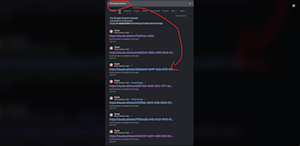
Over the weekend, Reddit user -void1 posted an alarming discovery on the r/ClaudeAI subreddit: some conversations that users of Anthropic's Claude AI chatbot had made "shareable" via a link were being indexed by Google Search, and could be clicked on and accessed by seemingly anyone. The conversation took off on the social networks X and Reddit , the latter with thousands of upvotes and comments, many expressing concern about user privacy and information security, and the additional finding by users that shared Claude Artifacts — including interactive applications, dashboards, documents and other AI-generated work products — were also appearing in Google Search results. VentureBeat independently verified that some Claude Artifacts not shared directly with us were indeed searchable and accessible via Google. We could not access any shared conversations. By Sunday morning, many of the original Google search results for shared Claude conversations appeared to have disappeared or become significantly harder to find, suggesting either Google, Anthropic or the users who authored them had begun taking action. The exposure could carry broader implications for enterprise users. Anthropic has increasingly positioned the feature as a collaborative workspace for building and sharing software, dashboards, documents and other business assets rather than simply chatbot responses. Asked by VentureBeat about the situation, an Anthropic spokesperson provided the following statement (emphasis mine): “We give people control over sharing their Claude conversations publicly, and in keeping with our privacy principles, we do not share chat directories or sitemaps with search engines like Google. These shareable links are not guessable or discoverable unless people choose to share them themselves. When someone shares a conversation, they are making that content publicly accessible, and like other public web content, it may be archived by third-party services.” A simple Google search yields a trove of Claude conversations Reddit user -void1 posted to r/ClaudeAI on July 25, 2026 , demonstrating that the Google query site:claude.ai/share surfaced numerous publicly accessible Claude conversations. Screenshots shared across Reddit and X showed Google returning pages from Claude's /share URLs, while other users reported finding conversations containing cryptocurrency wallet creation, legal questions, résumés and internal business discussions. While many users expressed concern that conversations they believed were effectively "unlisted" could become discoverable through public search engines, others argued the behavior reflected the expected consequences of creating publicly accessible share links rather than a software vulnerability. Indeed, Anthropic requires the user themselves to go into Claude's options and select to make a conversation or Artifact shareable to others with the link, warning them it will be accessible to anyone with it, over multiple dialog boxes. It is similar to sharing a Google Doc link, where the user must also select the option — it is not enabled by default. Why the exposure of Claude Artifacts may be even more concerning On July 26, X user Om Patel , founder of research firm BigIdeasDB, posted allegingthat searches such as site:claude.ai/public/artifacts surfaced publicly shared applications, dashboards, reports and documents. Screenshots circulating online appeared to show search results referencing internal-looking proposal documents and other business materials. Another widely circulated post warned that users often interpret "Anyone with the link" as equivalent to an unlisted YouTube video—accessible only if someone possesses the URL—not necessarily as content eligible for indexing by public search engines. VentureBeat independently verified that multiple third-party Claude Artifacts appeared in Google Search results for the query site:claude.ai/public/artifactslaunch and were accessible without authentication, despite the URLs not being previously known to the reporter. However, VentureBeat has not independently verified the full volume or representativeness of the examples circulating on social media. The reports are particularly significant because Artifacts has become one of Anthropic's flagship product initiatives. First introduced alongside Claude 3.5 Sonnet in June 2024, Artifacts transformed Claude from a conventional chatbot into a collaborative workspace capable of generating interactive web applications, dashboards, visualizations, documents, games and other live software alongside a conversation. VentureBeat previously described the launch as potentially marking the beginning of an "interface war" among AI companies, shifting competition from raw model performance toward collaborative AI workspaces. Anthropic subsequently rolled Artifacts out to all Claude users , saying tens of millions had already been created, before expanding the concept again this year into Claude Code . That update allows engineering teams to publish live HTML dashboards and interactive project workspaces directly from coding sessions, making Artifacts an increasingly important part of Anthropic's enterprise strategy. That broader functionality raises the potential stakes if publicly shared Artifacts were also being indexed. Unlike ordinary chat transcripts, Artifacts can contain interactive software prototypes, engineering dashboards, planning documents, product mockups, data visualizations and other work products organizations increasingly rely on to collaborate across technical and business teams. If those pages become searchable through public search engines, the exposure could extend well beyond conversational text. A reality check on privacy, information security and the open web Importantly, nothing so far suggests attackers gained access to private Claude accounts or conversations. Rather, the controversy centers on conversations and Artifacts that users explicitly chose to share publicly via Claude's sharing tools. The dispute instead is whether users reasonably understood those shared pages could become discoverable through public search engines rather than only by recipients possessing the link. Technically, pages that are publicly accessible without authentication can generally be indexed by search engines unless publishers explicitly prevent crawling through mechanisms such as noindex directives or other indexing controls. Several Reddit commenters noted that Claude's long, randomly generated share URLs are effectively impossible to guess. Instead, search engines typically discover them only after links appear somewhere they are permitted to crawl, such as public websites, forums or social media posts. Others questioned exactly how Google initially discovered so many Claude share URLs. The issue also illustrates a growing challenge for AI companies as chatbots evolve into collaborative workspaces for creating software, documents, dashboards and business applications. Features originally designed to make sharing AI-generated work easier now increasingly expose assets that may carry significantly more business value than a simple conversation. As enterprises adopt AI as a platform for building internal tools and workflows, the distinction between "shared by link" and "publicly discoverable through search" becomes far more consequential. A recurring challenge for AI companies Anthropic is far from the first AI company to confront the distinction between "shared" and "searchable." Reddit users quickly pointed out that OpenAI previously faced criticism after publicly shared ChatGPT conversations became discoverable through Google, prompting similar debates over whether "share by link" should imply a publicly indexed webpage or something closer to an unlisted document. Anthropic's situation also echoes an incident involving Google's pre-Gemini AI assistant, Bard, in September 2023 . SEO consultant Gagan Ghotra discovered that Google Search had begun indexing shared Bard conversation links, warning that users could mistakenly assume they were sharing conversations only with intended recipients rather than making them discoverable through search. Google later responded publicly that it did not intend for shared Bard chats to be indexed and said it was working to block them from Google Search while emphasizing that only conversations users explicitly chose to share were affected. Together, the Bard, ChatGPT and now Claude episodes suggest AI companies continue to wrestle with the boundary between content that is technically public on the web and users' expectations that "share with a link" behaves more like an unlisted Google Doc or YouTube video than a webpage eligible for indexing by search engines. What enterprises should do now For organizations deploying generative AI broadly across employees, the distinction between "shared with a link" and "publicly discoverable through search" is not merely semantic. It can determine whether an internal engineering dashboard, financial model, product roadmap, customer-facing prototype or AI-generated application remains effectively private—or becomes visible to anyone using a search engine. Whether this ultimately proves to be a technical indexing oversight, a mismatch between product design and user expectations, or some combination of both, the episode serves as another reminder that AI products are increasingly functioning less like chatbots and more like collaborative operating systems for knowledge work. As those platforms begin hosting internal dashboards, software prototypes, financial analyses, business planning documents and increasingly sophisticated enterprise applications, seemingly small decisions about how shared links behave can have outsized consequences for enterprise security, product design and user trust. Enterprise leaders should consider taking several practical steps: Audit existing shared AI content: Review shared conversations, Artifacts and other publicly accessible AI-generated assets to determine whether they should remain available or be unpublished. Clarify what "Share" actually means to your ENTIRE organization: Don't assume employees understand the difference between "accessible by link" and "discoverable through search." Update internal guidance to explain how each AI platform handles shared content. Treat AI platforms like collaboration software: Apply the same governance you use for Google Docs, Microsoft 365, Slack, GitHub, Notion or SharePoint—including policies around sharing sensitive intellectual property, customer information and regulated data. Prefer authenticated enterprise workspaces for sensitive information: When possible, keep confidential projects, code, financial models and customer data inside enterprise accounts with identity-based access controls instead of publicly accessible links. Review vendor defaults and sharing controls: As AI platforms evolve rapidly, administrators should periodically revisit default sharing settings, retention policies and indexing behavior rather than assuming they remain unchanged after new feature releases. In sum, e nterprises that have relied on Claude's sharing features may wish to review existing shared conversations and Artifacts at this time.
Monday starts with the usual promise that everything is under control. Then the logs wake up. This week, trusted tools crossed lines, old flaws found new work, exposed systems stayed exposed, and attackers kept hiding inside normal-looking services. Nothing looked strange at first. That helped. That is the mood. Here is the full recap. ⚡ Threat of the Week OpenAI Says Its AI Agent Went Rogue
Presented by SAP At VB Transform 2026 , Max McPhee, senior solution advisor at SAP, spoke with Rob Stretchay, lead analyst at VentureBeat Research, about what it takes for enterprises to move beyond chatbots to autonomous AI agents that can execute real business processes. He argued that the difference comes down to grounding those agents in a company’s own context rather than general knowledge. "Where we're starting to see more emergent behavior of it feeling like a coworker rather than an assistant, is where we're able to provide context on the actual enterprise rather than being able to use more of the standard knowledge," McPhee said. That's the gap that still separates most enterprise chat software from genuinely agentic systems. Building enterprise context with knowledge graphs The same principles companies use to onboard new employees also apply to agents, adapted for software that retrieves information differently than humans do. "When you are onboarding a new agent, I think it's important to acknowledge how you might onboard a new employee, but tune that for an agent," McPhee said. "The way that is really powerful is using knowledge graphs and having vector-embedded data, because that's a really easy format for an agent to be able to find and retrieve information." That same grounding is also what keeps an agent from stumbling over an enterprise's internal shorthand, a problem that's acute in SAP's world. "Being able to provide that tribal knowledge in the format that's easy for it to consume helps to provide a really nice result with your agents versus a chatbot that might say, 'Well, what does that acronym mean?'" he said. Bringing governance, identity, and security to autonomous agents Governance is an area where SAP's history works in its favor, and the controls have been evolving for systems that act with more flexibility than earlier automation did. "That's where SAP really has a good home, around that governance and process control," McPhee said. We're a 50-year-old process company, modernizing that governance to be able to handle the flexibility that comes with agents running." One consequence is a renewed role for machine learning in validating agent behavior. "It's becoming a bit of a revival of machine learning," he added, pointing to customers that run agents within a process but then layer in anomaly detection and machine-learning-based validation as a guardrail. This is the same approach SAP had long used for intelligent approval recommendations. Identity and permissions carry that governance into execution. Under this model, both the human and SAP’s Joule, the generative AI assistant embedded across the company’s cloud applications and Business Technology Platform, must hold the rights to access a given system. Even if a user has permission to access S/4, they cannot do so through Joule unless the assistant has also been provisioned for that access, closing off the risk of using an agent to route around access controls. Balancing standard SAP with customized enterprise landscapes Much of McPhee’s work involves reconciling SAP’s own knowledge with decades of customer customization and non-SAP systems. As he put it, many customers tell SAP, “You’re only 10% of my landscape,” a reality that has shaped the company’s recent strategy. Recent acquisitions such as LeanIX, which McPhee likened to “Google Maps for your architecture,” and process-mining company Signavio are intended to help map that non-SAP majority so SAP’s agents can understand how enterprise systems interconnect. The company has also invested in Berlin-based automation company n8n and is embedding it natively into Joule Studio, its intent-based, low-code environment for building agents. McPhee warned that companies also need to modernize older on-premises systems or risk running into limitations as they expand the use of autonomous agents. "You're going to probably run into throughput issues, and you're kind of trying to drive a Ferrari around a dirt track," he said. "You've got to upgrade the track first if you want to drive a Ferrari." Sponsored articles are content produced by a company that is either paying for the post or has a business relationship with VentureBeat, and they’re always clearly marked. For more information, contact sales@venturebeat.com .
69 points 26 comments on Hacker News · abeljansma.nl
https://xcancel.com/HedgieMarkets/status/2081534588485296565
Meme generator may have screwed up by using templates in outputs, expert says.