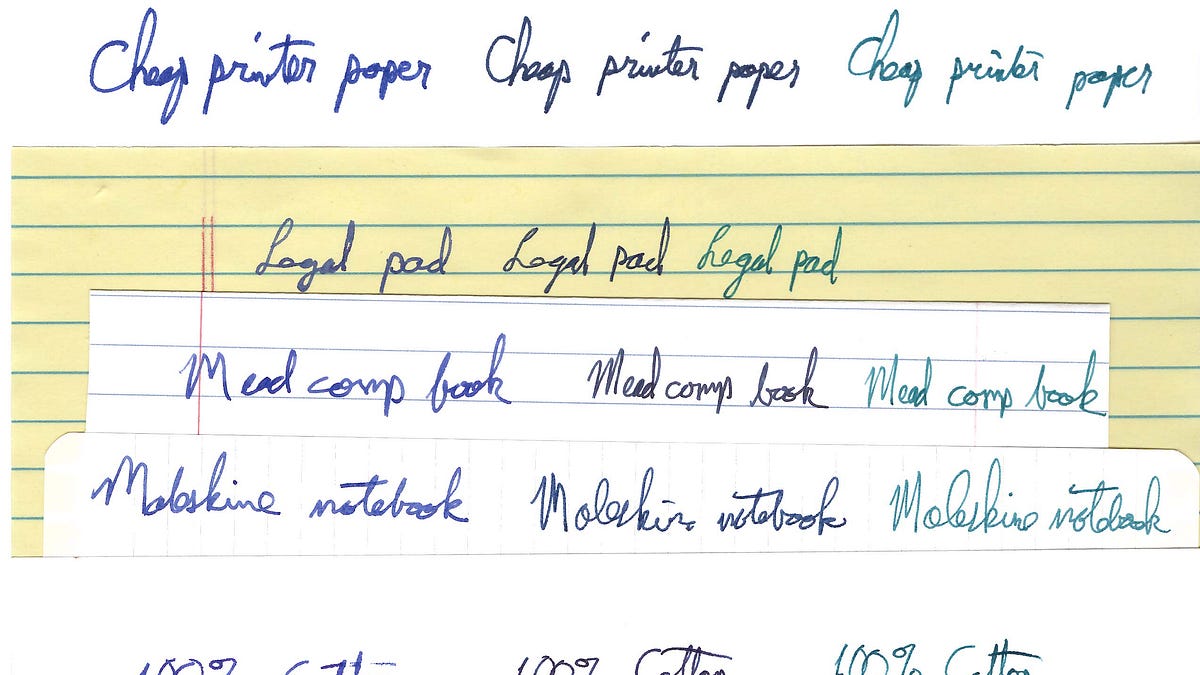
Matched "The Hacker News"Found in Description
TechnologyNews
What happened to TheNumbers.com
411 points 196 comments on Hacker News · stephenfollows.com
Hacker News1 min read
Explore
Showing results for:
"The Hacker News"
1,284 results • Page 67 of 107
Matched "The Hacker News"Found in Description
411 points 196 comments on Hacker News · stephenfollows.com
Matched "The Hacker News"Found in Description
156 points 110 comments on Hacker News · tombedor.dev
Matched "The Hacker News"Found in Description
Hi Hacker News, I'm Louis. I built Screenpipe ( https://screenpipe.com ), an app that records your screen and audio locally (only!), and gives AI agents a searchable memory of what you've seen, said, and heard. This makes it easier to automate your repetitive tasks, turn them into SOPs (Standard Operating Procedure) and so on. I made a HN-style demo video at https://www.tella.tv/video/build-your-ai-second-brain-with-s... and there’s a marketing video at https://www.youtube.com/watch?v=c1jV6E9pyug . I’ve been obsessed with this for a long time. I’ve been maintaining a “second brain” since 2020, in which I would store journals, handwritten notes, music I listen to, projects I'm working on, conversations I have with people, personal CRM etc. I experimented a lot of RAG in the early days with ParlAI, hundreds of fine-tuned GPT2 models, and GPT3 ( https://forum.obsidian.md/t/fine-tuning-openai-api-gpt3-on-y... ). Later I built Ava, the first Obsidian AI plugin, which grew to a few thousands of users quickly. It then became Embedbase, an API to make it easier to build AI apps powered by RAG. What I learned from all this is how important it is for the models to have context about what you’re doing on your computer, in order to get them to do what you want. In the early days there was fine tuning but it was too much pain, then there was tool calling so that AI can access software you use but still kinda not autonomous enough. needing micro management. Then MCP came, but it felt too static, and non technical users struggled to build and use MCP. Then we got skills. Most recently we’ve seen Karpathy’s LLM-maintained wiki, Garry's GBrain, etc., where an agent incrementally maintains a persistent collection of Markdown pages. New sources update entity pages, strengthen or contradict existing claims, and improve a synthesis that compounds over time. I like this pattern, but it still begins with someone selecting and importing the sources. There is still no way AI can know what you and your company are doing every day, across apps, not just inside of apps. Of course, not everyone wants this. But I do! I want AI to know what I'm doing and never lose memory ever again, and I want it to use the same software that humans do, without painful context switches. I started building Screenpipe for myself in 2024 - a CLI to record your screen and plug this context into AI. An HN user posted it in 2024 ( https://news.ycombinator.com/item?id=41695840 ) and that discussion influenced the product. The most useful criticism concerned recording consent, local security, CPU usage, signal-to-noise, and whether agents could act on top of the data. The naive implementation started from continuously recording video and running OCR over every frame. But that creates duplicate data, consumes substantial resources (it basically turns your computer into a space heater!), and discards structure the operating system already knows. Screenpipe now instead listens for events such as app switches, clicks, typing pauses, scrolling, and idle fallbacks. When something meaningful changes, it pairs a screenshot with the operating system’s accessibility tree at the same timestamp. OCR is used when structured accessibility data is unavailable. We also capture audio continuously, identify speakers and transcribe locally through Parakeet/Whisper or using cloud models. Everything is indexed in a local SQLite database, mp4 files, and sometimes md files. An AI friendly API on port 3030 is open for agents, with authentication and a MCP and skills. Once Screenpipe has been up and running for a while, you can use it through our built-in chat, Claude, ChatGPT, Hermes, Openclaw, or any agent, to do things like: - adding context to your current chat, e.g. "gather all context about task X", then requiring less prompts to achieve your goal - retrieve information, e.g. "retrieve the tasks i was working on from 8 am to 4 pm, make a list of what got done and what's left" - create and maintain a personal wiki / second brain for your agents: "every 1h organize everything i do in projects, people, tasks, meetings in my Obsidian vault as markdown files and folders" - create automations: whenever i visit someone's profile on linkedin, update my crm - find automation opportunities: look at everything my team has done this week and turn it into a list of automation opportunities Screenpipe data is stored locally, though we also offer an enterprise plan to discover automation opportunities and for that the company decides where the data lives. We built our own AI PII model to redact sensitive information, it runs locally on Apple MLX or Windows DirectML, we also support cloud confidential inference for low end devices, although our local models are meant to use <1% CPU and <400 mb RAM. Users can set apps, windows, and urls to filter, in addition to browser incognito mode. We also support recording schedules and other privacy features. Most of our codebase is written in Rust, MLX, Onnx, we like cidre or direct C call for Apple APIs and windows-rs for Windows API. We also experimentally support Linux. We have a desktop app ( https://screenpipe.com/how-to-install ) and a CLI: npx screenpipe record You can run that without creating an account. All the code is source-available at https://github.com/screenpipe/screenpipe . We took the dreaded step of making our own Screenpipe Commercial License. I know HN strongly prefers OSI open source (MIT/Apache/etc.) but couldn’t find a sustainable way to keep developing Screenpipe while companies were using it commercially for free. So now personal non-commercial, nonprofit, educational, and research use is free, but commercial use requires a license. Versions released before the license change remain available under MIT. We have a free tier, and other plans, including Enterprise which helps companies find automation opportunities. Would love to hear any feedback, things you've done with screenpipe, or features you'd want
Matched "The Hacker News"Found in Description
87 points 64 comments on Hacker News · openjdk.org
Matched "The Hacker News"Found in Description
375 points 263 comments on Hacker News · github.com
Matched "The Hacker News"Found in Source
https://littletech.org/ https://static.politico.com/4a/bf/9c4021d8404386b0a311dcccf0...
Matched "The Hacker News"Found in Source
Hi HN, we are Marcos and Harrison, cofounders of Palmier ( https://palmier.io ). We are building Palmier Pro, an open source macOS video editor, with built-in AI generation and a local MCP server that connects to your agent. Here are a few demos: - Making some AI transitions: https://www.youtube.com/watch?v=hbM_-eR1GX4 - Multicam editing with Codex: https://www.youtube.com/watch?v=SjS2q2LT1q8 - Cutting long form clips into shorts: https://www.youtube.com/watch?v=PR66eN2ouuQ We built Palmier Pro as an internal tool when we were making AI launch videos for other startups. The main problem it solved in the beginning was the back-and-forth between AI generation platform and video editor. The iteration loop was awkward: AI videos → download → import to editor → edit → realize we need to change the AI video → repeat. So we built a minimal video editor where we could let Claude generate AI videos inside the editor. As we gave more and more tools to the agent, we wanted to push to see what else agents can do in the video editing space. So today, your Claude/Codex can: - Manage projects inside Palmier Pro - Import media from a public URL or filesystem to the project, and organize them in folders - Search media (by embedding footages using SigLIP2 running locally) - Edit the timeline (tracks/clips/keyframes operations) - Generate images, videos, sound effects, captions, music - Export videos There are two ways for LLMs to interact with the editor: by connecting to the local MCP server, or using the in-app chat. Both use the same tools and APIs exposed by the video editor. We have seen people using MCP server to connect to their own workflow to automate massive-scale video editing (e.g. given this same podcast style, replicate it with other footages that I have). We have also seen people using the in-app chat where it lives closer to the editor UI, with lower latency for faster iteration. We don't believe that AI is going to replace human creativity (nor should it), but where it can really help is in automating the gruntwork in video editing. Most work in the editing workflow is more mechanical than creative. Our vision is to build a video editor where AI can enable more individuals to create. Throughout our experiments, AI is not very good at creative editing, but given a pattern (transcription-based, beat-based), it can do a decent job at rough cut. We built Palmier Pro in Swift as an MVP because we wanted better performance and minimal dependencies (no nodejs/webview), with some native macOS APIs like SpeechAnalyzer and CoreML for us to run some models locally. We use SpeechAnalyzer for local transcriber, SigLip2 to embed video frames, beat_this for beat detection, Silero VAD for silence detection, all running locally. The tradeoff is that we don't support Linux or Windows at the moment. Palmier Pro is open source and free to try out (macOS 26 only at the moment, though - we'll support more platforms over time, but for now are focusing on iterating the core product). No login required except for the AI generation features, which route requests to our backend. We are offering free credits on sign up so you can try out the AI generation as well. We'd love to hear your feedback!
Matched "The Hacker News"Found in Source
Most of this week's trouble came dressed as something useful. A package stole data. A fake extension opened remote access. A safety app became spyware. An image gave hidden orders to an AI agent. Other threats hid in open systems, weak code, and normal network traffic. The threats change every week. Subscribe, and we’ll alert you when each new ThreatsDay Bulletin is out. The danger was
Matched "The Hacker News"Found in Description
213 points 109 comments on Hacker News · learnopengl.com
Matched "The Hacker News"Found in Description
1435 points 650 comments on Hacker News · nealstephenson.substack.com
Matched "The Hacker News"Found in Description
156 points 82 comments on Hacker News · mathunion.org
Matched "The Hacker News"Found in Description
269 points 52 comments on Hacker News · haqr.eu
Hacker News
“GPT-5.5's API pricing is reshaping how startups build AI products”