Matched "Google Developers"Found in Content
AIResearch
An AI Approach to Verified Production Cryptographic Libraries
1 point 0 comments on Hacker News · arxiv.org
Hacker News1 min read
Explore
Showing results for:
"Google Developers"
246 results • Page 6 of 21
Matched "Google Developers"Found in Content
1 point 0 comments on Hacker News · arxiv.org
Matched "Google Developers"Found in Content
5 points 1 comment on Hacker News · arxiv.org
Matched "Google Developers"Found in Content
The coastal dune field in Brazil looks like a desert but fills with freshwater lagoons every year.
Matched "Google Developers"Found in Content
60 points 38 comments on Hacker News · arxiv.org
Matched "Google Developers"Found in Content
Sorry, Pixel Glow fans, but that 'HiLight' name keeps picking up support.
Matched "Google Developers"Found in Content
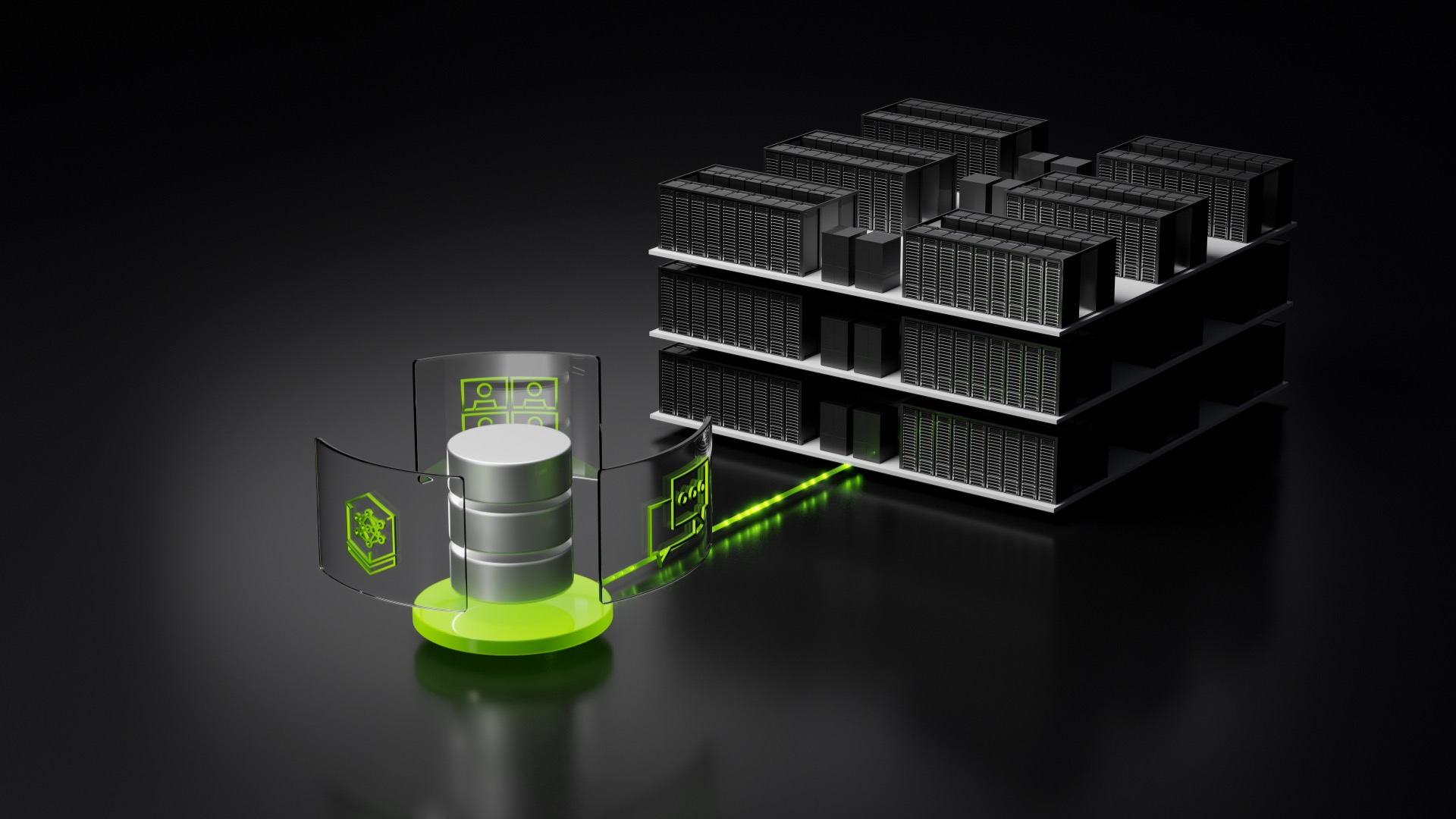
Surging AI demands are driving the need for massive datasets and context windows that burst past the confines of system memory. But rising needs aren’t met by simply adding more storage capacity. What’s needed is useful, grounded insights from AI factories and efficient, secure storage architectures that enable those insights. At this week’s Future of […]
Matched "Google Developers"Found in Description
Google deleted three AI agent workflows from its Agent Development Kit (ADK) Python repository. Pillar Security showed that a public GitHub issue could manipulate a triage agent into triggering a privileged code-fixing agent. The researchers said the public agent could be prompt-injected into posting /adk-issue-fix as adk-bot. They identified the bot as a collaborator, so that comment satisfied
Matched "Google Developers"Found in Content
Google is catching up to Samsung with this audio feature in the latest Android 17 QPR2 beta.
Matched "Google Developers"Found in Description
Chinese e-commerce and cloud giant Alibaba's famed Qwen team of AI researchers last night unveiled Qwen3.8-Max , a new flagship 2.4-trillion-parameter mixture-of-experts (MoE) multimodal large language model (LLM) that targets one of the most competitive corners of the frontier AI market: autonomous software engineering and long-horizon enterprise work. If the company's published benchmarks hold up under broader independent testing, Qwen3.8-Max doesn't merely compete with today's leading proprietary models — it surpasses several of them on some key benchmarks in agentic computing. Most notably, Qwen reports that Qwen3.8-Max scores 86.1 on the OSWorld-Verified benchmark measuring how well agents can use a computer operating system and applications on it, ahead of GPT-5.6 Sol Max (83.2) and Fable 5 (85.0). It also posted the highest reported score on PaperBench , the benchmark from OpenAI measuring how well agents can reconstruct scientific research papers from experimental data, and leading or remaining highly competitive across software engineering, research reproduction, multimodal reasoning, and visual web development benchmarks. The release also signals a potentially significant strategic shift for Alibaba: the company says open weights for Qwen3.8-Max will be released next week, alongside Qwen3.8-27B. If that happens under a permissive license, it would represent the first time a Max-class Qwen model becomes available for self-hosted deployment—a move that could substantially reshape enterprise adoption. One important caveat remains, however: Alibaba has not yet disclosed the licensing terms, leaving open the possibility that the release could use a more restrictive custom license, as we saw recently with Chinese rival Moonshot's open Kimi K3 frontier model , rather than a broadly permissive one such as Apache 2.0. A different definition of 'frontier' Over the past year, the competitive landscape for foundation models has become increasingly specialized. OpenAI has largely focused its GPT series on general reasoning, multimodal interaction and enterprise productivity. Anthropic's Claude series has emphasized coding and dependable long-context reasoning. Google continues to push Gemini toward multimodal productivity and web-native workflows. Moonshot AI's Kimi K3 recently entered the conversation by pairing frontier-class performance with an open-weight release. Qwen3.8-Max attempts to combine many of these strengths into a single model aimed squarely at enterprise automation. Rather than emphasizing conversational intelligence, Alibaba is positioning the model as an autonomous coworker capable of executing projects that span days rather than minutes. According to the company, Qwen3.8-Max can autonomously complete software projects lasting more than 10 days, reproduce research papers involving thousands of lines of code, perform iterative chip-design optimization, and continuously revise plans using multimodal feedback loops. Those demonstrations remain company-produced and have not yet been broadly replicated by independent evaluators. Nevertheless, they illustrate a growing industry trend: frontier models are increasingly competing on their ability to finish entire workflows rather than answer individual prompts. Benchmarks increasingly reward autonomous execution The benchmark suite released alongside Qwen3.8-Max reflects this shift. Instead of focusing solely on traditional reasoning exams or coding puzzles, many of the highlighted evaluations measure long-horizon execution. On OSWorld-Verified, which evaluates computer-use agents interacting with desktop environments, Qwen3.8-Max posts 86.1, ahead of GPT-5.6 Sol Max's 83.2, Fable 5's 85.0, and Gemini 3.1 Pro's 76.2. The model also leads: PaperBench: 93.0 TerminalBench 2.1: 86.6 Vision2Web: 69.0 LVBench: 81.8 ERQA: 77.8 Elsewhere, it remains competitive with proprietary leaders while trailing in several categories. On the professional software engineering benchmark SWE-Pro, for example, OpenAI's model posts the highest reported score, while Opus 4.8 continues to lead on certain software engineering evaluations and Agents' Last Exam. Rather than dominating every benchmark, Qwen appears to offer one of the broadest balanced performance profiles currently available. That balance may ultimately matter more for enterprise buyers than isolated benchmark wins. Many organizations increasingly evaluate models based on how reliably they complete heterogeneous workflows—writing code, reading documents, navigating interfaces, generating reports, inspecting images and coordinating multiple subtasks—rather than optimizing for one narrow capability. Where Qwen3.8-Max appears strongest Assuming Alibaba's published results translate into production deployments, several enterprise workloads stand out as particularly well suited for Qwen3.8-Max. 1. Long-running software engineering Alibaba's primary demonstration involves autonomous software development extending beyond ten days. While enterprises should treat these demonstrations as vendor claims until independently reproduced, they align with a growing interest in persistent coding agents that operate continuously rather than interactively. Organizations experimenting with autonomous engineering teams, CI/CD automation, repository maintenance, regression testing or feature implementation may find Qwen particularly attractive if its agentic performance proves consistent outside laboratory settings. 2. Computer-use agents The strongest differentiator may be computer use. OSWorld has rapidly become one of the industry's most closely watched benchmarks because it measures a model's ability to interact with operating systems instead of simply generating text. Models capable of reliably navigating desktop software can automate countless repetitive business processes, including document processing, enterprise software integration, internal operations and legacy workflows where APIs may not exist. Leading OSWorld could therefore translate into real operational advantages if benchmark performance generalizes to production environments. 3. Research automation Qwen's PaperBench leadership suggests strong potential for organizations performing scientific computing, literature review, experiment reproduction and technical analysis. Research institutions, pharmaceutical companies and industrial R&D teams increasingly use LLMs not only for summarization but also for executing reproducible computational workflows. Models capable of maintaining context across extended sessions become increasingly valuable in these environments. 4. Multimodal industrial workflows Unlike earlier multimodal systems that primarily analyze uploaded images, Qwen describes vision as an ongoing feedback mechanism integrated into planning and execution. That architecture could prove particularly useful in manufacturing, logistics, engineering inspection and design review, where visual inputs continuously inform operational decisions rather than serving as isolated prompts. The economics may prove just as important Perhaps the biggest competitive pressure comes not from benchmark scores but from pricing through Qwen's application programming interface (API) on QwenCloud (based in China): Qwen3.8-Max launches at $2/$6 per million input/output tokens, a mid-priced model but undercutting the top U.S. proprietary offerings to which it is benchmarked against by meaningful percentages, less than 1/3 the combined in/out price of Claude Opus 5 and less than 1/4 the price of GPT-5.6 Sol Max. Model Input ($/1M) Output ($/1M) Total ($/1M) Source MiMo-V2.5 Flash $0.10 $0.30 $0.40 Xiaomi deepseek-v4-flash $0.14 $0.28 $0.42 DeepSeek deepseek-v4-pro $0.435 $0.87 $1.305 DeepSeek GPT-5.6 Luna $0.20 $1.20 $1.40 OpenAI MiniMax-M3 $0.30 $1.20 $1.50 MiniMax LongCat-2.0 — limited-time promo $0.30 $1.20 $1.50 LongCat Gemini 3.1 Flash-Lite $0.25 $1.50 $1.75 Google Qwen3.7-Plus $0.40 $1.60 $2.00 Alibaba Cloud MiMo-V2.5 $0.40 $2.00 $2.40 Xiaomi Gemini 3.5 Flash-Lite $0.30 $2.50 $2.80 Google LongCat-2.0 — standard $0.75 $2.95 $3.70 LongCat MiMo-V2.5 Pro (≤256K) $1.00 $3.00 $4.00 Xiaomi GLM-5.2 $1.40 $4.40 $5.80 Z.ai Grok 4.5 $2.00 $6.00 $8.00 xAI MiMo-V2.5 Pro (>256K) $2.00 $6.00 $8.00 Xiaomi Qwen3.8-Max $2.00 $6.00 $8.00 QwenCloud Gemini 3.6 Flash $1.50 $7.50 $9.00 Google Qwen3.7-Max $2.50 $7.50 $10.00 Alibaba Cloud Gemini 3.5 Flash $1.50 $9.00 $10.50 Google Gemini 3.1 Pro Preview (≤200K) $2.00 $12.00 $14.00 Google GPT-5.6 Terra $2.00 $12.00 $14.00 OpenAI GPT-5.4 $2.50 $15.00 $17.50 OpenAI Kimi K3 $3.00 $15.00 $18.00 Moonshot AI Gemini 3.1 Pro Preview (>200K) $4.00 $18.00 $22.00 Google Claude Opus 5 $5.00 $25.00 $30.00 Anthropic GPT-5.5 $5.00 $30.00 $35.00 OpenAI GPT-5.5 Instant (chat-latest) $5.00 $30.00 $35.00 OpenAI Sakana Fugu Ultra (≤272K) $5.00 $30.00 $35.00 Sakana AI GPT-5.6 Sol — Standard mode $5.00 $30.00 $35.00 OpenAI Claude Fable 5 / Claude Mythos 5 $10.00 $50.00 $60.00 Anthropic GPT-5.6 Sol — Fast mode $10.00 $60.00 $70.00 OpenAI Lower inference costs increasingly matter because agentic systems consume dramatically more tokens than conventional chatbots — a reality that likely factored into OpenAI's decision late last week to cut the API prices of its mid- and lower-end GPT-5.6 lineup of models (Terra and Luna) by 20% and 80%, respectively. Indeed, as those running these systems can attest, multi-hour autonomous workflows, iterative planning and continuous self-correction can generate millions of tokens during a single task. For enterprises deploying hundreds or thousands of agents simultaneously, inference costs often become one of the largest operational expenses. Small reductions in per-token pricing therefore compound rapidly. How it compares with American frontier models Despite headline benchmark comparisons, Qwen3.8-Max should not necessarily be viewed as a wholesale replacement for leading American models. Instead, its strengths suggest different deployment strategies. OpenAI's GPT family continues to excel as a broadly capable enterprise reasoning platform with mature tooling, ecosystem integration and extensive commercial deployment. Organizations already invested in Microsoft ecosystems or OpenAI's enterprise offerings may continue to value those operational advantages even if Qwen leads on selected agent benchmarks. Anthropic's Claude Opus remains widely regarded as one of the strongest coding assistants, particularly for careful software engineering and long-context reasoning. Some enterprises may still prefer Claude for human-in-the-loop development where reliability and predictable behavior outweigh raw autonomy. Google Gemini continues to differentiate itself through deep Workspace integration, multimodal capabilities and Google Cloud services, making it attractive for organizations already standardized on Google's enterprise stack. Where Qwen appears most compelling is for enterprises prioritizing autonomous execution, extended planning horizons and favorable inference economics without sacrificing frontier-level performance. The open-weight question remains unanswered The largest unknown surrounding Qwen3.8-Max has little to do with benchmarks. Alibaba says open weights are coming next week. However, neither the announcement nor the provided documentation specifies the license that will govern those weights. That distinction could prove critical. A permissive license such as Apache 2.0 would significantly broaden enterprise adoption by allowing organizations to self-host, fine-tune and integrate the model into proprietary products with relatively few restrictions. A custom license—similar to approaches used by several recent frontier releases—could impose limitations on commercial deployment, redistribution, field of use or model modification. Such restrictions would narrow the appeal for enterprises seeking long-term infrastructure investments, regardless of the model's technical performance. Moonshot AI's recent Kimi K3 release illustrates why this distinction matters. While Kimi K3 made its weights openly available to all, its licensing terms included specific terms including a disclosure and a commercial license requirement for those offering it as a "Model as a Service." Until Alibaba publishes Qwen3.8-Max's license, organizations considering self-hosting should treat the open-weight announcement as promising but incomplete. An increasingly crowded frontier Qwen3.8-Max arrives during one of the fastest-moving periods in the history of foundation models. Within weeks, developers have seen major releases from Moonshot AI, OpenAI, Anthropic and others, each emphasizing different strengths: reasoning, coding, multimodality, autonomous agents or economics. Alibaba's contribution is notable because it combines competitive benchmark performance, aggressive pricing, a million-token context window and a stated commitment to releasing weights for its flagship model. Whether it becomes the preferred platform for enterprise autonomous agents will ultimately depend less on leaderboard positions than on broader independent validation, production reliability and the licensing terms accompanying the forthcoming weight release. Those factors—not benchmark charts alone—will determine whether Qwen3.8-Max becomes a genuine alternative to the leading American proprietary models or simply another impressive entrant in an increasingly crowded frontier AI race.
Matched "Google Developers"Found in Content
Buyers of AI services are struggling to control costs and sellers are not sure how much to charge.
Matched "Google Developers"Found in Description
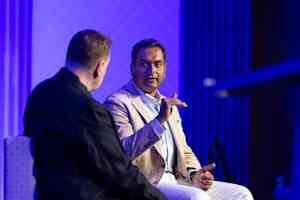
Enterprise teams building AI agents keep hitting the same wall: a chatbot that can answer a prompt but can't remember what the last five people asked it, and can't tell you whether last month's version actually worked. In a fireside chat with VentureBeat's Sam Witteveen at VB Transform 2026 , Asana's chief product officer, Arnab Bose, unpacked how his team tackled this problem to build a new operating system: Agentic Work Management (AWM). The product treats AI agents as coachable teammates that operate alongside humans rather than as one-to-one assistants. For product builders and developers trying to move beyond basic integrations, Bose provided a look under the hood. He detailed how Asana engineered AWM, offering a blueprint for solving real-world bottlenecks and building agentic systems at scale. The Work Graph: 18 years of company data, repurposed To build an operating system for human-agent teams, Asana needed a ready-made enterprise context graph. They built AWM on top of their 18-year-old architecture: the Work Graph. This graph-based database organizes information through a structure the company calls the Pyramid of Clarity. The smallest unit of work is a task with an assignee and a due date. Tasks belong to projects, projects roll up into portfolios, and portfolios connect to company-wide goals. The graph can help trace for example how a delayed design task impacts a corporate revenue goal. The Work Graph provides a real-time ledger of who does what, by when, and why. AWM leverages this architecture to create a multiplayer teammate. A standard AI copilot is stateless and tied to a single user's prompt. Because AWM plugs into the Work Graph, the AI can view overarching company goals, update project statuses, and share memory with human colleagues. "Because [the agent] is plugged into the Work Graph, it's not just looking at a particular prompt that you're sending it or looking at a particular individual's markdown file system on their local file,” Bose said. “It's working off of that shared ledger for the whole company." AWM is already in production. Bose said Asana has "several customers live and successful on it," including FedEx, which published its own case study on the shift. Building in guardrails for confidential work Shipping AWM to enterprise customers required Asana to solve several technical hurdles. The first was data governance. If an AI teammate acts across a company, it builds a shared memory by learning from workflows and human feedback. Bose highlighted a critical boundary problem: If an executive uses AWM to build workflows for a confidential project, the system must ensure the agent's updated memory does not leak context to an unauthorized employee who interacts with the same agent later. "[I] shouldn't be able to leverage that shared memory when I run the AI teammate if you created that memory using that same teammate on a project that is, let's say, a secret M&A project that I don't have access to," Bose said. Asana engineered a system of access controls to govern what triggers the creation of a memory versus the simple execution of a task. Second, AWM handles dynamic model routing to abstract prompt engineering away from the user. When a user assigns a task to an AI teammate (i.e., drafting a job description for a general manager role), the AI cross-references public job postings, Asana’s internal style guide, and product requirement documents. For a complex task, the system automatically routes the prompt to a heavy frontier model — Bose pointed to Anthropic's Opus and OpenAI's models as examples — while lighter tasks get down-leveled to something faster and cheaper. "We don't want the knowledge worker to have to think through what the best possible prompt, context engineering, and attachments are that they should put into the task," Bose said. "It should feel as if you were assigning the task to a human being." This dynamic routing introduces a third challenge: billing abstraction. Agentic tasks vary in computational complexity, making credit burn rates unpredictable. "We don't want to get into a state where our customers are having to reason about the fact that some of these tasks... are way more complex than others and they'll be burning credits at different rates," Bose said, adding that unpredictable pricing risked customers throttling their own employees by capping how often they could run an AI teammate. To make AWM commercially viable, Asana designed its billing architecture to charge a static cost per task completion. The platform absorbs the complexity of model selection, token counts, and run limits to ensure predictable enterprise pricing. The problem with stateless chatbots AWM targets a specific problem with current enterprise AI deployments: statelessness. Developers can easily connect large language models to enterprise tools like Slack, Google Drive, or Databricks using Model Context Protocol (MCP) integrations. However, basic chat-based agents lack persistence. Bose detailed a scenario where a user asks a chat agent to draft a marketing campaign based on historical performance and competitive research. The agent fetches data from external tools to answer the prompt, but the execution happens in a vacuum. It is a one-off task that benefits a single individual. It fails to create a reusable workflow for the next person building a similar campaign. "The challenge with that is that those calls are stateless, and they are not leveraging a shared company brain that is this graph-based database or a context graph," Bose said. AWM solves this by creating a permanent state. When an AI teammate inside AWM completes a task, the system records the metadata. It registers whether the completion improved the project status and how it moved higher-level company goals. Inside CoreWeave's product launches Cloud provider CoreWeave is an early adopter using AWM to overhaul complex new product launches. "CoreWeave is using both our deterministic AI studio workflow rules as well as multiple AI teammates to do new product launches," Bose shared. In the past, CoreWeave product managers filled out complicated forms detailing infrastructure, parameters, and costs. Human reviewers manually evaluated these forms and broke them out into specific tasks for finance, marketing, and hardware teams. Under the AWM workflow, a product manager writes a standard Google document pointing to their product requirement documents. A deterministic AI workflow reads the document, automatically creates the project structure, and assigns tasks. Specialized agents then take over the execution. One agent then watches overall project status and flags bottlenecks; another, working inside individual tasks, forecasts infrastructure costs and recommends approvals when the numbers align with historical budgets. The system automatically triages the busywork while human beings focus on evaluating the AI's outputs. The frenemy problem The dynamic gets complicated by the fact that the same frontier-model providers powering AWM under the hood — Anthropic, OpenAI — are also shipping their own competing agent products, like Anthropic's Claude in Slack (Tag). Pressed on the overlap, Bose didn't dispute the tension. " I think that's the reality that we all have to live in," he said. His case for AWM's staying power rests on Asana's 18 years of user-experience and workflow data, and prebuilt standard operating procedures for specific industries — expertise he argues raw frontier models don't have. A product like Tag can work well in Slack, he said, but it requires a highly curated channel and its own separate credentials for every downstream app it touches. "There's a big difference between the power of the model plus a lightweight way to demonstrate its value, and something that's pre-built … for true end-to-end use," Bose said.
Matched "Google Developers"Found in Content
392 points 50 comments on Hacker News · pandoc.org
Hacker News
“GPT-5.5's API pricing is reshaping how startups build AI products”