Matched "Google Developers"Found in Content
AINews
Google Genie 3: Interactive worlds generated by AI
3 points 2 comments on Hacker News · deepmind.google
Hacker News1 min read
Explore
Showing results for:
"Google Developers"
246 results • Page 5 of 21
Matched "Google Developers"Found in Content
3 points 2 comments on Hacker News · deepmind.google
Matched "Google Developers"Found in Content
4 points 1 comment on Hacker News · github.com
Matched "Google Developers"Found in Description
Meta today released Muse Code , a terminal-based AI coding agent now in beta, alongside Muse Spark 1.2 , a coding-focused update to its Muse Spark family of frontier models — a one-two punch that puts the company in direct competition with Anthropic's Claude Code, OpenAI's Codex, and the growing field of agentic coding harnesses that have rapidly become the primary way many professional developers ship software. "Releasing Muse Code in beta today," Meta co-founder and CEO Mark Zuckerberg wrote in a post on rival social network X (under his longtime handle @finkd). "It's a terminal coding agent that takes on complete software engineering tasks across large repos: planning changes, writing code, validating the results." The launch marks Meta's most serious entry yet into a category it has largely watched from the sidelines. While Anthropic and OpenAI turned their coding agents into flagship products — and startups like Cursor built billion-dollar businesses on the workflow — Meta's developer story long centered on Llama, the open-weight model family it gave away to the tune of more than a billion downloads. Muse Code changes that in more ways than one: it's a full harness, installable on macOS or Linux with a single curl command, co-trained with the model that powers it — and, like the Muse Spark models behind it, entirely proprietary. However, Zuckerberg teased that open source may be in the cards for Muse Spark or perhaps another product entirely, in a reply to a question on X , saying "I'll have more to share on that soon." Developers and prospective users can install it now on their Terminal using the following one-line command — but be warned, if that's you, you'll need to log in with a Meta account and provide billing details first in order to begin: curl -fsSL https://dev.meta.ai/install.sh | bash Persistent background agents and parallel worktrees Muse Code's headline architectural bet is what Meta calls async background agents . Rather than spawning helper agents fresh for each task — the pattern most rival harnesses use — Muse Code keeps a set of specialized background agents alive for the entire session. According to Meta's blog post, these agents "remain active throughout each session, rather than being spawned for individual tasks, helping avoid redundant information gathering," carrying out next steps on their own and choosing when to report back to the main agent. The practical pitch is less latency and less babysitting: an agent that already knows the repository doesn't have to re-explore it every time the developer asks for something new. When a job is large enough, Muse Code fans out to separate sub-agents working in parallel, each in its own isolated git worktree, so the developer's working copy is never touched. "In testing we had it build six features for a game simultaneously with no collisions," Zuckerberg wrote on X. Worktree isolation and parallel sub-agents exist in competing tools, but Meta is leaning on the combination of persistence plus parallelism as its differentiator. The second notable design choice is auditability. Every model call, tool run, approval, and edit is appended to a local event log before it executes — a single source of truth that Meta says makes the runtime "replay-exact and restart-safe." If Muse Code crashes 20 hours into a long-running task, it resumes precisely where it stopped, with no lost work and no re-prompting. For engineering leaders who have been burned by opaque agent runs, a complete local audit trail may prove to be the feature that matters most in enterprise evaluations. Muse Code also ships with bundled "skills" that will look familiar to users of rival tools: /plan turns a task into an approval-gated plan, /grill stress-tests that plan until it holds up, and /goal drives the agent toward completion of a stated objective. Muse Spark 1.2: co-trained with its own harness Under the hood is Muse Spark 1.2, which Meta describes as a coding-focused update to Muse Spark 1.1 with "significantly scaled up training compute on coding tasks" and broader training environment diversity, improving code generation, complex debugging, and codebase understanding while maintaining general agentic capability. The update lands squarely on the Muse family's weakest flank. When the original Muse Spark debuted in April , it vaulted Meta back into the top five on frontier reasoning and vision benchmarks — but trailed on the agentic coding evaluations that matter most to this market, scoring 77.4 on SWE-Bench Verified against Claude Opus 4.6's 80.8 and Gemini 3.1 Pro's 80.6, and lagging well behind GPT-5.4 on GDPval's measure of long-horizon work tasks. Four months later, a coding-specialized checkpoint paired with a purpose-built harness reads as Meta's direct answer to that gap. Two training details stand out. First, Meta co-trained the model with Muse Code itself, using rejection-sampled harness trajectories and recipe optimizations for goals, context compaction, and sub-agents — meaning the model was explicitly tuned to perform best inside this particular tool. That mirrors an industry-wide shift away from treating models and harnesses as separable products. Second, Meta used a self-improvement loop: Muse Spark 1.1 generated challenging coding environments and instruction-following templates, then graded candidate solutions against those requirements, producing a scalable training dataset for its successor. Meta credits the loop with making 1.2 measurably better at following complex instructions. Meta published benchmark charts comparing Muse Spark 1.2 against other coding models on Terminal-Bench 2.1, DeepSWE 1.1, and an internal Meta coding benchmark, pointing readers to a separate methodology report for details — though the announcement text itself doesn't tout any placements, an unusual reticence in a field where rivals trumpet leaderboard wins. The charts explain why: they show a strong but clear second place. On Terminal-Bench 2.1, Muse Spark 1.2 running in Muse Code scored 82.9%, edging OpenAI's GPT-5.6 Terra in Codex (81.8%) and xAI's Grok 4.5 in Grok Build (81.6%) but trailing Anthropic's Opus 5 at max effort in Claude Code, which leads at 86.7%. On DeepSWE 1.1, Muse Spark 1.2 posted 59.3% — third, behind Opus 5 (65.0%) and GPT-5.6 Terra (64.8%). Most striking is Meta's own internal coding benchmark, where Muse Spark 1.2's 70.6% comfortably beats GPT-5.6 Terra (65.4%) and Gemini 3.6 Flash (63.9%) yet still sits nearly nine points behind Opus 5's 79.4% — an unusually candid admission that even on the test Meta designed itself, Anthropic's model wins. Indeed, Claude tops all three charts. The generational gains are real, though: Muse Spark 1.2 improves on 1.1 by 6.7 points on Terminal-Bench and 6.3 on DeepSWE. One caveat buried in the chart labels — the 1.1 scores were recorded in the generic mini-swe-agent harness while 1.2 ran in Muse Code, so some of that jump belongs to the new harness rather than the new model. The company's most striking demonstration is a long-horizon case study: Meta pointed Muse Spark 1.2 at GPU kernel optimization and let it run for more than 1,000 tool calls over up to 24 hours on NVIDIA Hopper hardware. Working in Triton and barred from simply wrapping existing third-party kernel libraries, the agent wrote, compiled, and profiled its way to what Meta calls "substantial improvements" over baseline implementations of KDA and MLA kernels — including genuinely non-obvious optimizations like re-centering gated cumulative decay at a chunk midpoint. "It kept finding substantial improvements well beyond the initial exploration phase," Zuckerberg wrote. Sustained improvement over a 24-hour autonomous run, if it holds up outside Meta's demos, addresses one of the most persistent criticisms of coding agents: that they plateau or drift once past their initial burst of progress. Your data for a discount? The pricing structure may be the most consequential — and most scrutinized — part of the launch. Meta is offering Muse Spark 1.2 through its Meta Model API in two tiers. The standard tier is priced at $1.25 per million input tokens and $4.25 per million output tokens (with cached input at $0.15), and Meta commits that prompts and completions on this tier are not used to train its models. There is no long-context premium, and rate limits run to 3,000 requests and 4 million tokens per minute, per team. It's about mid-range price, compared to other leading AI models available over API. The contributor tier is where Meta's strategy diverges sharply from its rivals: $0.10 per million input tokens and $0.20 per million output tokens — roughly 12x and 21x cheaper than standard, respectively, with cached input at a near-free $0.002 — in exchange for explicit permission to use your prompts and completions to train future Meta models. It's the cheapest available on the market, but you pay with your data — as described below. Model Input ($/1M) Output ($/1M) Total ($/1M) Source Muse Spark 1.2 Contributor $0.10 $0.20 $0.30 Meta MiMo-V2.5 Flash $0.10 $0.30 $0.40 Xiaomi deepseek-v4-flash $0.14 $0.28 $0.42 DeepSeek deepseek-v4-pro $0.435 $0.87 $1.305 DeepSeek GPT-5.6 Luna $0.20 $1.20 $1.40 OpenAI MiniMax-M3 $0.30 $1.20 $1.50 MiniMax LongCat-2.0 — limited-time promo $0.30 $1.20 $1.50 LongCat Gemini 3.1 Flash-Lite $0.25 $1.50 $1.75 Google MiMo-V2.5 $0.40 $2.00 $2.40 Xiaomi Gemini 3.5 Flash-Lite $0.30 $2.50 $2.80 Google LongCat-2.0 — standard $0.75 $2.95 $3.70 LongCat MiMo-V2.5 Pro (≤256K) $1.00 $3.00 $4.00 Xiaomi Muse Spark 1.1 / 1.2 $1.25 $4.25 $5.50 Meta GLM-5.2 $1.40 $4.40 $5.80 Z.ai Grok 4.5 $2.00 $6.00 $8.00 xAI MiMo-V2.5 Pro (>256K) $2.00 $6.00 $8.00 Xiaomi Qwen3.8-Max $2.00 $6.00 $8.00 QwenCloud Gemini 3.6 Flash $1.50 $7.50 $9.00 Google Gemini 3.5 Flash $1.50 $9.00 $10.50 Google Gemini 3.1 Pro Preview (≤200K) $2.00 $12.00 $14.00 Google GPT-5.6 Terra $2.00 $12.00 $14.00 OpenAI GPT-5.4 $2.50 $15.00 $17.50 OpenAI Kimi K3 $3.00 $15.00 $18.00 Moonshot AI Gemini 3.1 Pro Preview (>200K) $4.00 $18.00 $22.00 Google Claude Opus 5 $5.00 $25.00 $30.00 Anthropic GPT-5.5 $5.00 $30.00 $35.00 OpenAI GPT-5.5 Instant (chat-latest) $5.00 $30.00 $35.00 OpenAI Sakana Fugu Ultra (≤272K) $5.00 $30.00 $35.00 Sakana AI GPT-5.6 Sol — Standard mode $5.00 $30.00 $35.00 OpenAI Claude Fable 5 / Claude Mythos 5 $10.00 $50.00 $60.00 Anthropic GPT-5.6 Sol — Fast mode $10.00 $60.00 $70.00 OpenAI This is the tier Zuckerberg is steering new users toward: "It's easy and low-cost to get started," he wrote. "Install Muse Code with one line and you can start on our contributor tier." In VentureBeat's own testing on a Mac mini, the one-line installer worked as advertised — a 97 MB download and a sign-in — but the agent stopped short of running anything, reporting that no models were visible and that payment was "required to finish setting up your account." In other words, even the heavily discounted contributor tier requires a payment method on file before Muse Code will do any work: low-cost is accurate, but free is not. Meta frames the contributor tier as lowering the barrier for prototyping and experimentation "where training on your data is acceptable." But it also means the default on-ramp for Muse Code sends developers' code and prompts into Meta's training pipeline — a tradeoff enterprises with proprietary codebases will need to consciously opt out of by moving to standard pricing. The contributor tier also carries much tighter rate limits (60 requests per minute versus 3,000), a clear signal it's aimed at individuals and small experiments rather than production workloads. The approach is classically Meta: subsidize access, harvest data at scale, and use it to close the gap with the frontier. Zuckerberg made no secret of the ambition, calling Muse Spark 1.2 "our next step as we push toward frontier, with larger, more capable models on the way." However, for developers and enterprises who want or are required legally to keep their code secure, the tradeoff may not be one they're willing or able to make. No Llama in sight What today's announcement conspicuously lacks is any mention of open source — a striking omission from the company that spent three years positioning itself as the standard-bearer of open AI. From the original LLaMA's debut in February 2023 — whose weights famously leaked onto 4chan within weeks, inadvertently kickstarting the movement to run capable models on consumer hardware — through Llama 2's commercially usable license, the coding-specialized Code Llama, and the 405-billion-parameter Llama 3.1, which Zuckerberg launched in July 2024 with a manifesto titled " Open Source AI Is the Path Forward ," Meta's entire pitch to developers was that frontier-class weights should be free to download, self-host, and fine-tune. The strategy worked: by early 2026, the Llama family had been downloaded roughly 1.2 billion times , averaging about a million downloads a day, with self-hosting offering enterprises cost reductions VentureBeat has previously reported at as much as 88% versus proprietary API providers. Then came the unraveling. Llama 4 debuted in April 2025 to mixed reviews and, eventually, admissions that its benchmark results had been fudged — while Chinese open-weight rivals from DeepSeek, Alibaba, and Zhipu AI surged to account for some 41% of downloads on Hugging Face by late 2025, eroding Llama's claim to leadership of the very movement it started. The rocky rollout spurred Zuckerberg's summer 2025 overhaul of Meta's AI operations into Meta Superintelligence Labs (MSL), with Scale AI co-founder Alexandr Wang recruited as chief AI officer. The Llama era effectively ended this past April 8, when MSL shipped the original Muse Spark — "the most powerful model that meta has released," in Wang's words — as Meta's first proprietary model: cloud-only, with no downloadable weights and no self-hosting , initially confined to Meta's apps and a private API preview. Asked directly at the time whether Llama development would continue, a Meta spokesperson told VentureBeat only that "our current Llama models will continue to be available as open source" — pointedly silent on future ones. Wang, for his part, said bigger models were already in development "with plans to open-source future versions" — but four months on, today's release does nothing to advance that promise: no weights, no license, and neither the blog post nor Zuckerberg's thread so much as uses the word "open." The reversal is all the sharper because Meta's rivals have been moving in the opposite direction. OpenAI released its Codex CLI as open source under the permissive, enterprise-friendly Apache 2.0 license and followed with its gpt-oss open-weight models ; Google's Gemini CLI harness is likewise Apache-licensed. With Muse Code, Meta lands closest to the posture of Anthropic — whose Claude Code remains proprietary — while the company that once argued open source was the path forward now asks developers to pay per token for a model they cannot inspect, or to subsidize that access with their own data. Seen in that light, the contributor tier reads as the successor to the Llama strategy itself: the ecosystem flywheel is no longer free weights in exchange for mindshare, but cheap tokens in exchange for training data. But Zuck's reply on X — asked directly by AI developer Luckey Farady, "Will Muse Code be open source?" he responded "I'll have more to share on that soon" — does keep hope alive that Meta will return to the open source AI ballgame. Why it matters Terminal coding agents have become the fastest-growing surface in enterprise AI, and until today the category has effectively been a two-horse race between Anthropic and OpenAI, with Google and a crowd of startups in pursuit. Meta's entry brings a genuinely different architecture (persistent background agents, an append-only local event log), a credible long-horizon demo, and an aggressive pricing wedge. The open questions are the ones benchmarks charts can't answer: whether Muse Spark 1.2 actually matches Claude and GPT-class models on real-world repositories, whether developers trust Meta with their code, and whether the contributor tier's discount is enough to make them stop asking. Muse Code is available in beta today; Muse Spark 1.2 is live in the Meta Model API with expanded global access.
Matched "Google Developers"Found in Content
266 points 235 comments on Hacker News · runarcn.no
Matched "Google Developers"Found in Content
Google's AI brain drain continues.
Matched "Google Developers"Found in Description
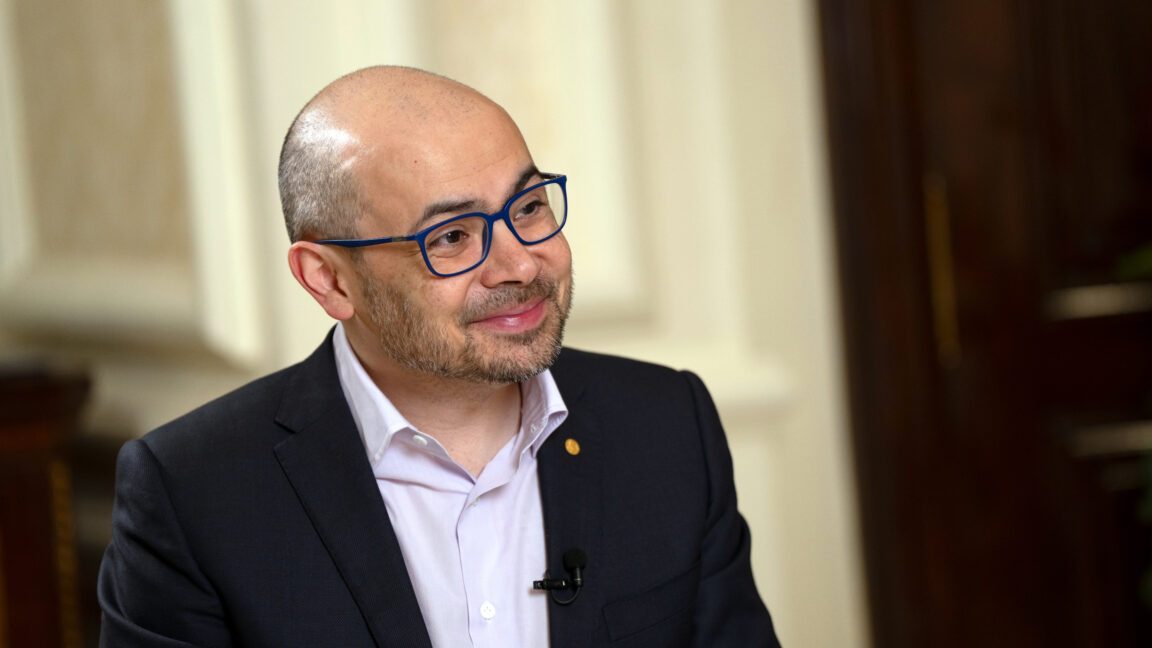
Google is making some significant AI leadership changes, including a major shift for Google DeepMind leader Demis Hassabis. Hassabis will become the chair of Google DeepMind and the chief scientist at Alphabet, CEO Sundar Pichai announced on Wednesday. Hassabis will continue to lead Alphabet's Isomorphic Labs, which aims to use AI to develop drugs. Koray […]
Matched "Google Developers"Found in Content
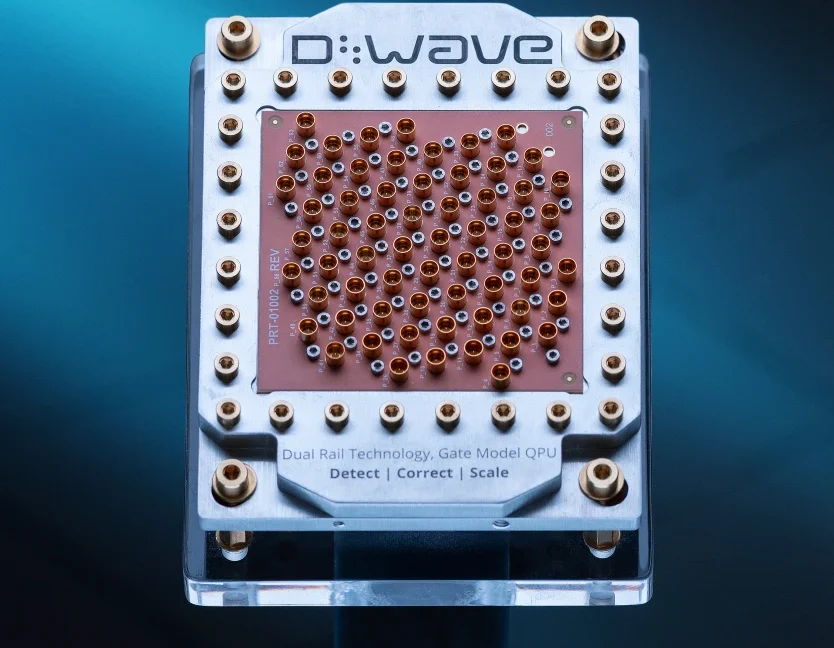
Company noted for building quantum annealers now also making gate-based hardware.
Matched "Google Developers"Found in Content
Elon Musk told investors that people were "underestimating" his company.
Matched "Google Developers"Found in Content
525 points 256 comments on Hacker News · blog.cloudflare.com
Matched "Google Developers"Found in Content
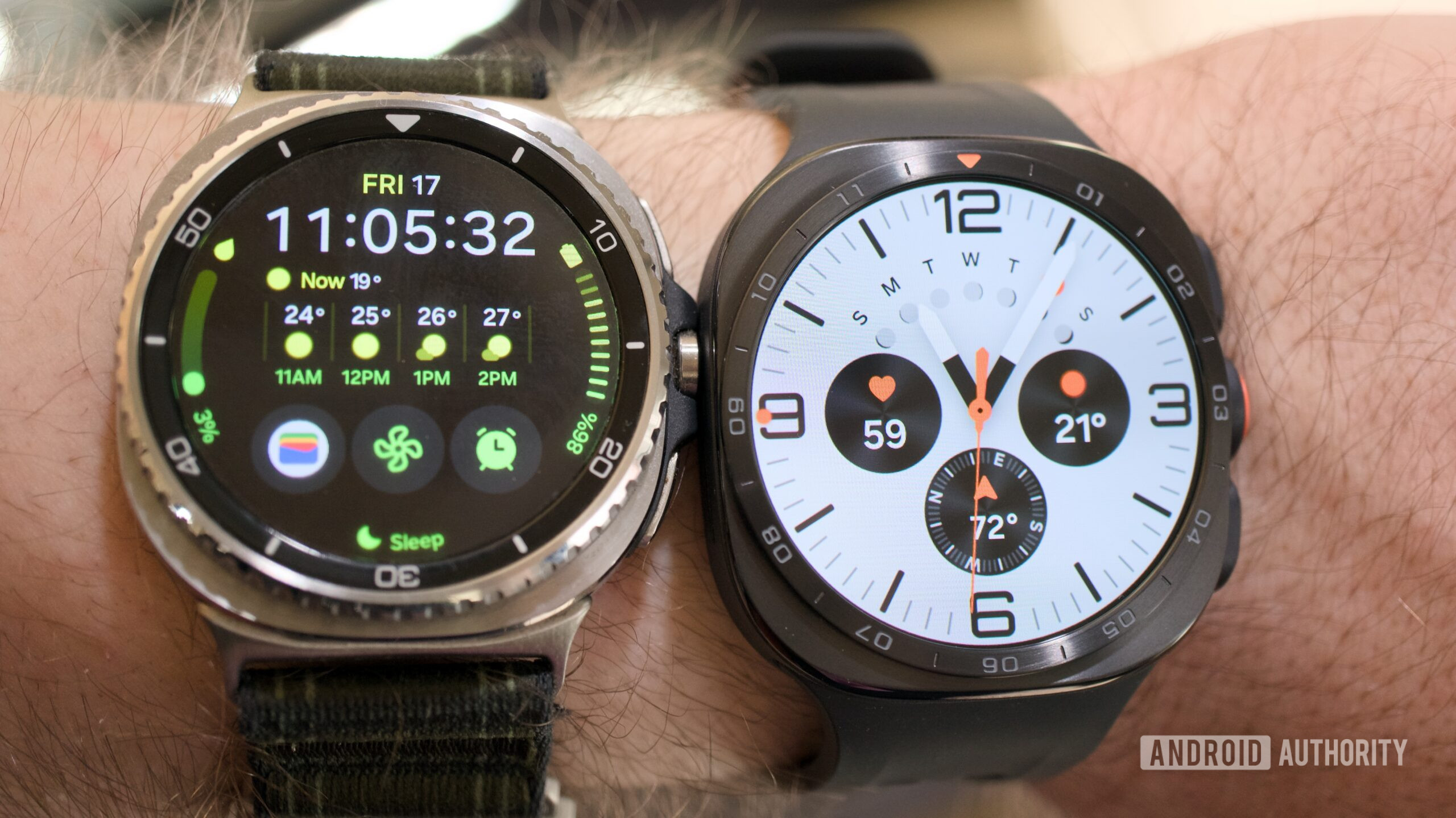
This RTOS-powered Samsung wearable may bridge the gap between Galaxy Fit and Galaxy Watch FE.
Matched "Google Developers"Found in Content
Google is finally fixing a bug that exclusively annoyed Android tablet users.
Matched "Google Developers"Found in Source
The Agent Development Kit (ADK) for Go 2.0 has been released, introducing a first-class, graph-based workflow engine to help developers compose complex, multi-agent applications. This update adds built-in primitives for human-in-the-loop (HITL) orchestration, dynamic execution using plain Go code, and automated resilience features like exponential backoff retries. By unifying the execution model, both single-agent applications and intricate graphs now run on the same runtime, simplifying telemetry and state persistence.
Hacker News
“GPT-5.5's API pricing is reshaping how startups build AI products”