HeyGen ported their 18B+ parameter Avatar IV video generation model to Google Cloud's Trillium (v6e) TPUs via torchax and XLA, utilizing FSDP and Ulysses sequence parallelism across an eight-chip mesh. To achieve a 1.86x speedup for real-time streaming, the engineering team pipelined exposed all-to-all collectives, aligned sparse attention block sizes to eliminate mask padding, and bypassed softmax serial dependencies using a precomputed Cauchy-Schwarz upper bound. These custom Pallas kernel and compiler optimizations were deployed only after passing rigorous two-tier quality gates to guarantee byte-identical or mathematically equivalent pixel outputs.
The 2026-07-28 Model Context Protocol (MCP) specification replaces legacy stateful constraints with a fully stateless core, enabling cloud-native horizontal scaling, serverless deployments, and standard round-robin load balancing. This architectural shift introduces standardized HTTP headers for efficient routing without deep packet inspection, caching controls, and Multi Round-Trip Requests (MRTR) to handle interactive and long-running tasks without blocking connections. Developers can immediately begin migrating their agentic applications to this highly scalable infrastructure using the newly available beta SDKs for Python, TypeScript, Go, and C#.
Real-time AI agents break traditional request-response load balancing paradigms because they rely on long-lived, stateful bidirectional streams that obscure true server capacity. To solve this, developers must implement application-level session tracking directly within the runtime to accurately measure the committed concurrent workload of active conversations. By feeding these precise session counts alongside standard CPU utilization metrics into a hybrid routing algorithm, infrastructure can effectively distribute stateful AI traffic and prevent individual backend bottlenecks.
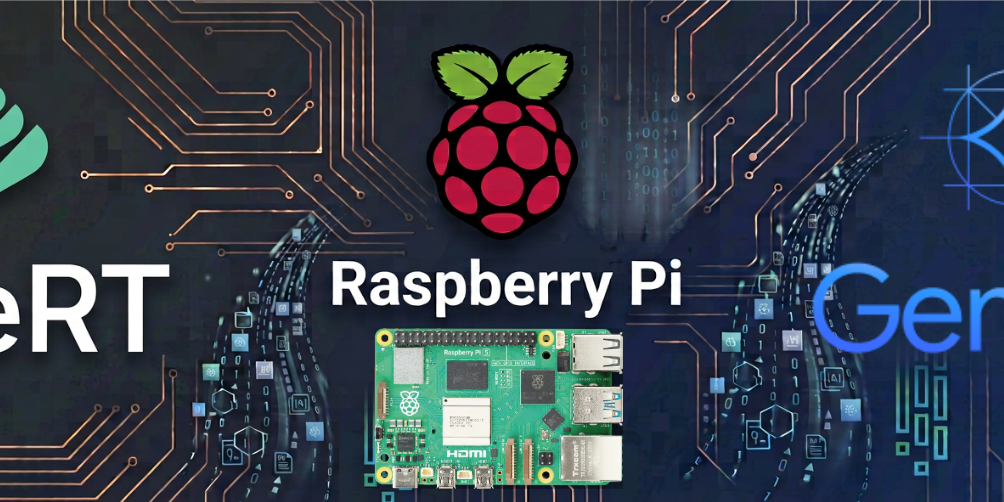
Deploying secure, real-time Edge AI on Raspberry Pi is now simplified using LiteRT and lightweight Gemma open models. LiteRT optimizes CPU and GPU performance, delivering fast token speeds for models like Gemma4, enabling real-time local reasoning for robotics. Developers can quickly convert, quantize, and run these models using the lightweight LiteRT CLI tool. Support for Hailo AI accelerators is also coming very soon.
As AI coding assistants shift the developer's primary role from writing boilerplate to reviewing and maintaining systems, language choice becomes critical for long-term architectural integrity. Go directly addresses this new paradigm by utilizing its strict compiler, integrated toolchain, and uncompromising readability to provide deterministic guardrails that help AI models self-correct and generate highly standardized code. By enforcing ecosystem-wide consistency and strict backward compatibility, the Go platform empowers engineering teams to efficiently verify, optimize, and maintain high-velocity, AI-generated output in production environments.
This second installment explores how Ray’s higher-level libraries—Serve, Data, and Train—abstract the complexities of running AI workloads on Google's TPU slices. Ray Serve uses a simple topology configuration to correctly gang-schedule large multi-host models, while Ray Data eliminates data-loading bottlenecks by feeding accelerators directly with native JAX batches. Finally, JaxTrainer streamlines distributed training across TPUs by automatically handling cross-slice coordination, checkpointing, and fault tolerance.
Agent Platform's evaluation service is now generally available, providing developers with a unified engine to measure agent quality consistently across local development experiments and live production traffic. You can evaluate agents using over 20 pre-built metrics, DeepMind-backed adaptive rubrics, or custom code-based and LLM-as-a-judge metrics stored in a centralized, versioned registry. The service integrates directly into existing workflows via the Agent Platform SDK, agents-cli, and ADK, offering built-in user and environment simulators to automate complex multi-turn testing and streamline CI pipelines.
Building autonomous AI agents that mutate production state requires moving beyond soft system prompts to a robust zero-trust architecture. To secure Google Agent Development Kit (ADK) workflows against prompt injections and malicious execution, developers must implement hardware-backed cryptographic signatures for database writes, kernel-level sandboxing with gVisor for dynamic code, and deterministic semantic gateways for I/O validation. By enforcing these hard security boundaries at the infrastructure level, you can safely deploy multi-tool AI agents without risking unauthorized data manipulation or server compromise.
Google's new HiLight notification LED on the Pixel 11 Pro is nearly useless. Out of the box, the only two things it can glow for are when the phone is face down and you're interacting with Gemini, or when you get a call from a favorite contact. And even then, it can only glow one […]
Serval is making Catalyst , its AI agent for building enterprise automations, generally available Thursday and enabling it by default for customers — allowing teams of AI agents to decide what should be automated and then build the automation itself. Catalyst sits above Serval’s AI-native service management platform as an admin-facing “super agent.” It can inspect ticket history, standard operating procedures or natural-language instructions, identify recurring work, and draft the workflows, skills, forms, access policies, journeys and dashboards needed to automate it. Serval is also using Catalyst to create background agents that continuously inspect connected systems for emerging problems and propose fixes before an employee files a ticket. That distinction matters because enterprise service management vendors are rapidly converging on AI-assisted workflow creation. ServiceNow’s Build Agent can already translate natural-language instructions into full-stack applications, flows, scripts and other platform metadata, while its AI Agent Advisor can analyze instance records to identify automation opportunities. Atlassian’s Rovo can generate Jira automation flows from plain-English requirements, and Freshworks offers Freddy AI Agent Studio for creating service agents that act across Freshservice workflows. So Serval’s claim to differentiation is narrower — and potentially more consequential — than simply “we use AI to build workflows.” Catalyst is designed as a single administrative layer that can move from discovering an opportunity, to assembling multiple kinds of governed automation, to creating proactive agents that keep looking for new work to automate. "You just started with a single prompt, and now you’ve got enterprise-grade workflows ready to deploy that are going to solve all password resets for the entire company," Serval co-founder and CEO Jake Stauch told VentureBeat in an interview. From ticket history to working automation Serval says Catalyst analyzes existing help desk data before an organization has decided what to automate. If it finds a repetitive category of requests, it can draft the automation required to resolve those requests and stage the result for administrator review. Users can also upload an SOP or spreadsheet and ask Catalyst to turn the documented process into an executable system. Serval’s documentation says Catalyst can build workflows, author help desk skills, create onboarding and offboarding journeys, configure access-management policies, construct dashboards, investigate operational issues and debug failed workflow runs. Unlike Serval’s earlier workflow builder, Catalyst is intended to become the primary interface for configuring the platform; the company says its long-term goal is that anything an administrator can do through the UI should also be possible through Catalyst. The actual workflows are code-backed. In a demonstration, Stauch showed Catalyst taking a request to build password-reset workflows, detecting connected systems including Okta, Google Workspace and Microsoft Entra, and generating the underlying TypeScript needed to perform those actions. Administrators could then add approvals or restrict who was allowed to run the workflow. The models underneath Catalyst are deliberately swappable Serval is not building its own foundation model. Stauch said in the interview that the company uses models from “frontier labs,” runs evaluations to determine which models work best for particular jobs, and is deliberately model-agnostic. “You can swap different models in,” he said, adding that Serval also works with enterprises that build their own models. Stauch provided more detail in a May 2026 interview with Sequoia Capital , saying Serval was using both OpenAI and Anthropic models. He said OpenAI’s GPT models had performed best for end-user interactions and tool calling, while Anthropic’s Sonnet and Opus models were producing the strongest results for the code-generation side of Serval’s automation system — the workload most directly relevant to Catalyst. Serval continuously runs evals rather than automatically moving every workload to the newest model release, Stauch said. That architecture makes the underlying LLM less central to Serval’s differentiation. The company’s own documentation now lets organization administrators supply their own OpenAI or Anthropic API keys, including a compatible custom endpoint, while Stauch said the broader architecture can accommodate different models. The materials do not, however, establish that every Catalyst user gets a self-service menu for arbitrarily choosing an individual model. Serval’s pitch is instead that its proprietary value sits in the harness around those models: enterprise context and memory, integrations, generated code, permissions, approvals and the controls governing what an agent can actually do. That code-generation model is central to Serval’s pitch against ServiceNow. Stauch argues that legacy ITSM deployments often accumulate custom tables, business rules, workflows and platform-specific expertise that make seemingly simple automation changes expensive to implement. Serval, by contrast, wants administrators and business teams to describe the outcome they need and let the model generate the implementation. But ServiceNow is no longer standing still on that front. Its current Build Agent similarly creates applications and code from natural-language prompts, supports flow design and testing, and operates inside ServiceNow’s governance framework. ServiceNow’s AI Agent Studio lets customers create agents and agentic workflows, while AI Agent Advisor is explicitly designed to analyze operational records for automation candidates. The competitive question is therefore shifting from “who has generative AI?” to how many separate tools, configuration concepts and specialists are required to get from an observed operational problem to a production automation. Serval is effectively arguing that Catalyst compresses those steps into one conversational surface and a smaller platform model. ServiceNow, by comparison, now has a powerful but broader set of AI and development surfaces spanning Build Agent, AI Agent Studio, AI Agent Advisor, Workflow Studio and AI Control Tower. That breadth is an advantage for customers already deeply invested in ServiceNow, but it also illustrates the complexity Serval is attacking. ServiceNow itself notes that Build Agent is aimed at admins and developers who understand and can support what it generates. Atlassian is moving in the same direction from a different starting point. Rovo can generate “if this happens, then that happens” automation flows from natural-language descriptions, while Jira Service Management increasingly supports agents that triage, investigate and execute service work. Freshworks ’ Freddy AI Agent Studio likewise emphasizes agents that resolve requests end-to-end, with prebuilt IT and HR agents and more than 30 workflow templates. Catalyst’s differentiator, then, is not that rivals cannot generate an automation from a sentence. It is Serval’s attempt to make the entire automation lifecycle itself agentic. Building agents that look for trouble before a ticket exists That approach becomes clearest with Serval’s background agents. Rather than waiting for a help desk request, a background agent can run on a schedule across connected systems, correlate signals and draft a remediation. In one customer example provided by Serval, an agent correlated network incidents across two offices using switch telemetry, DHCP data and historical tickets, ruled out hardware and wireless interference, traced the issue to configuration drift, and generated a remediation workflow for an administrator to approve. “Most AI agents today wait for an employee to ask a question or submit a ticket,” Stauch said. “We believe the future is AI that acts before an employee ever submits a request.” That framing also highlights a philosophical difference in Serval’s pitch. The startup does not want service management to revolve around creating, routing and tracking better tickets. It wants the system to eliminate as many requests as possible by turning repeated support work into executable automation. "A lot of the code written in enterprises has nothing to do with software engineering," Stauch explained. "It’s actually internal automations and other scripts for the company, and so we use that technology to build a better service management platform." Serval's pitch to enterprises is that it can largely automate those scripts. And the governance model is critical because Catalyst can generate code and potentially initiate changes across production systems. Serval says Catalyst inherits the permissions of the user operating it and remains scoped to that user’s team workspace. Everything it builds starts as a draft, and organizations can restrict publishing privileges or require formal review and approval before an automation becomes active. Customer data remains customer-owned, with several deployment options Those controls also extend to the enterprise data Catalyst examines. Stauch said Serval is intended to operate as the customer’s system of record and told VentureBeat that “they own all the data.” Serval’s current Master Services Agreement is more precise: customers retain rights, title and interest in both their “Customer Materials” — a category that includes records, documents, workflows, prompts, inputs and configurations — and the output Serval generates from them. Serval receives the rights necessary to process that information to provide, maintain, support and secure the service. Serval also says it does not retain or use customer materials, inputs or outputs to train, fine-tune or improve its own or third-party AI models. Its Data Processing Addendum identifies Serval as the processor of customer personal data and allows processing for operating the service, responding to support requests, diagnosing issues and protecting the platform, while authorized subprocessors can also be involved. Serval’s acceptable-use terms say it maintains a current list of AI subprocessors and model providers for customers. Where that data resides can vary by deployment. Stauch said customers can use Serval as a cloud SaaS service, run it on-premises or place it in their own VPC. Serval’s self-hosting documentation now describes two fuller options: a Serval-managed single-tenant deployment inside an AWS account owned by the customer, or a self-managed deployment on the customer’s Kubernetes cluster in any cloud or on-premises environment. In the AWS option, Serval says it operates the installation without persistent IAM access to the customer’s AWS account. There are therefore two distinct access boundaries for enterprise buyers to consider. At the Catalyst level, the agent can only reach data, integrations and automations available to the user and team workspace under which it is operating. At the platform level, Serval and authorized subprocessors necessarily process customer information to deliver and support the service, subject to the company’s contractual confidentiality and data-processing terms. That makes Stauch’s informal statement that Serval “doesn’t touch” customer data better understood as an ownership and deployment claim, rather than a literal assertion that the service never processes it. Ramp and other customers provide an early test Customer deployments provide some evidence that the faster-build thesis can translate into operational changes, although the metrics come from Serval’s own case studies. Corporate expense and financial technology firm Ramp says in a Serval case study that Catalyst has made workflow building 50% faster and helped extend Serval across roughly 10 teams, including IT, finance, facilities, people and talent, legal and business operations. In one hardware replacement program, Serval says Ramp automated 600 laptop replacements and saved 150 hours, leaving approval as the principal human step. The more telling Catalyst example may be what happened afterward. Ramp had already automated laptop replacement when Catalyst suggested splitting its shipping logic into separate office and home workflows to reduce errors. The company also says employees outside IT now use Catalyst for analytics, bulk ticket operations, workflow troubleshooting and HR process automation. Other Serval deployments show the broader operating environment Catalyst is meant to configure. Mercor says it has onboarded more than 4,000 external experts through Serval automations and expanded the platform across seven teams. Together AI says Serval automates 95% of its just-in-time infrastructure access requests, with approval and auditing controls around sensitive access. Perplexity says Serval automatically handles more than half of its incoming IT requests and all employee onboarding. Those deployments extend beyond Catalyst itself, but they demonstrate the type of cross-system automation substrate Catalyst is now being asked to build and maintain. Serval says more than 90% of customers adopted Catalyst as their starting point for automation during beta. Catalyst is generally available Aug. 20 and will be enabled by default for all Serval organizations. Pricing and the battle with ServiceNow Pricing is customized depending on the size of the deployment and is not publicly listed on Serval's website or documentation. Serval describes a single platform fee and typically runs a pilot to determine expected deployment and usage. Stauch said the software license can be similar to ServiceNow’s, but argues total cost of ownership can be substantially lower because customers require fewer implementation and maintenance services. "The total cost of ownership is going to be dramatically less — usually half as much, sometimes 10 to 20% of the total cost of ownership of ServiceNow," Stauch said. "But the actual software license fee is not necessarily going to be all that different." Serval's origin story and history Serval was founded in 2024 by Stauch and CTO Alex McLeod, former Verkada product and engineering leaders, after they repeatedly heard IT customers complain about overburdened help desks and the limitations of established IT service-management software. Serval has positioned itself as an AI-native alternative to platforms such as ServiceNow and Jira Service Management, combining help-desk ticketing, access management, asset management and workflow automation within a single system. Serval and Sequoia Capital describe the company’s goal as moving IT software beyond merely recording and routing requests toward resolving them automatically. The company can operate as an organization’s primary IT service-management system or add automation to an existing one. Its publicly identified customers include Perplexity, Mercor, Clay, Verkada and Together AI. Serval says customers can automatically resolve more than half of their incoming IT requests; its Together AI case study reports automation of 95% of that customer’s just-in-time access requests. Investor interest accelerated rapidly in late 2025. Serval announced a $47 million Series A led by Redpoint Ventures in October, bringing its funding at that point to $52 million. In December, it raised another $75 million in a Sequoia-led Series B at a $1 billion valuation , lifting total capital raised to approximately $127 million; Redpoint, Meritech Capital and General Catalyst also participated. Serval told Reuters that revenue had grown 500% since August 2025 and that it was expanding beyond IT into operational work performed by human resources, finance and legal departments. The big test for enterprise customers For enterprise buyers, Catalyst’s biggest test will be whether its compression of the automation lifecycle survives contact with large, messy, highly customized environments. ServiceNow can now generate applications and discover automation opportunities with AI. Atlassian and Freshworks are adding increasingly capable agentic automation to their own service platforms. Serval therefore cannot rely on natural-language creation alone as its moat. Its stronger wager is that an AI-native platform can make the administrative layer itself agentic: continuously finding repetitive work, building the necessary resources across the service stack, exposing generated code for review, and proposing the next automation before an administrator has opened a workflow designer. If Catalyst works at that scope, the competitive unit is no longer the ticket — or even the workflow. It is the system that keeps turning an enterprise’s operational history into new automation.