Science
 BBCAugust 17, 20265 min read5 views
Image source, Matt Cardy/Getty Images By Mark Poynting , Climate reporter , Jess Carr , Data designer and Phil Leake , Data journalist Published 2 July 2025 Updated 17 August 2026 Nearly three-quarters of England and all of Wales are under drought conditions, with repeated heatwaves leaving water supplies under strain.
Both England and Wales provisionally recorded their driest July on record. This lack of rainfall - on top of hot, dry weather in spring and early summer - has begun to take its toll on rivers, crops and nature.
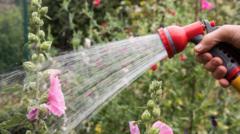
Wessex Water has become the latest water provider to announce a hosepipe ban - the company's first for 50 years - taking the total number of people under such a measure to nearly 30 million.
So how is your area doing and are you in a drought?
There is no single definition of drought, but it is characterised by a period of low rainfall. As the ground dries out, crops and vegetation can begin to struggle.
If dry conditions persist, rivers, reservoirs and groundwater levels can also fall, putting pressure on water supplies.
Environmental bodies in each UK nation decide whether to declare drought or water scarcity by assessing current water resources alongside weather forecasts.
Both drought and water scarcity can lead to hosepipe bans, if they are not already in place.
While drought is driven by prolonged dry weather, water scarcity occurs when demand for water outstrips the available supply. This summer, restrictions have been introduced in some areas to help manage high demand.
But while recent months have seen temperatures regularly exceed 35C, winter was much wetter than usual.
It has raised questions about how effectively water resources are being managed, and whether the UK is prepared for the drier summers expected with climate change.
So far, ten UK water companies have announced hosepipe bans. This means hosepipes cannot be used for watering gardens, washing vehicles and windows, and filling pools.
Nine companies are spread across central, southern and eastern parts of England, and one is in Wales.
In England, nearly three-quarters of the country is now in drought, according to the Environment Agency (EA). Northern parts of England are in "prolonged dry weather" - the category below drought.
Elsewhere, the whole of Wales is in drought, with Natural Resources Wales saying sustained high temperatures were causing the condition of the natural environment to "deteriorate".
There are no official droughts currently in Northern Ireland.
Scotland does not declare droughts but monitors "water scarcity".
While conditions have improved in some parts of Scotland following recent rainfall, some eastern areas remain in the two most extreme categories of "moderate" or "significant" scarcity, according to the Scottish Environment Protection Agency.
Our three main sources of water are rivers, reservoirs and from deep underground.
Almost all river flows in England and Wales were classed as "below normal", "notably low" or "exceptionally low" in July, according to the UK Centre for Ecology & Hydrology (UKCEH).
"This is the third time in the last five years that drought conditions have intensified rapidly following exceptional spring and summer dryness," said Steve Turner, a hydrologist at the UKCEH.
He added that low river flows are likely to persist well into the autumn.
England's reservoirs are some way below average levels for the time of year. Wales' reservoirs are also declining, but Dŵr Cymru Welsh Water has said its water resource position is "relatively strong".
Reservoir levels in Northern Ireland and Scotland are close to average, according to the latest available data.
South-east England relies more heavily on groundwater than reservoirs.
Groundwater originates as rainfall and is naturally stored beneath the surface in the pore spaces and fractures in rocks.
Groundwater levels are generally declining following the prolonged dry weather, but almost half of monitored groundwater sites recorded levels considered "normal" or higher in July.
Water can flow more slowly through some rock types than others, sometimes taking years to fully respond to current conditions.
These groundwater stores "respond more slowly to changes in the climate than rivers, which is why they provide a useful buffer during periods of drought", said Prof Alan MacDonald of the British Geological Survey.
It is why groundwater droughts in the south of England generally take a longer time to develop but can be longer-lasting if they do occur.
Droughts are complex phenomena, driven by a mix of natural and human causes.
The Met Office expects the UK to experience drier summers on average in future as the world warms, though there has been no clear trend so far.
But rising temperatures can play a more direct role by drawing extra moisture from the soil via evaporation.
"A warmer atmosphere is thirstier for moisture and this can mean water in the soil, rivers and reservoirs are depleted more effectively, leading to more rapidly onsetting droughts, heatwaves and wildfires," said Richard Allan, professor of climate science at the University of Reading.
But there are other factors that determine whether dry conditions lead to water shortages, including how we use water.
In a landmark review into the water sector of England and Wales, water companies were criticised for historic underinvestment in water infrastructure.
As part of plans to address water shortages, the government and water companies are planning nine new reservoirs for England by 2050 , in addition to one under construction at Havant Thicket in Hampshire.
But the EA has warned that measures to tackle water leaks and control water demand - potentially including hosepipe bans - may be needed in England too .
Water companies in Scotland, Wales and Northern Ireland - which are all public bodies or non-profit - also said they were taking steps to secure future supplies.
Get in touch Tell us how you're affected by the hosepipe ban.
Contact form Contact form A really simple guide to climate change
Published 14 January How climate change worsens heatwaves, droughts, wildfires and floods
Published 5 November 2025 'Hotter and hotter and hotter' - Europe's new climate in seven charts
Published 4 July Satellite images show impact of heatwaves and drought on UK landscape
Published 31 July Sign up for our Future Earth newsletter to keep up with the latest climate and environment stories with the BBC's Justin Rowlatt. Outside the UK? Sign up to our international newsletter here .
BBC
bbc.com